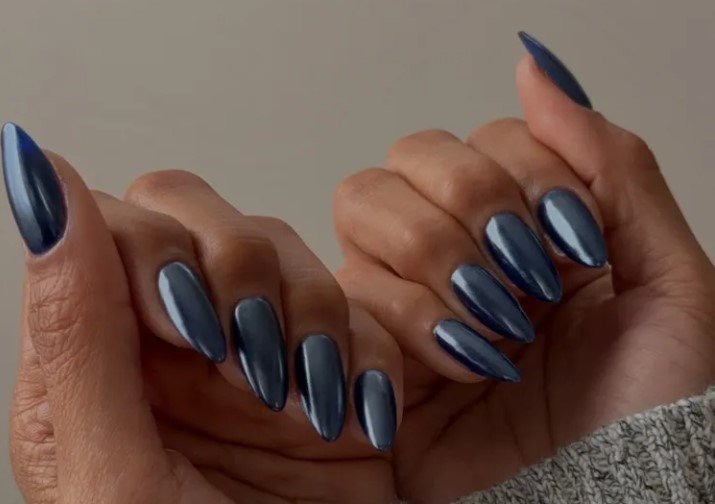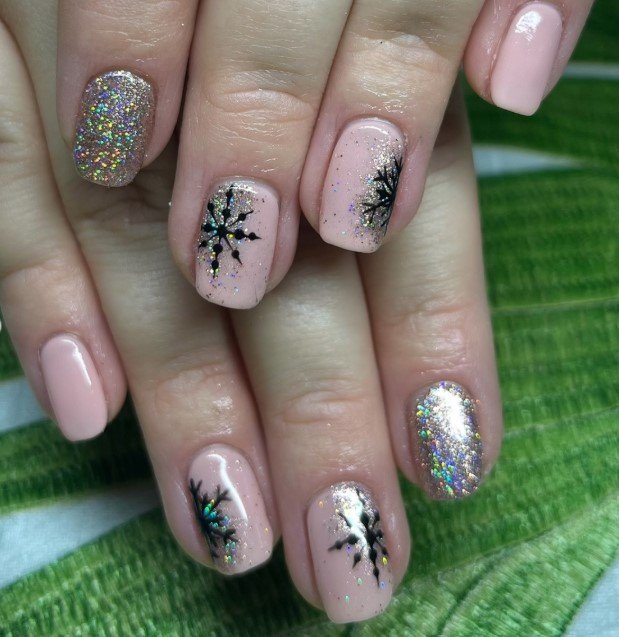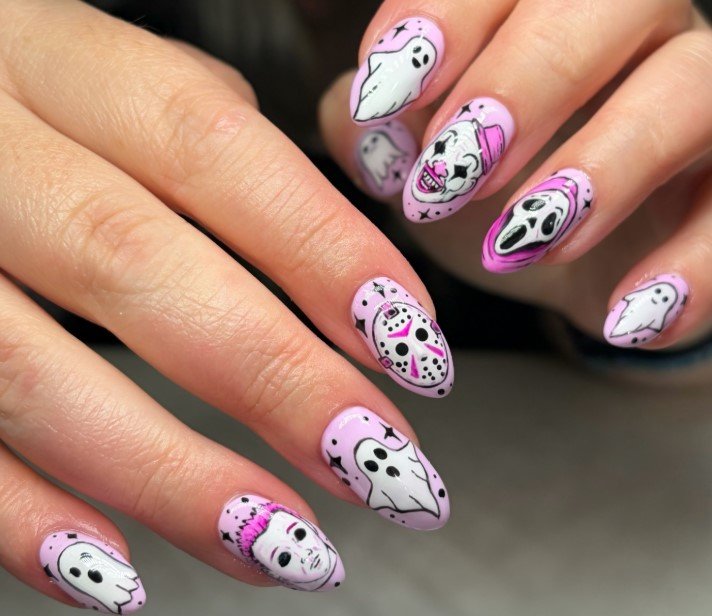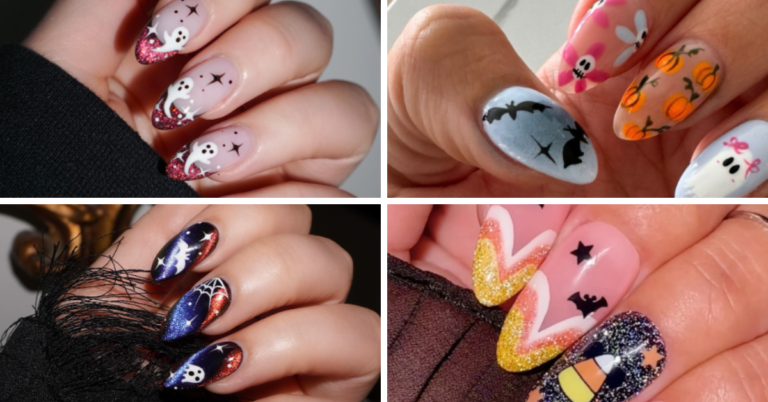

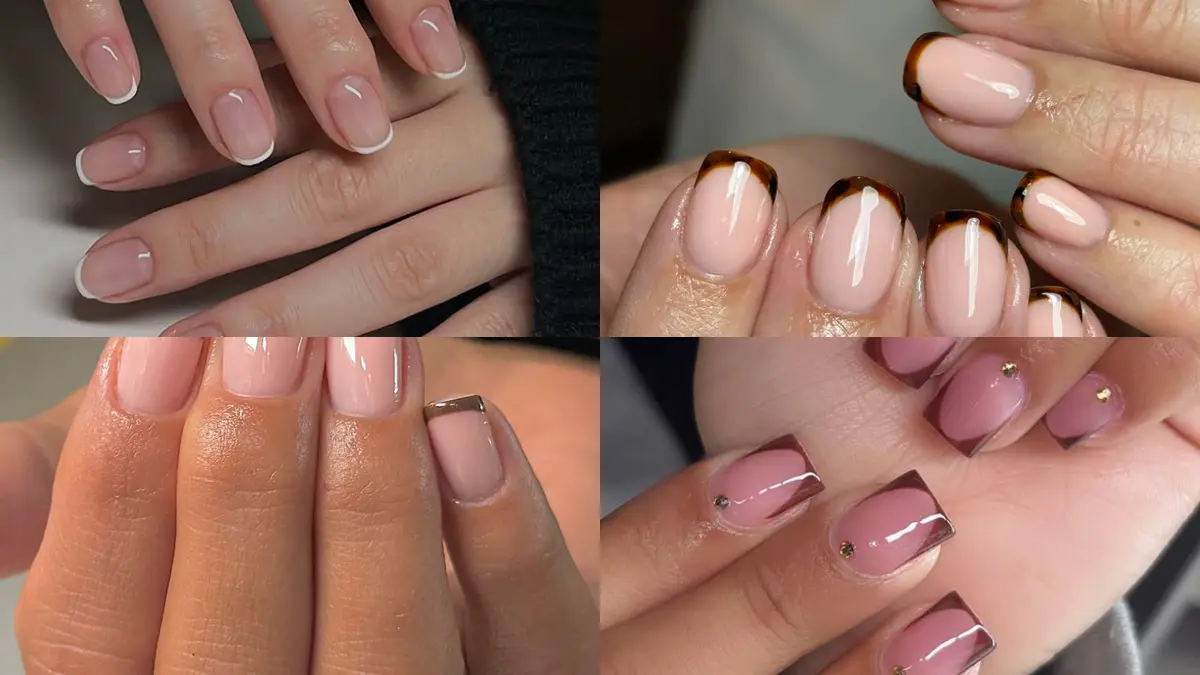
French tips take on a richer character when delicate artwork, defined curves, and subtle color shifts replace the usual plain edge. Fall Short French Tip Nail Designs bring together autumn leaves, mocha tones, cherry details, floral accents, graphic outlines, and tortoiseshell patterning without losing the clean structure that makes French tips recognizable. Shorter nails give these details a compact canvas, so placement and proportion become especially important. A narrow line can define the entire tip, while a tiny motif can become the focal point without crowding the surface. From softly layered color to precise decorative accents, each design relies on thoughtful composition rather than excessive embellishment, creating manicures that feel detailed, int
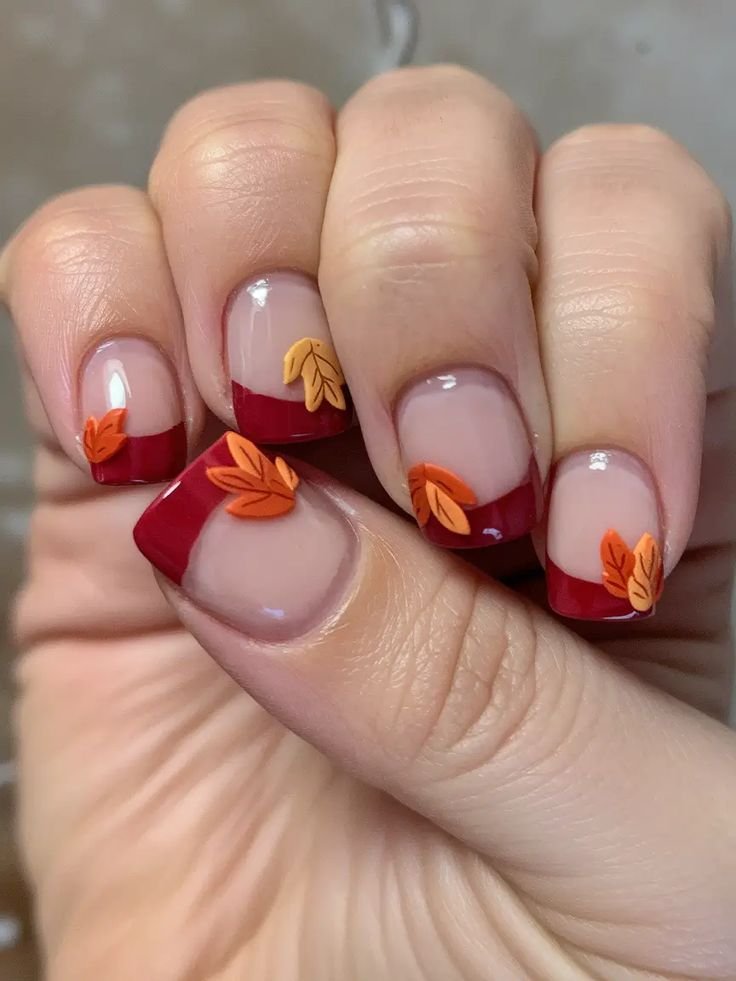
1. Autumn Leaf Accent French Tips
Autumn Leaf Accent French Tips place individual leaf motifs within the French-tip area, giving the manicure a clear seasonal focal point. Curved tip lines provide structure while the pointed leaf shapes introduce a contrasting organic form. Selective accent placement keeps the artwork visually separated instead of turning the entire tip into one continuous pattern. Small differences between the leaves add natural variation without disrupting the overall arrangement.
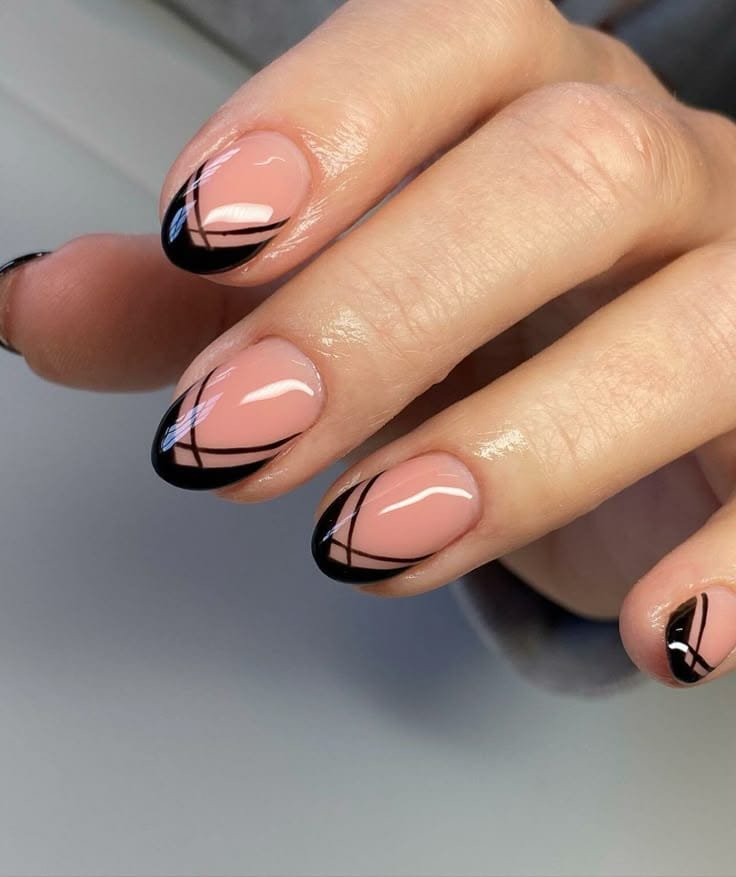
2. Sleek Black Curve French
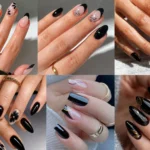
Sleek Black Curve French uses a narrow black curve to trace the French-tip boundary with deliberate precision. Smooth linework follows the rounded edge while leaving the surrounding nail surface open and uncluttered. Controlled spacing between the black detail and the remaining nail area makes the curved shape easier to read. Consistent arcs across the nails give the manicure a strong graphic rhythm without additional decoration.
3. Mocha Gloss French Tips
Mocha Gloss French Tips concentrate mocha color along the French-tip area beneath a glossy surface. Richer color remains contained within the curved section, while the reflective coating gives that area greater visual depth. Clean separation between the mocha tip and the untouched surface keeps the traditional French structure recognizable. Light reflection across the smooth coating adds dimension without introducing another pattern.
4. Burgundy Swirl French
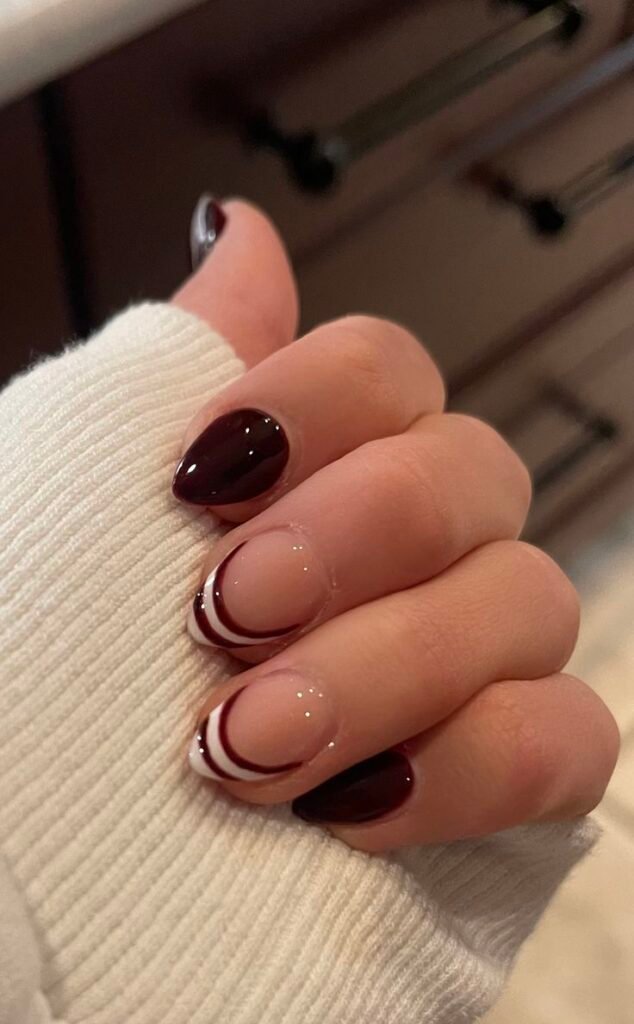
Burgundy Swirl French replaces the usual solid French edge with burgundy lines that curl through the tip area. Flowing strokes can narrow toward their ends, giving the artwork a sense of movement rather than forming a dense block. Open spaces between the swirls preserve visual clarity and allow individual curves to remain distinguishable. Varied line directions prevent the pattern from feeling mechanically repeated across every nail.
5. Autumn Leaf Classic French
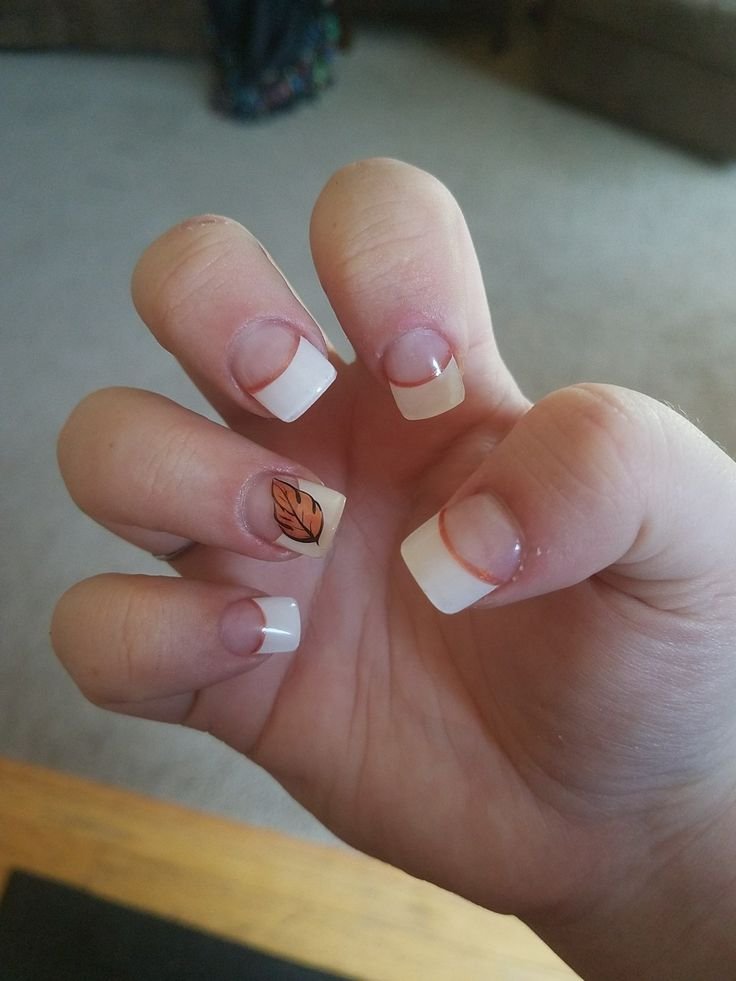
Autumn Leaf Classic French pairs the familiar French-tip curve with autumn leaf artwork positioned around the decorative edge. Pointed leaf forms introduce sharper contours against the rounded tip boundary, creating an interesting contrast in shape. Controlled placement prevents the botanical details from covering too much of the French structure. Repeated leaf motifs connect the nails while subtle positioning changes keep the composition from appearing stamped.
6. Rose Gold Fade Tips
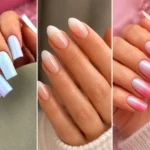
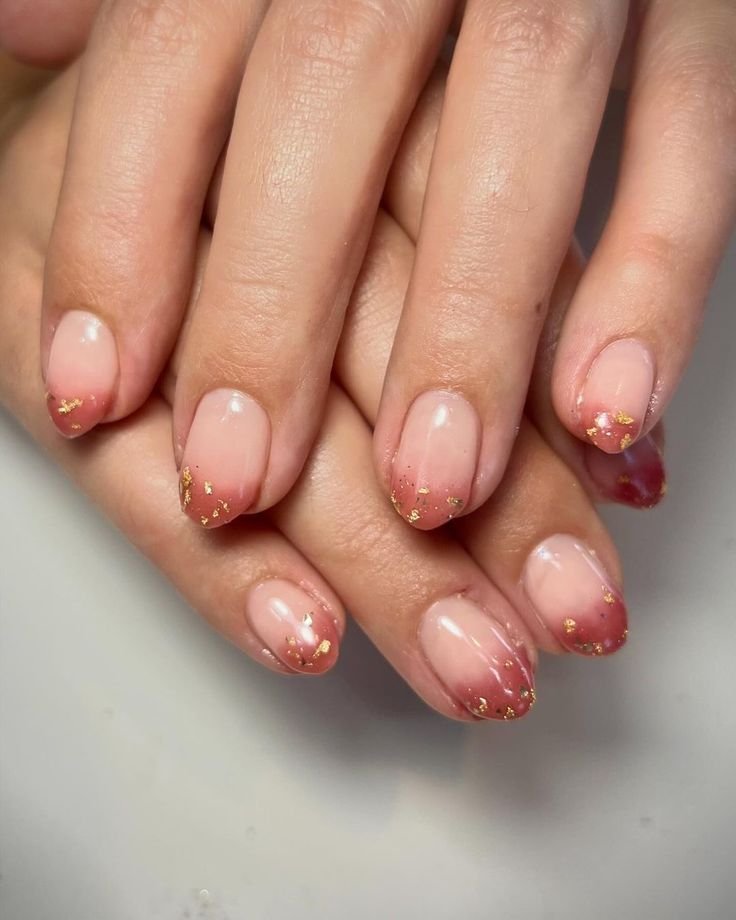
Rose Gold Fade Tips use a gradual concentration of rose gold that becomes softer across the tip area. Smooth tonal movement replaces a hard French boundary, allowing the color to transition without an abrupt dividing line. Greater color density near one section gives the tip visual depth while the lighter area preserves openness. Careful blending keeps the fade continuous rather than visibly separated into bands.
7. Mocha Fade French
Mocha Fade French turns the French tip into a soft progression of mocha rather than a sharply outlined section. Deeper mocha concentration gradually recedes, producing a controlled change in intensity across the curved area. Smooth transitions keep the tonal movement cohesive and prevent visible streaks from interrupting the gradient. Curved placement still identifies the design as French while the fading color supplies its main visual detail.
8. Midnight Blue French
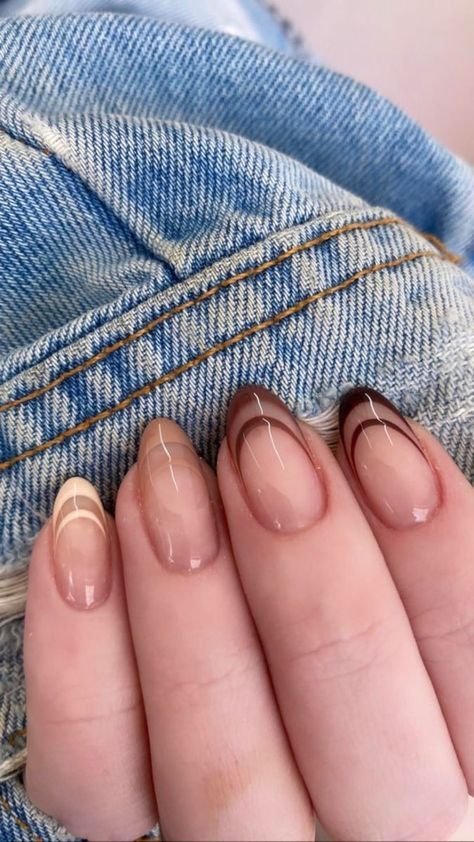
Midnight Blue French concentrates midnight blue along the curved French-tip boundary for a strong, defined color block. Deep saturation gives the outer edge visual weight while the remaining nail surface stays visually separate. Crisp borders help preserve the recognizable shape of the French tip despite the intensity of the color. Repeated curves establish consistency without requiring patterns, accents, or additional embellishment.
9. Deep Cherry French Tips
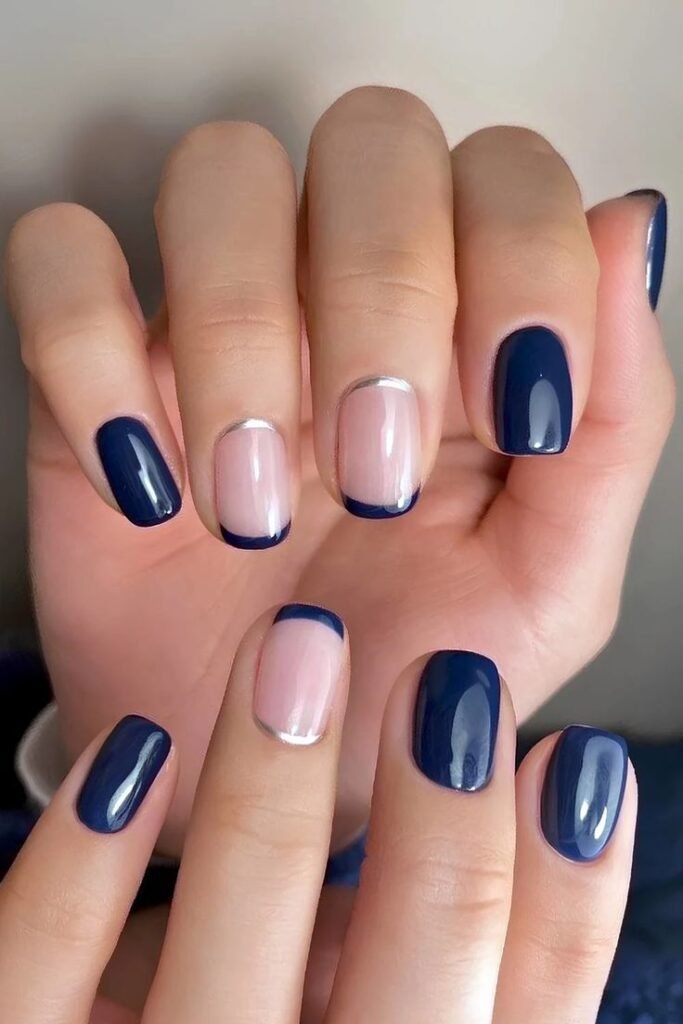
Deep Cherry French Tips place deep cherry color across the traditional French-tip section with a clearly defined curved edge. Strong color concentration makes the outer portion immediately distinct from the rest of the nail. Precise boundaries prevent the darker tone from spreading into the open area and weakening the French structure. Uniform tip placement gives the manicure a controlled rhythm from one nail to the next.
10. Polka Dot French Tips
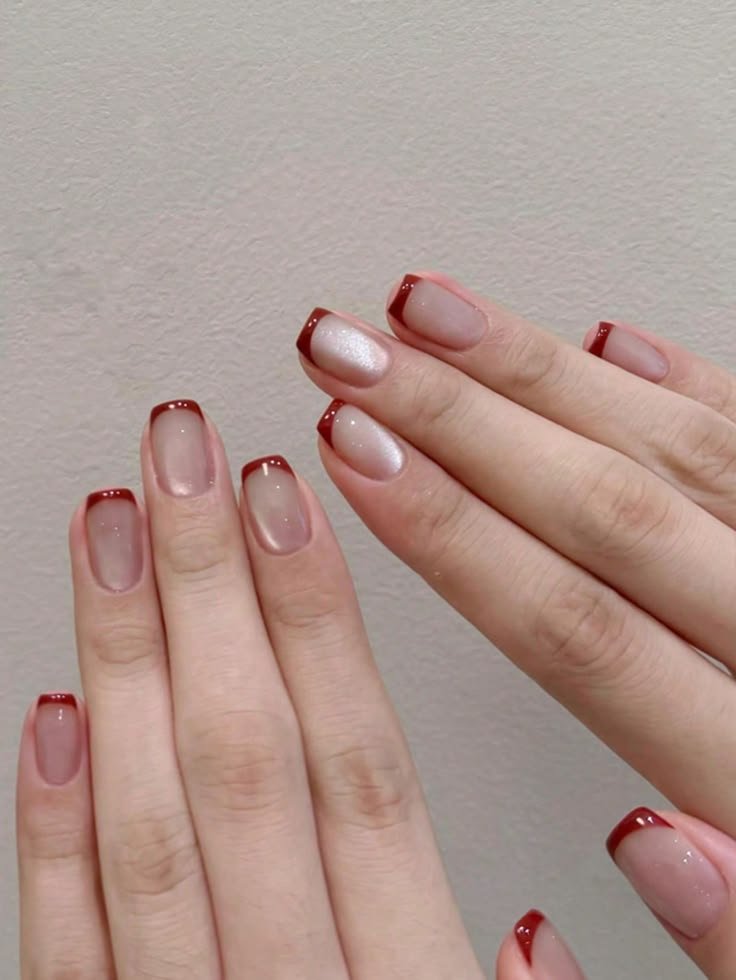
Polka Dot French Tips form the French boundary through individual dots rather than one continuous line. Rounded marks follow the curve of the tip while deliberate gaps preserve separation between neighboring dots. Changes in dot placement can give the edge a hand-arranged quality without losing its overall arc. Consistent spacing keeps the pattern readable and prevents the tip from becoming visually crowded.
11. Gold Lined Glitter French
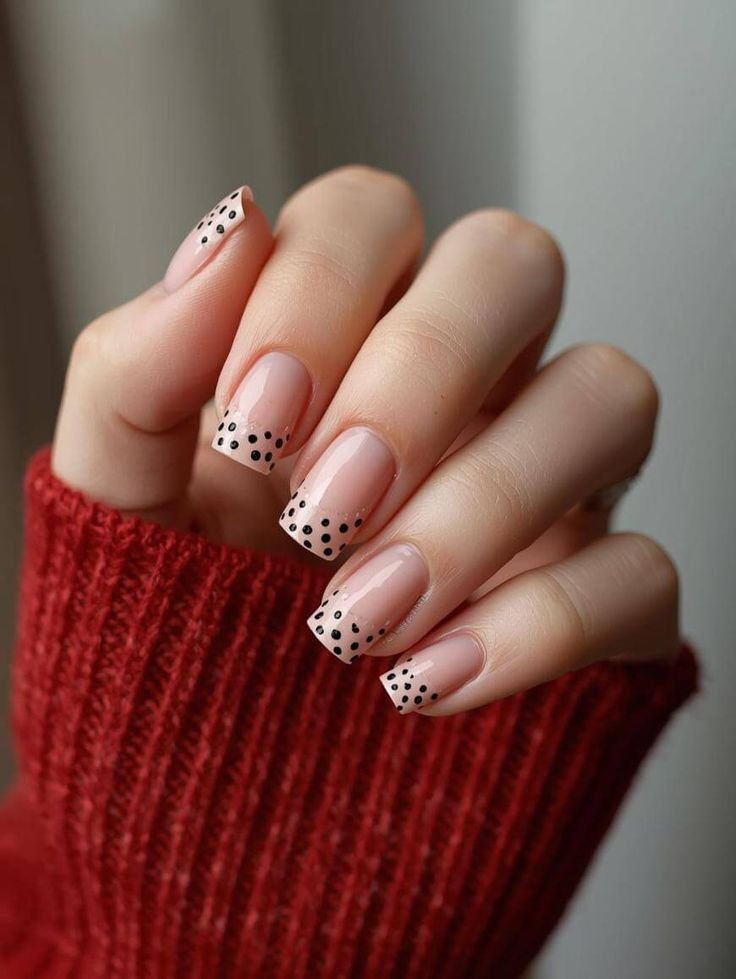
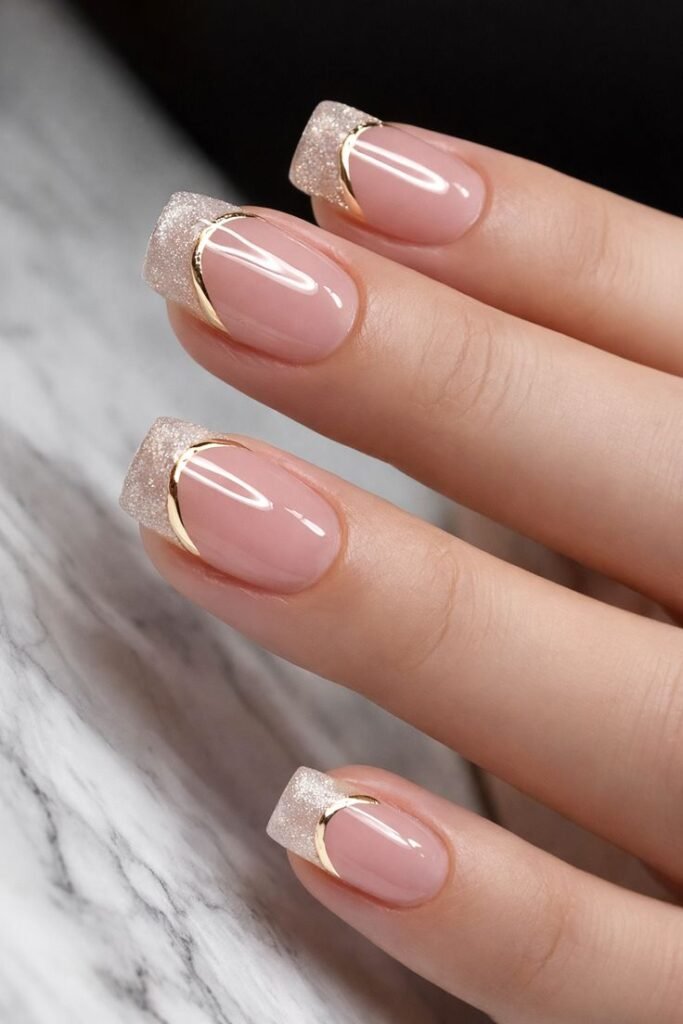
Gold Lined Glitter French places a fine gold boundary alongside glitter within the French-tip arrangement. Narrow linework establishes a crisp edge while the glitter introduces scattered reflective texture nearby. Separation between the linear detail and sparkling particles allows both elements to remain visually identifiable. Layered placement gives the tip dimension without relying on a complicated pattern.
12. Soft Glitter French Glow
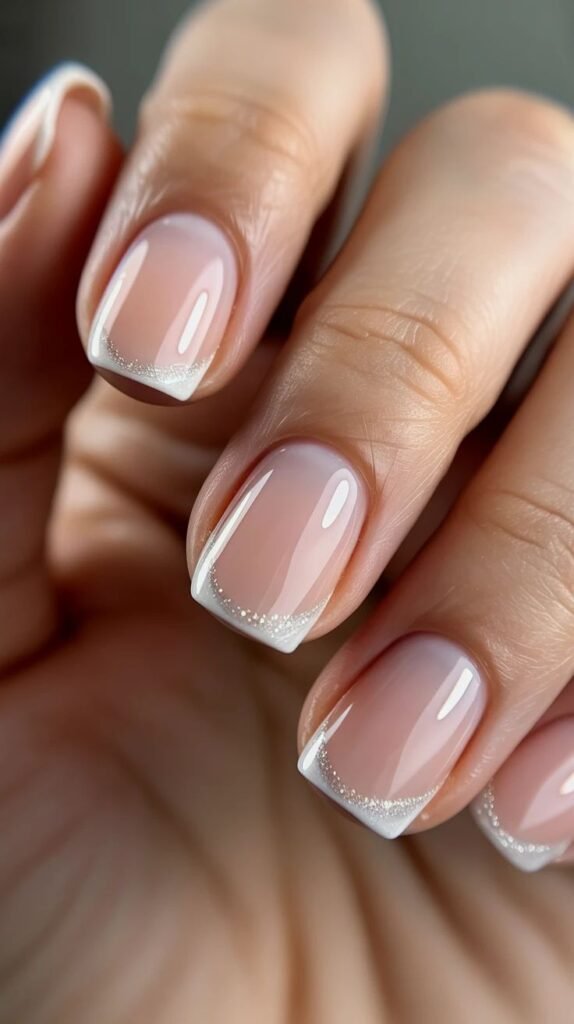
Soft Glitter French Glow distributes glitter gently through the French-tip area rather than concentrating it into one dense section. Individual reflective particles catch light at different points, producing variation across the surface. Controlled glitter density keeps the curved French structure visible beneath the sparkle. Subtle differences in particle placement prevent the effect from appearing completely uniform.
13. Cocoa Ombre French
Cocoa Ombre French shifts cocoa through gradual tonal changes across the French-tip area. Darker concentration gives way to lighter color, producing depth without a rigid dividing line. Smooth transitions make the ombre appear continuous from one section to another. Curved placement anchors the gradient within the familiar French arrangement while allowing the color movement to remain the main feature.
14. Cherry Heart French Tips
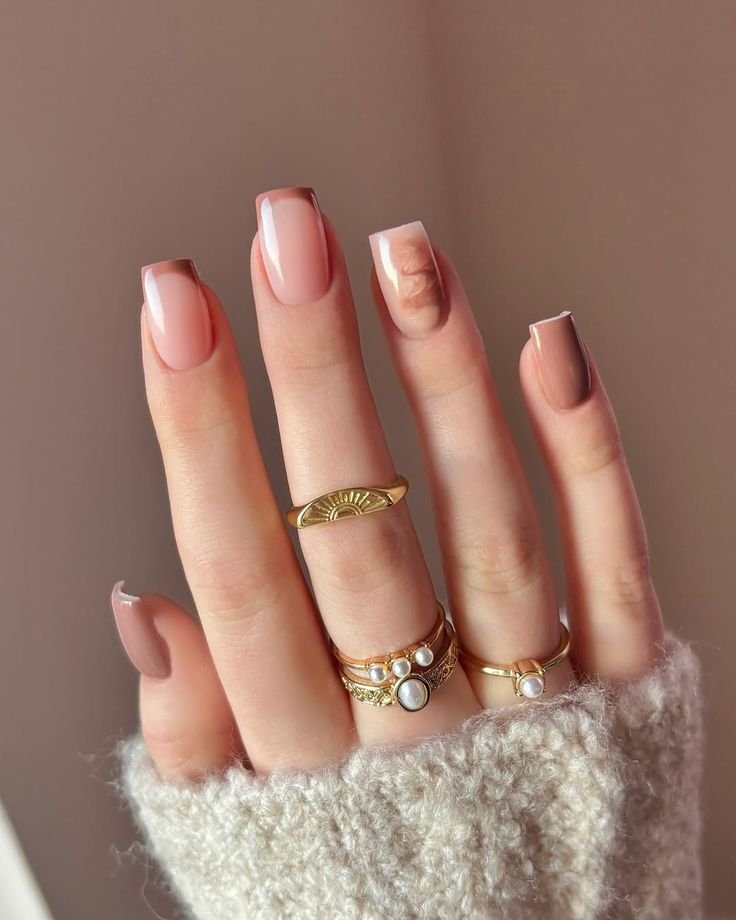
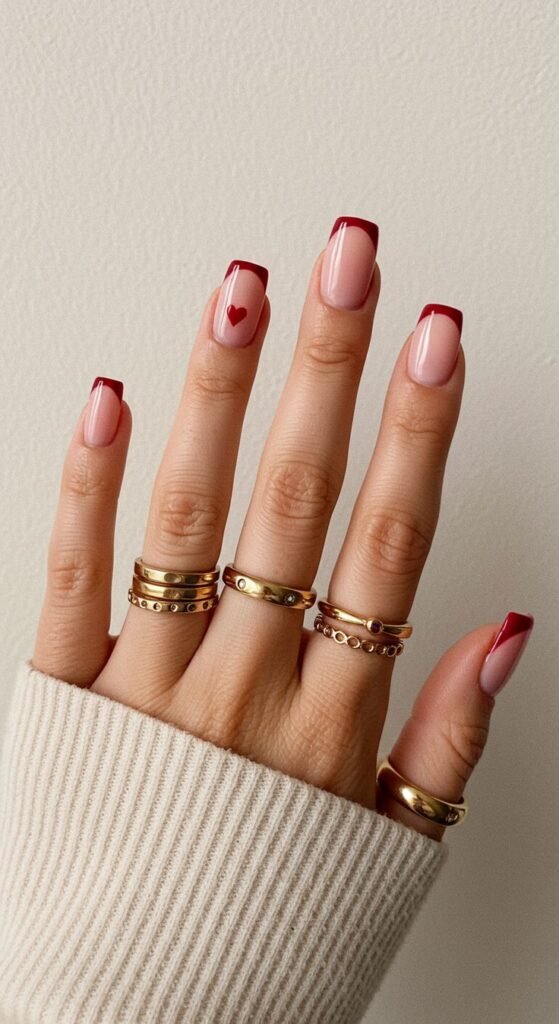
Cherry Heart French Tips incorporate cherry-colored heart motifs into the French-tip area, pairing rounded symbols with the curved edge. Heart shapes introduce a recognizable decorative element while remaining visually separate from one another. Concentrating the motifs near the tips leaves surrounding space open and prevents the artwork from becoming dense. Varied heart positioning can give the nails individuality while maintaining the same central theme.
15. Mocha Edge French
Mocha Edge French reduces the mocha detail to a concentrated line along the outer French boundary. Narrow placement emphasizes the contour while leaving most of the tip area visually open. Smooth curvature gives the edge a precise, continuous appearance from one side to the other. Controlled line thickness keeps the mocha detail delicate enough to read as an outline rather than a filled tip.
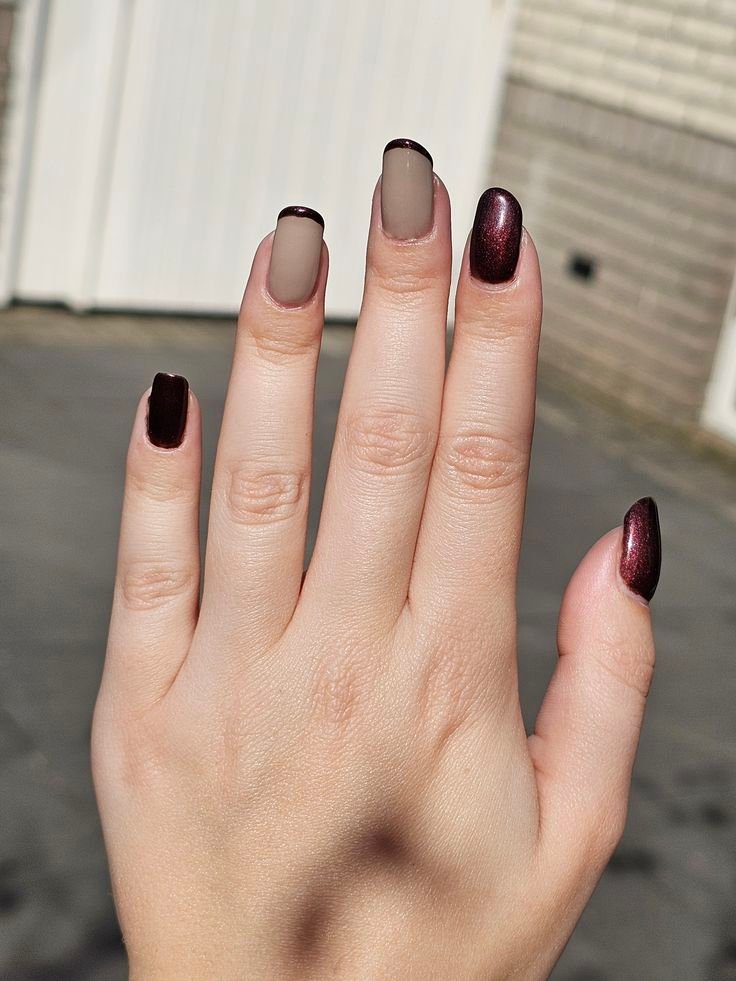
16. Cocoa Swirl French Tips
Cocoa Swirl French Tips use curling cocoa lines to form an expressive pattern within the French-tip area. Rounded strokes move through the tip with changes in direction that give the artwork a flowing quality. Open sections between the curves prevent overlapping lines from becoming visually confusing. Individual swirl shapes can differ slightly, creating movement while preserving a recognizable connection between the nails.
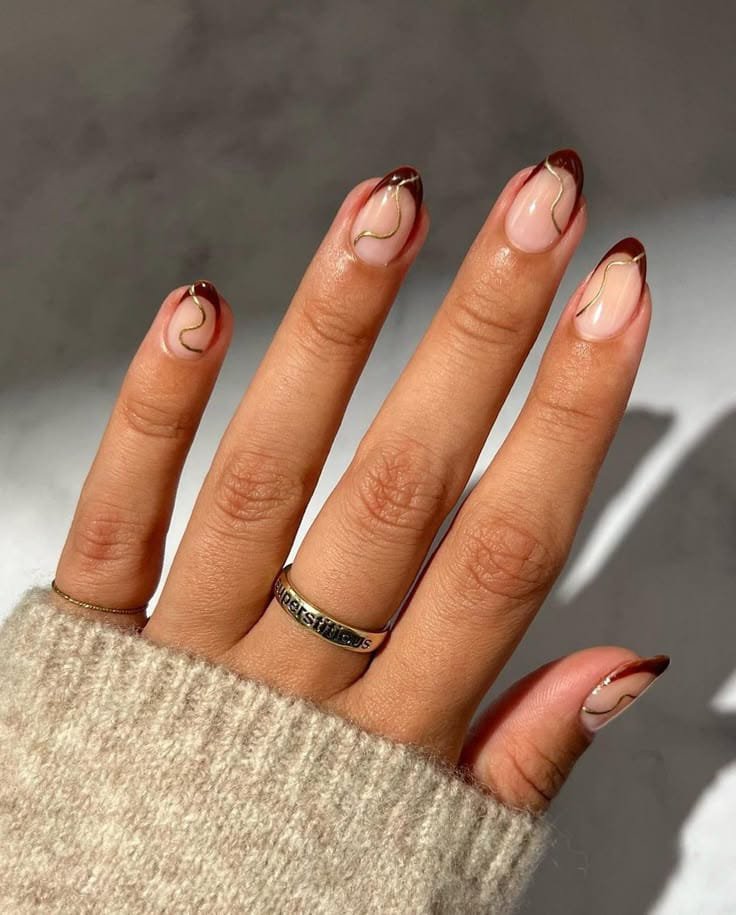
17. Mocha Star French Tips
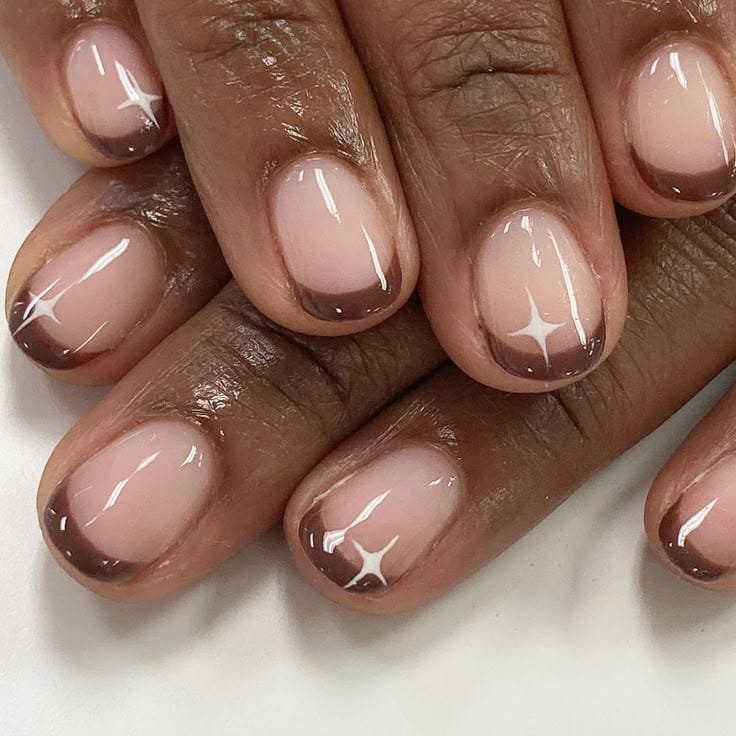
Mocha Star French Tips position star motifs within mocha-toned French-tip sections for a combination of angular and curved forms. Pointed star shapes contrast with the rounded French boundary, giving the artwork a sharper visual character. Varied star sizes can establish hierarchy, with smaller details supporting larger motifs rather than competing with them. Careful spacing keeps the individual stars distinct against the surrounding tip area.
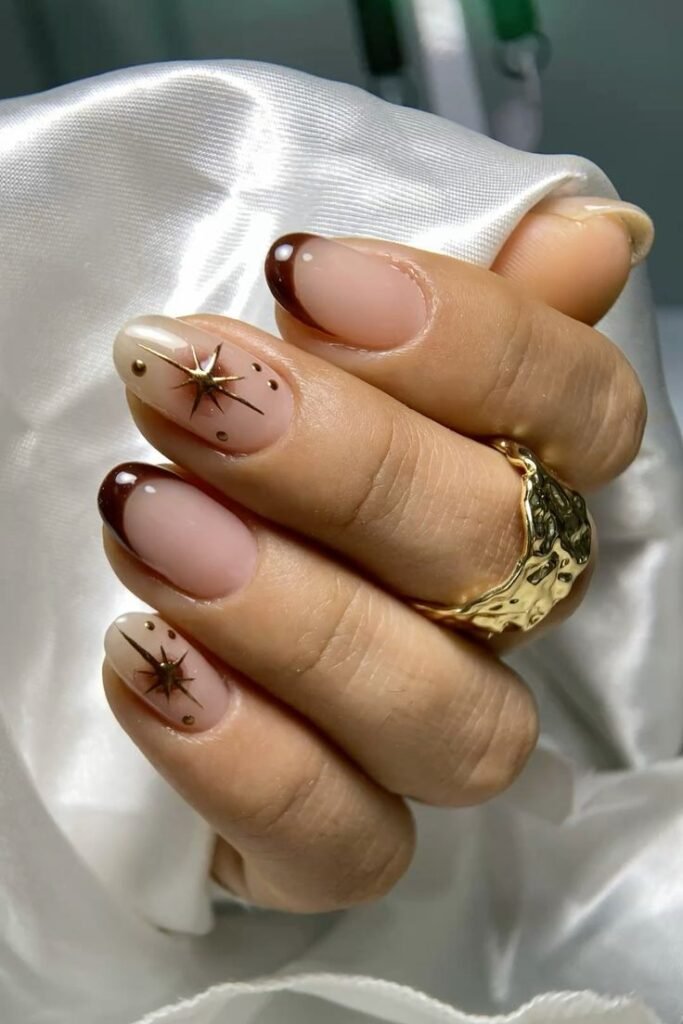
18. Pumpkin Accent French Tips
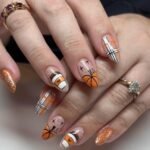
Pumpkin Accent French Tips use pumpkin motifs as selected focal details within the French-tip arrangement. Rounded pumpkin forms introduce a compact decorative shape against the cleaner structure of the curved tip. Limited accent placement gives the artwork breathing room instead of repeating the same visual weight across every nail. Clear separation around each pumpkin keeps its outline and internal form easy to recognize.
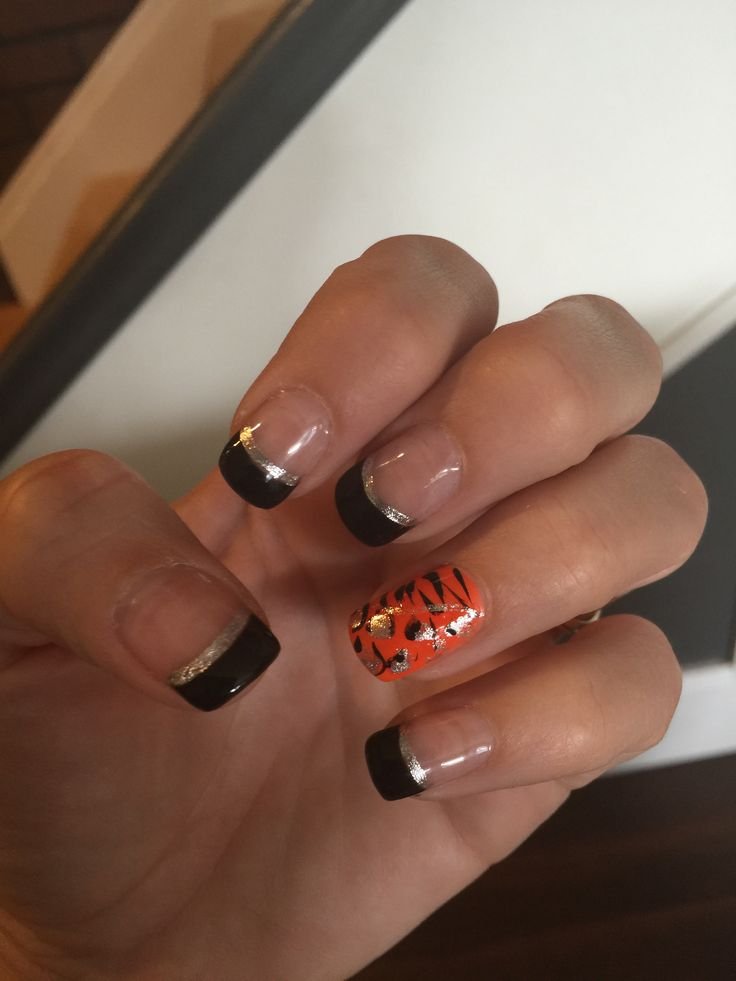
19. Sleek Black & Gold French
Sleek Black & Gold French pairs a stronger black French element with a narrower gold detail placed alongside it. Black establishes the dominant structure while gold introduces a secondary line that changes the visual layering. Clean separation between both tones prevents the contrast from becoming muddled along the curved edge. Precise line placement becomes especially important because the design depends on the relationship between two distinct borders.
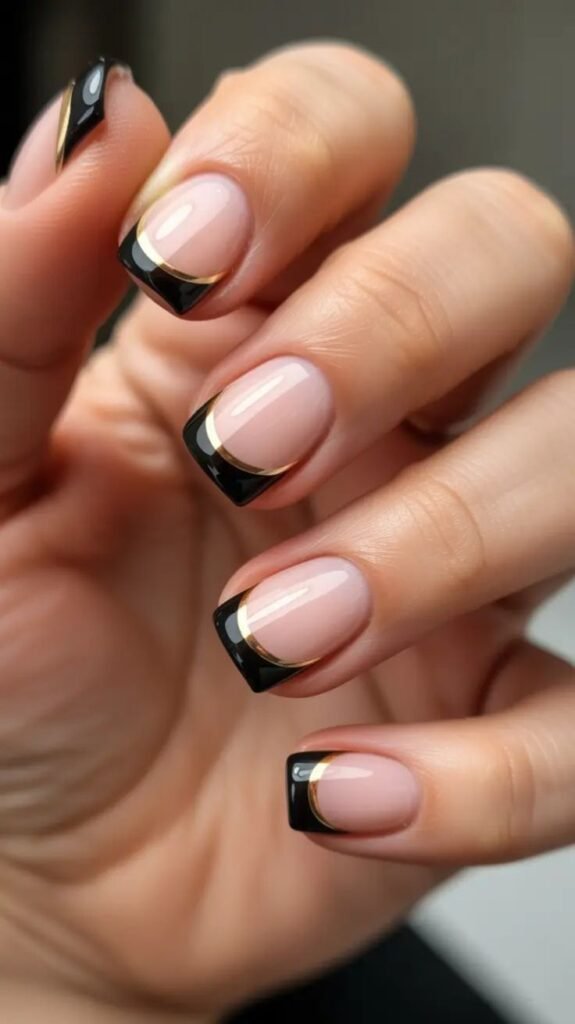
20. Soft Blossom French
Soft Blossom French introduces blossom motifs into the French-tip structure through rounded petals arranged around the curved edge. Petal shapes soften the linear quality of the French boundary without completely covering it. Spacing between individual blossoms keeps the floral artwork legible and gives every motif enough visual room. Slight differences in petal orientation add movement without turning the design into a dense floral field.
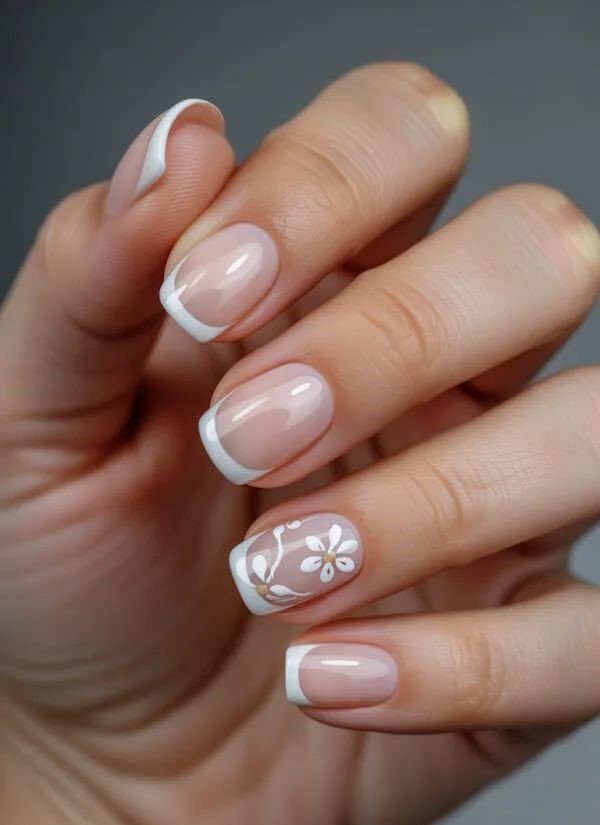
21. Cocoa Floral Tips
Cocoa Floral Tips place floral artwork directly within cocoa-colored tip sections, creating contrast between organic motifs and a defined French boundary. Petals and centers provide multiple layers of shape inside the limited tip area. Deliberate spacing prevents neighboring flowers from merging into one indistinct cluster. Concentrating the floral details near the outer edge keeps the underlying French structure visible beneath the artwork.
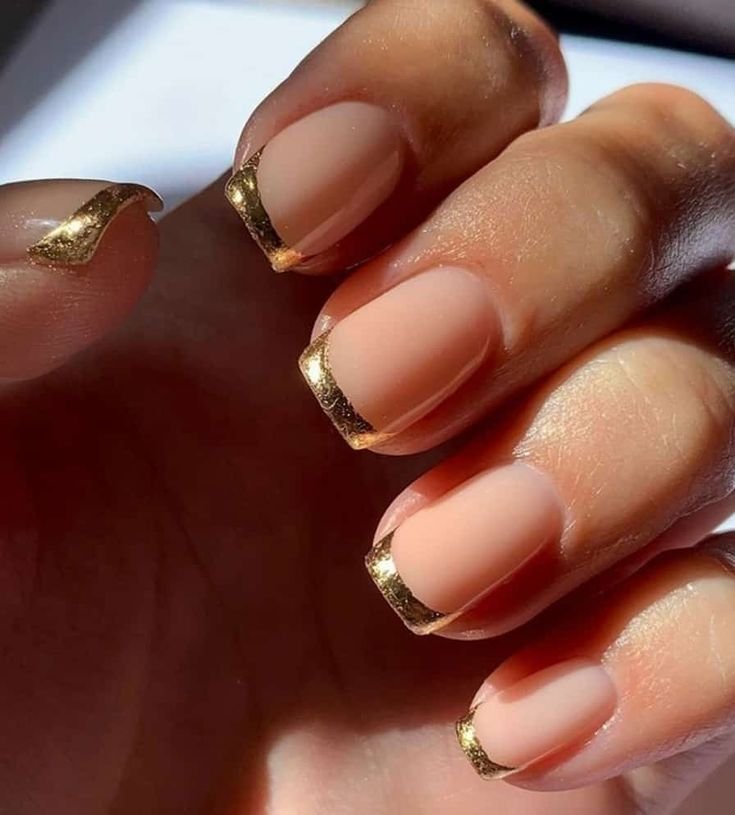
22. Golden Edge French
Golden Edge French traces the French-tip boundary with a narrow golden line that follows the natural curve. Minimal line width keeps the decoration concentrated at the perimeter rather than filling the entire tip. Smooth curvature makes the border appear continuous, with no unnecessary interruptions along the edge. Consistent placement gives the manicure a precise linear quality while leaving the surrounding surface visually quiet.
23. Burnt Copper Glitter Bloom
Burnt Copper Glitter Bloom combines burnt copper color, glitter, and bloom artwork within one layered composition. Bloom shapes provide the main organic form while glitter introduces smaller reflective points around the decorative area. Burnt copper ties the different elements together through a concentrated color presence rather than allowing each detail to compete independently. Layering gives the artwork variation in scale, texture, and visual density.
24. Cherry Mocha French Mix
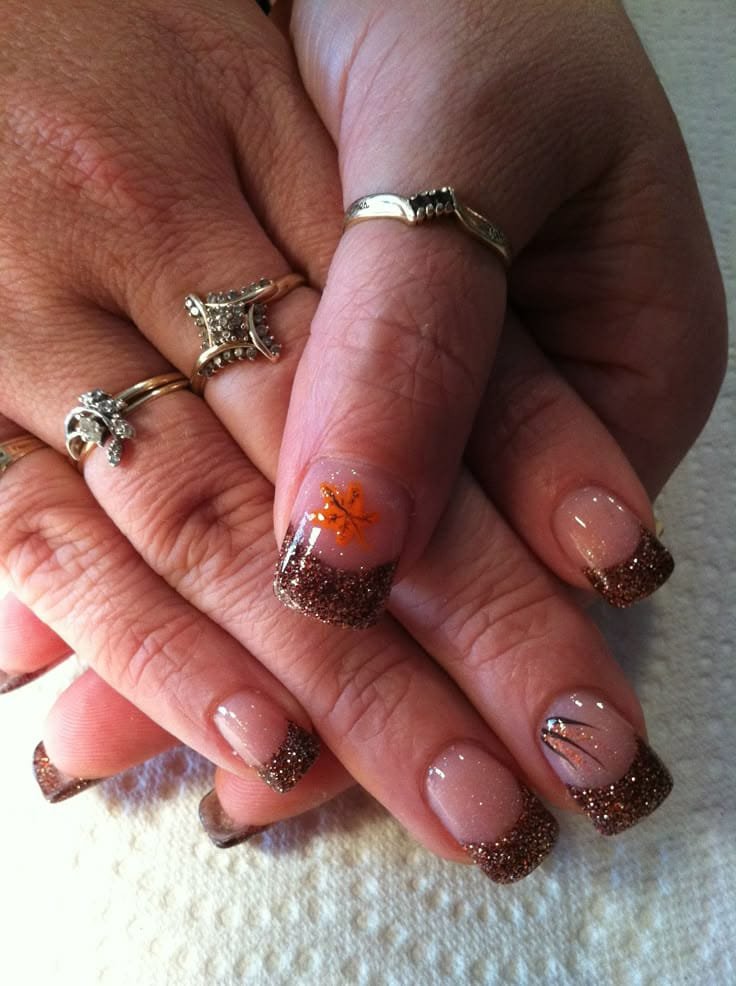
Cherry Mocha French Mix places cherry and mocha elements together within the French-tip structure, allowing two distinct tones to share the same visual space. Stronger separation between the colors keeps their individual identities clear instead of producing an indistinct mixture. Deliberate placement can divide the tip into recognizable sections while preserving its curved outline. Contrast between the two tones adds visual movement without requiring extra artwork.
25. Burgundy Outline French
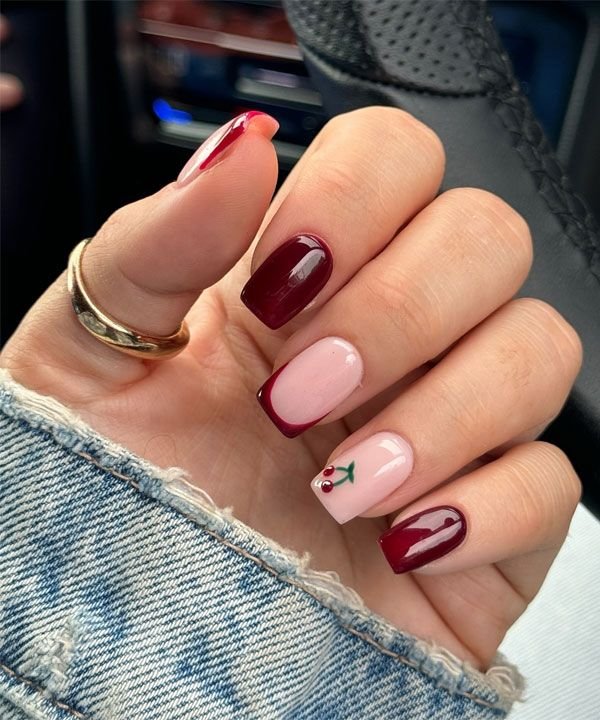
Burgundy Outline French traces the French-tip perimeter with burgundy rather than filling the entire curved section. Open space inside the outline keeps attention on the shape of the border itself. Controlled line width helps the burgundy remain visually defined without overpowering the surrounding nail surface. Smooth curves and clean junctions give the outline a continuous, uninterrupted appearance.
26. Autumn Floral French Tips
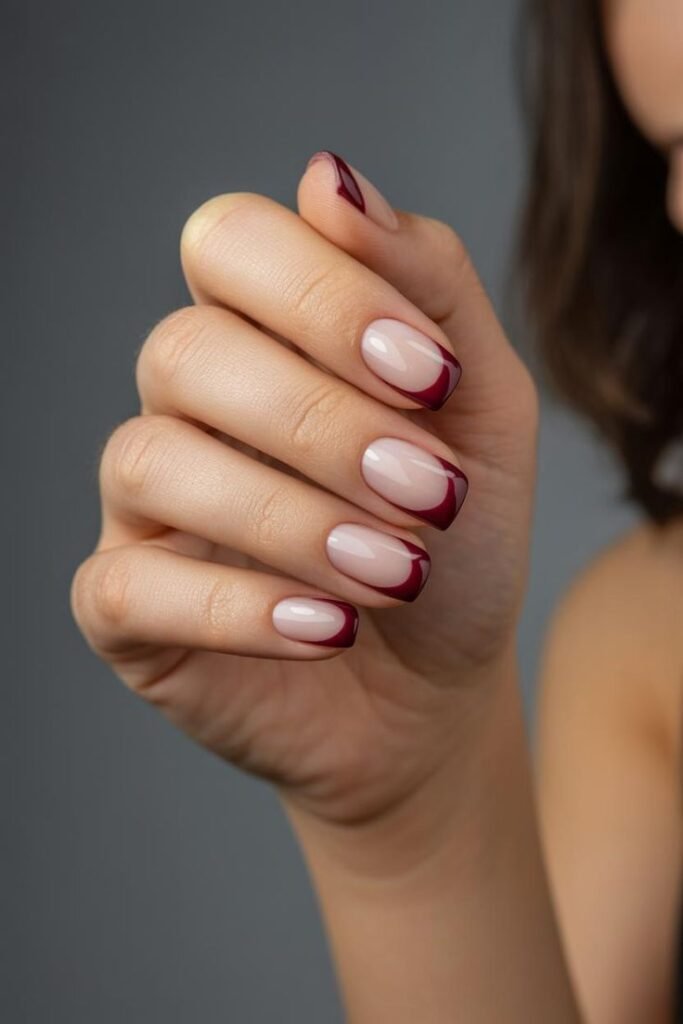
Autumn Floral French Tips place floral artwork around the French-tip area, combining curved nail structure with layered botanical shapes. Petals introduce repeated rounded forms while the French edge provides a contrasting geometric boundary. Strategic gaps between flowers preserve individual petal outlines and prevent the artwork from becoming visually compressed. Different flower placements can distribute attention across the nails without making every accent identical.
27. Cocoa Gloss French
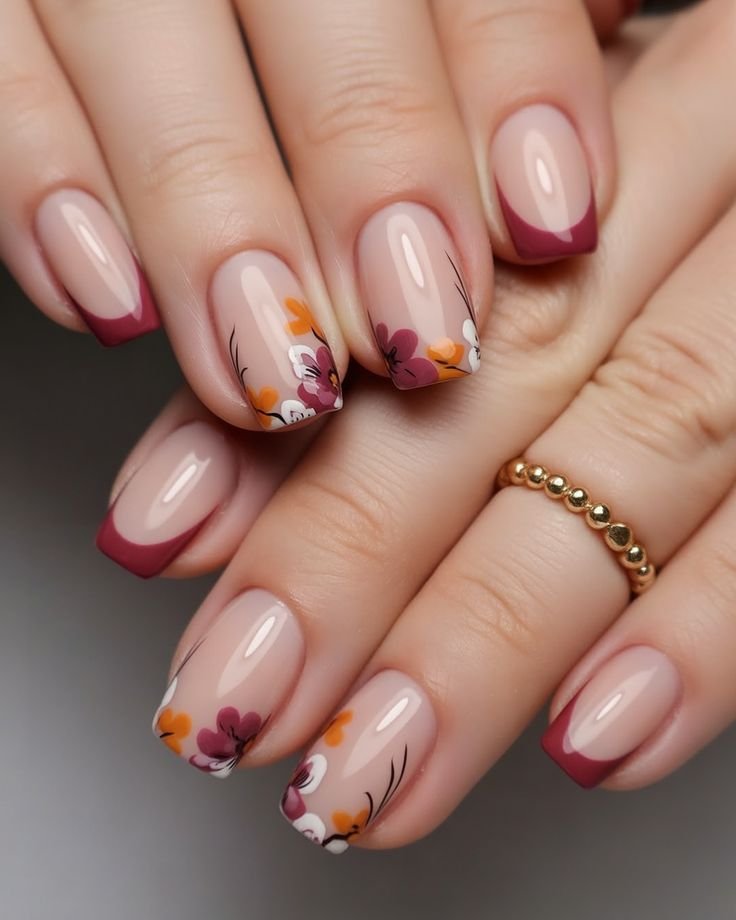
Cocoa Gloss French centers cocoa color within a glossy French-tip arrangement, allowing surface reflection to become part of the visual composition. Smooth coating gives the cocoa sections a deeper appearance as light moves across their curved surfaces. Crisp boundaries keep the color confined to the intended French area and preserve its recognizable structure. Minimal decoration leaves the relationship between cocoa tone, curvature, and gloss clearly visible.
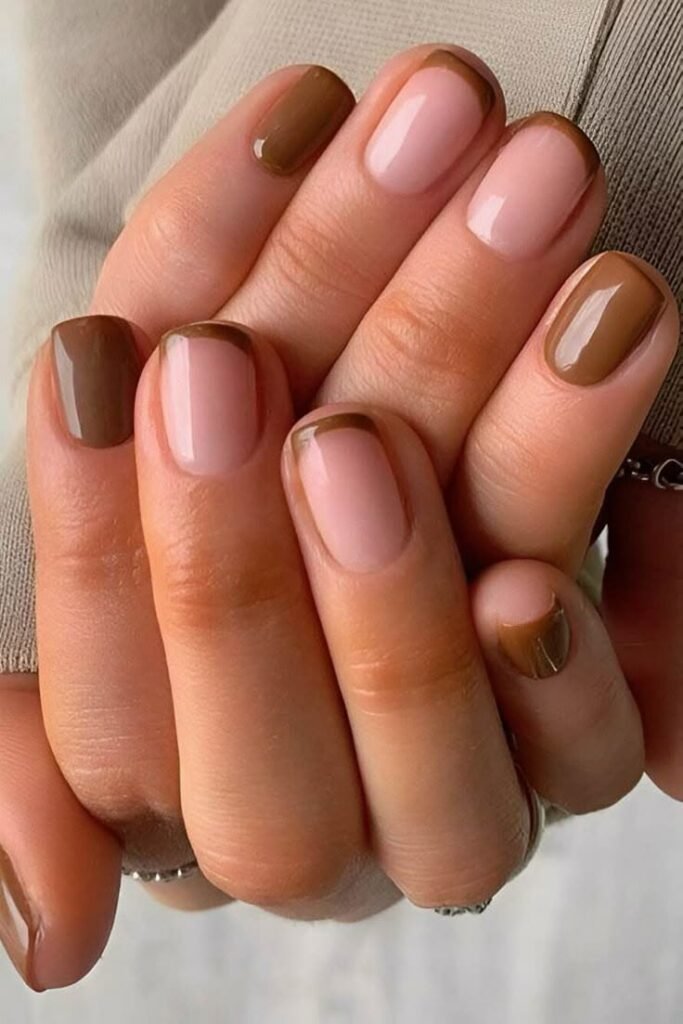
28. Warm Mocha Mix French Tips
Warm Mocha Mix French Tips arrange multiple mocha elements across the French-tip sections rather than relying on one uninterrupted tone. Subtle differences within the mocha palette introduce variation while maintaining a connected visual relationship. Deliberate divisions help separate the individual sections so their tonal differences remain noticeable. Curved placement keeps the mixed arrangement organized instead of allowing the colors to appear randomly distributed.
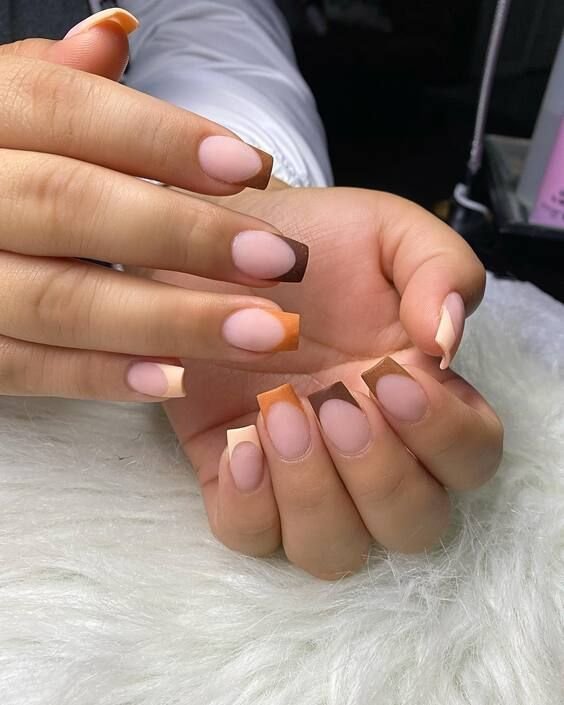
29. Classic Fall Leaf French Tips
Classic Fall Leaf French Tips combine fall leaf motifs with a clearly defined French-tip structure. Pointed leaf edges contrast against the smooth curve, producing visual tension between organic artwork and geometric placement. Concentrating the motifs near the outer portion keeps the decorative details connected to the French tip rather than spreading across the entire nail. Repeated leaf forms establish continuity while varied positioning keeps the artwork naturally irregular.
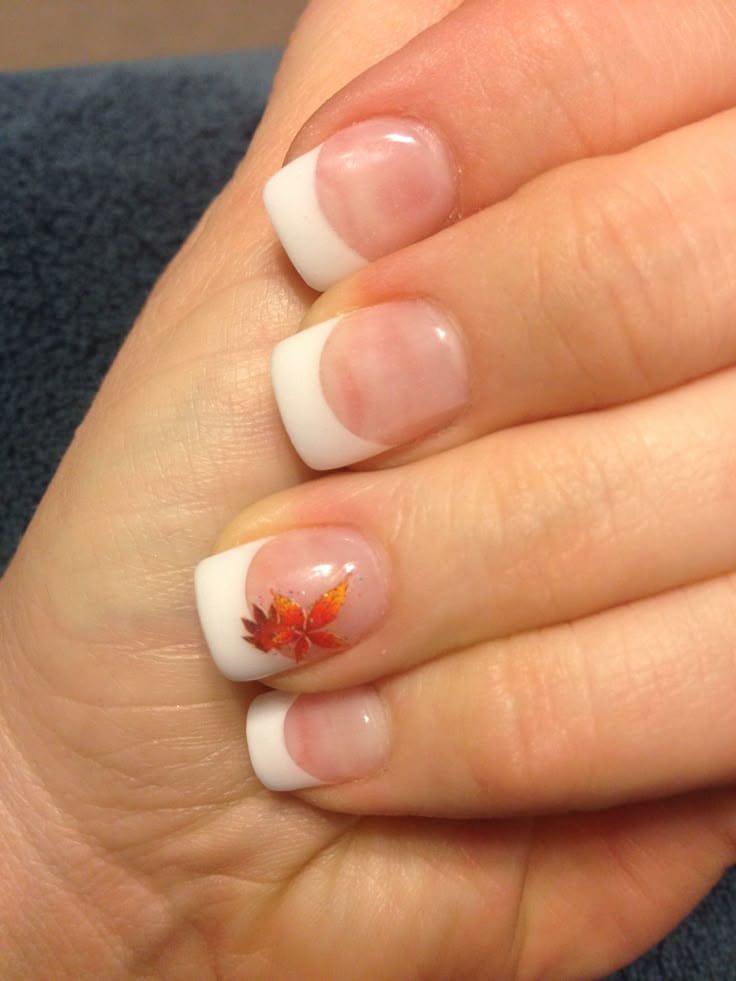
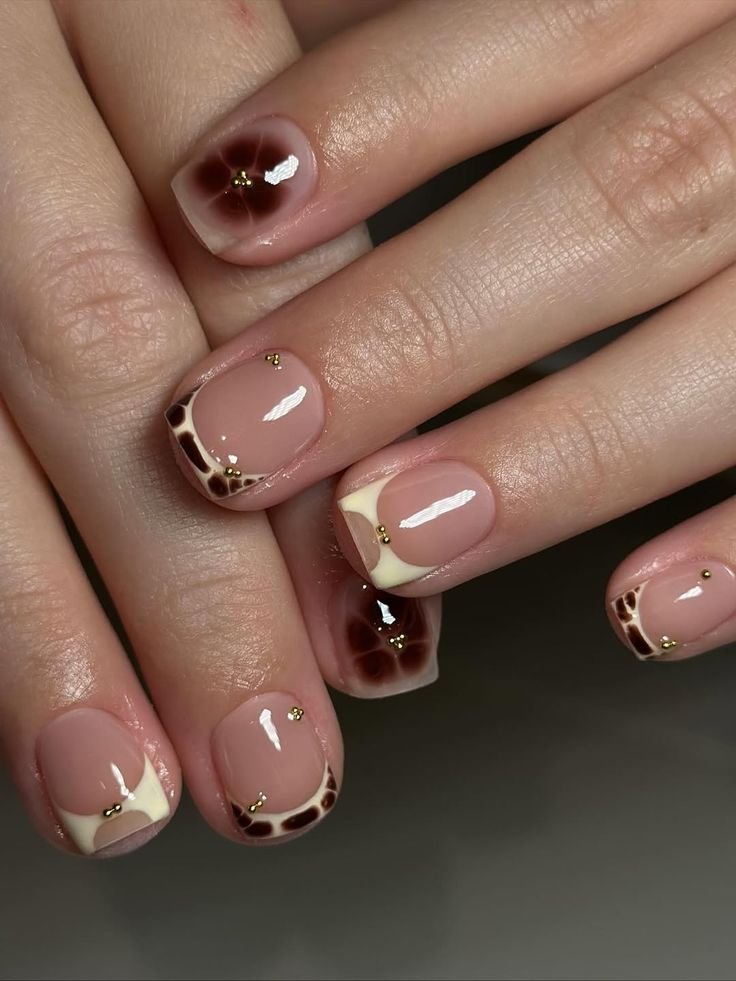
30. Tortoiseshell Glam French Tips
Tortoiseshell Glam French Tips place irregular tortoiseshell markings within the French-tip area, giving every section its own arrangement of shapes and tonal variation. Layered patches create visual depth because the markings differ in size, density, and direction. A clear curved boundary contains the pattern and separates its organic irregularity from the rest of the nail. Controlled placement keeps the tortoiseshell effect expressive without allowing the pattern to overwhelm the French structure.
Conclusion
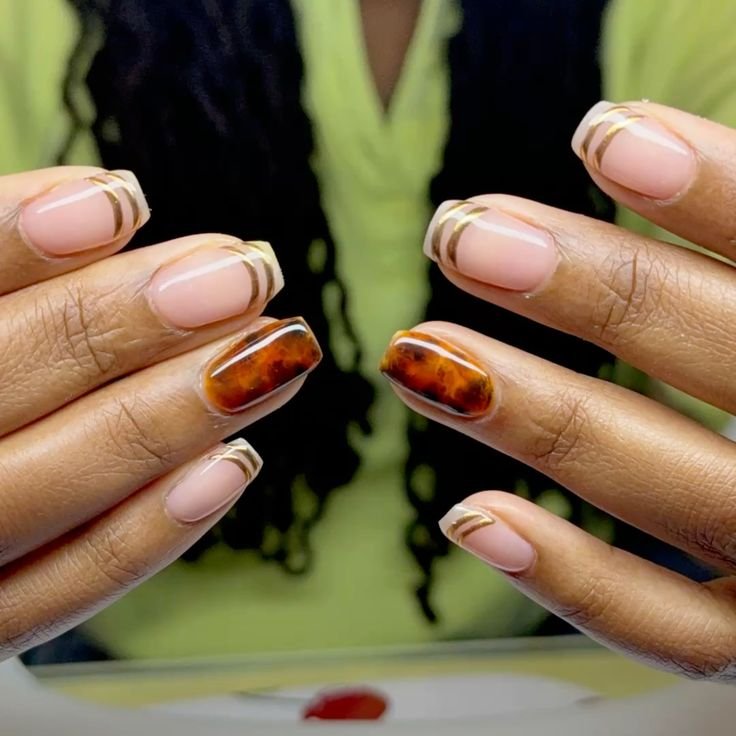
Thoughtful French-tip artwork can transform a compact nail surface without relying on excessive decoration. Curved lines, botanical motifs, tonal transitions, delicate outlines, and patterned accents each direct attention in a different way, giving the familiar French structure a more distinctive character. Strong composition comes from knowing where a detail belongs and allowing enough open space around it to remain clearly visible. Fall Short French Tip Nail Designs make that careful balance especially noticeable, while personal taste becomes part of the design through the details that naturally catch your eye, whether that means subtle linework, expressive motifs, or carefully layered color. Let those preferences shape a manicure that feels intentional from the first curve to the smallest accent.