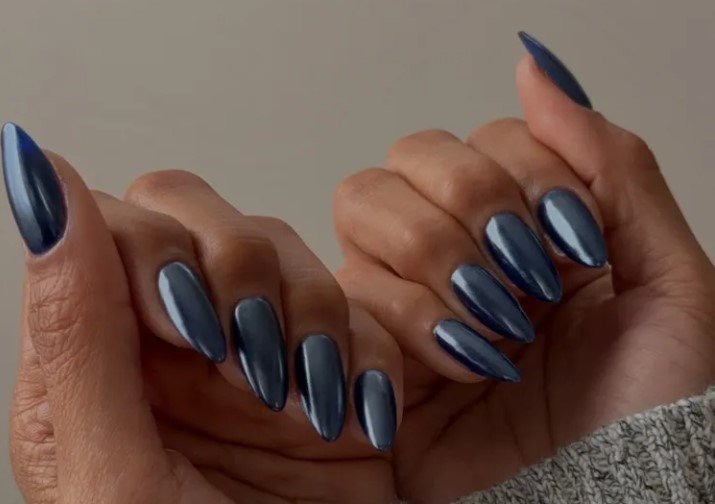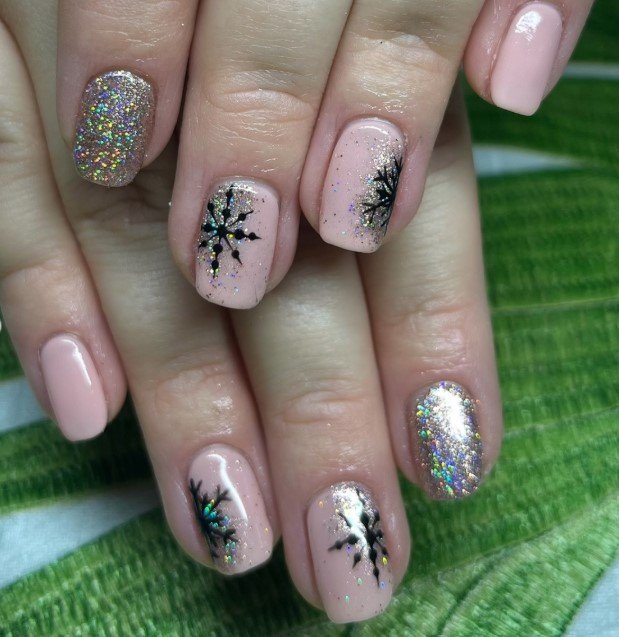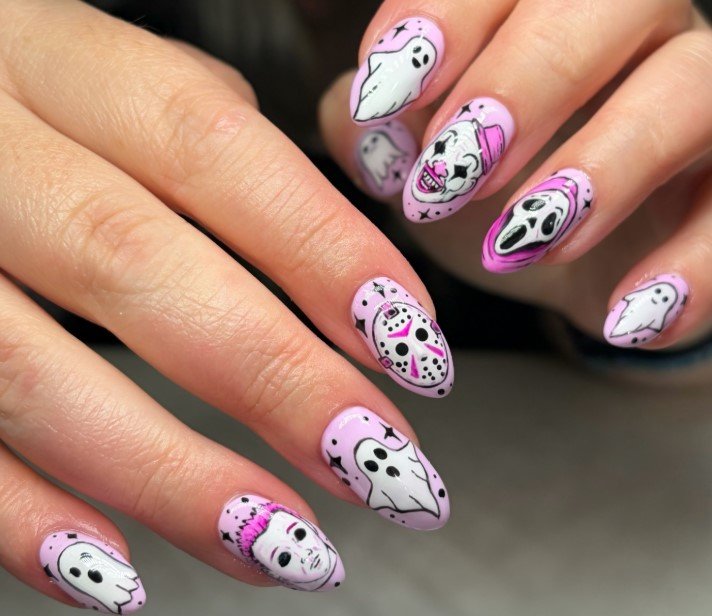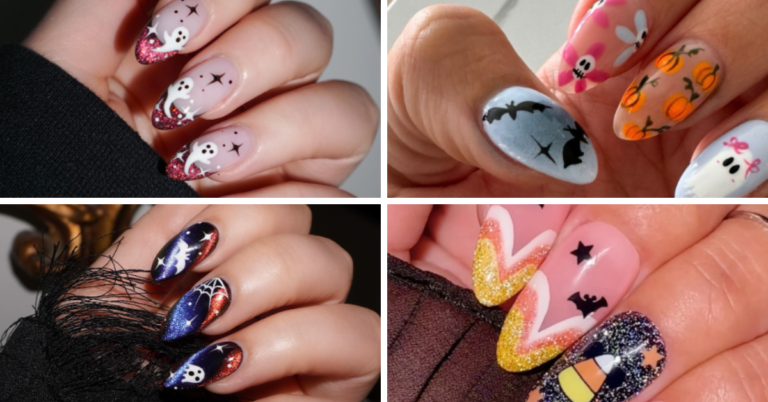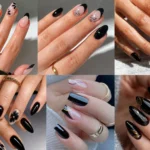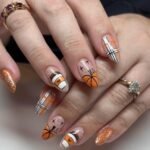


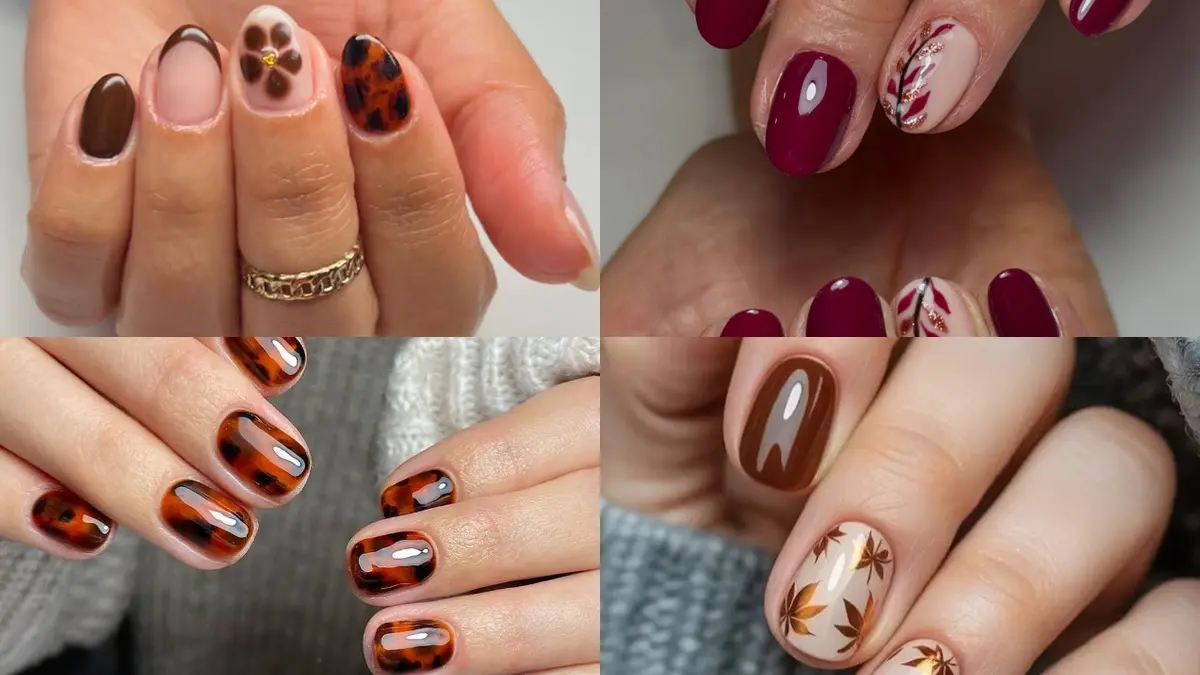
Crisp mornings and rich earthy tones bring a quieter sense of luxury to every manicure, making smaller nail designs feel especially captivating. Thoughtful color placement and delicate artwork often leave a stronger impression than oversized patterns, proving that subtle details can carry remarkable visual depth. Among the season’s most inspiring manicures, Short Fall Gel Nails celebrate cocoa hues, tortoiseshell textures, burgundy accents, floral illustrations, and softly layered neutrals with effortless balance. Every design explores a different artistic mood through texture, contrast, and carefully arranged patterns, showing how a compact nail can become a polished canvas filled with warmth, character, and beautifully considered detail.
1. Forest Tortoise Mix
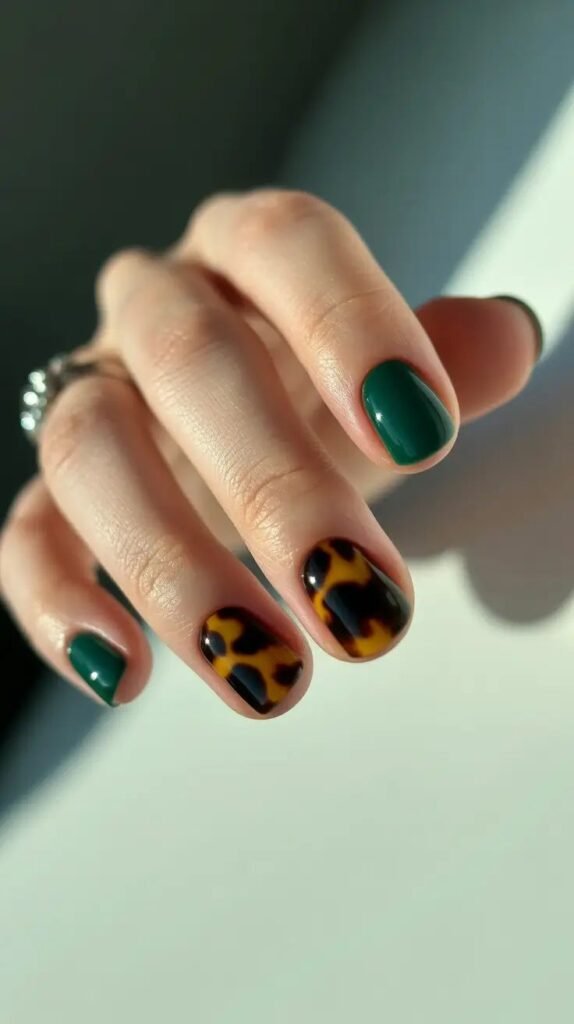
Forest Tortoise Mix layers forest-inspired depth with tortoiseshell patterning for a manicure built around organic visual movement. Curving patches can sit beside one another without forming identical shapes, allowing the pattern to feel naturally irregular across the nails. Richer sections draw attention toward the center while smaller markings keep surrounding areas from becoming visually heavy. Varied tortoise shapes give the composition a layered quality that changes from nail to nail.
2. Golden Cocoa Glow
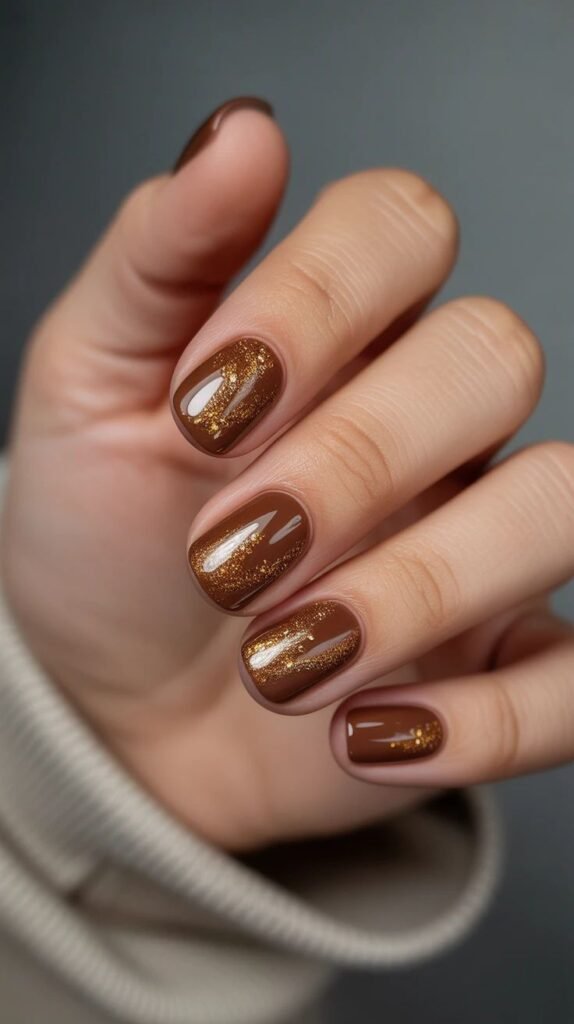
Golden Cocoa Glow pairs golden accents with cocoa tones, placing warmth and contrast within a compact composition. A Golden details can remain concentrated in selected areas, allowing the cocoa color to hold the larger visual field without interruption. Rounded transitions between the two shades soften the boundaries and prevent abrupt blocks from dominating the manicure. Subtle shifts in placement give every nail a slightly different relationship between the two defining tones.
3. Burgundy Gold Chic
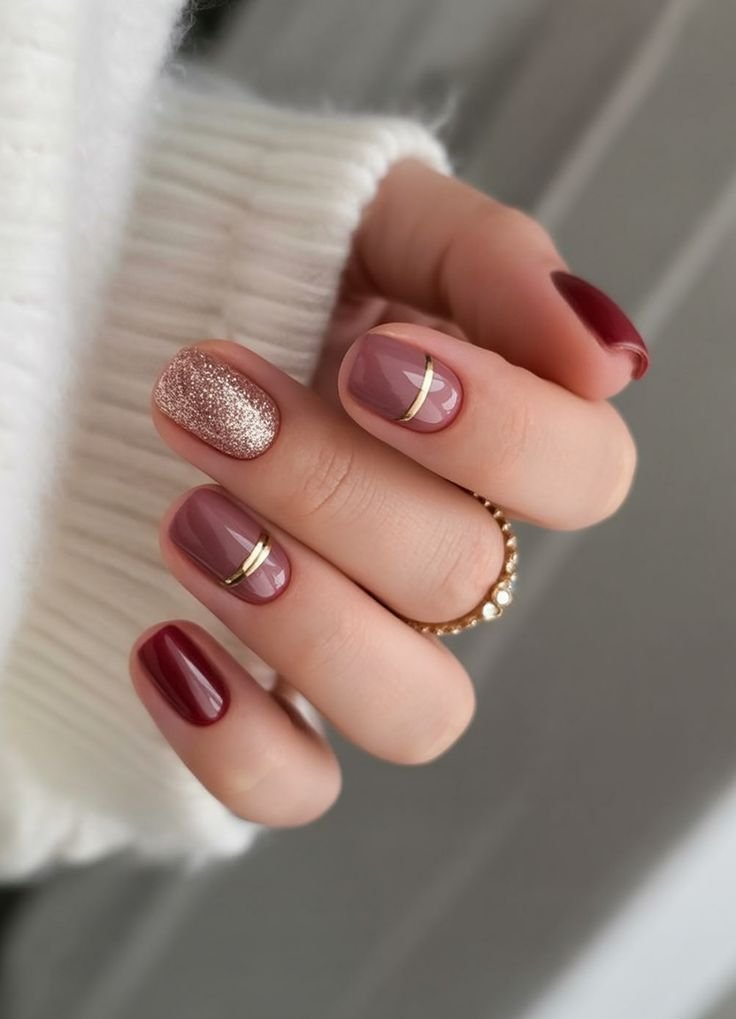
Burgundy Gold Chic centers the manicure on a conversation between burgundy and gold, with each shade occupying a clearly considered portion of the design. A Burgundy can anchor larger areas while gold appears in narrower sections that guide attention across the surface. Strategic spacing keeps the contrast from becoming crowded, especially where both colors meet. Alternating proportions lend the set a varied rhythm while preserving the strong connection between its two principal colors.
4. Muted Autumn Mix
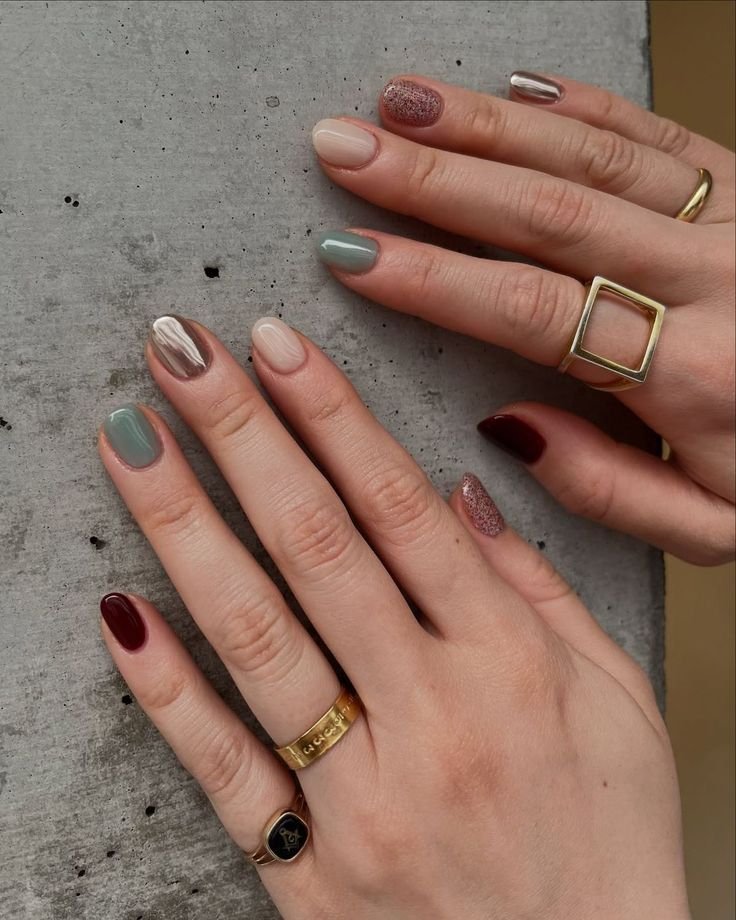
Muted Autumn Mix gathers subdued autumn-inspired tones into a composition that relies on variation rather than a single dominant shade. Different color areas can shift from nail to nail, giving the manicure a patchwork quality without requiring identical arrangements. Softer transitions help neighboring tones sit together without harsh visual breaks. Uneven distribution adds movement, allowing the eye to travel across the manicure and discover small changes in every section.
5. Rustic Floral Charm
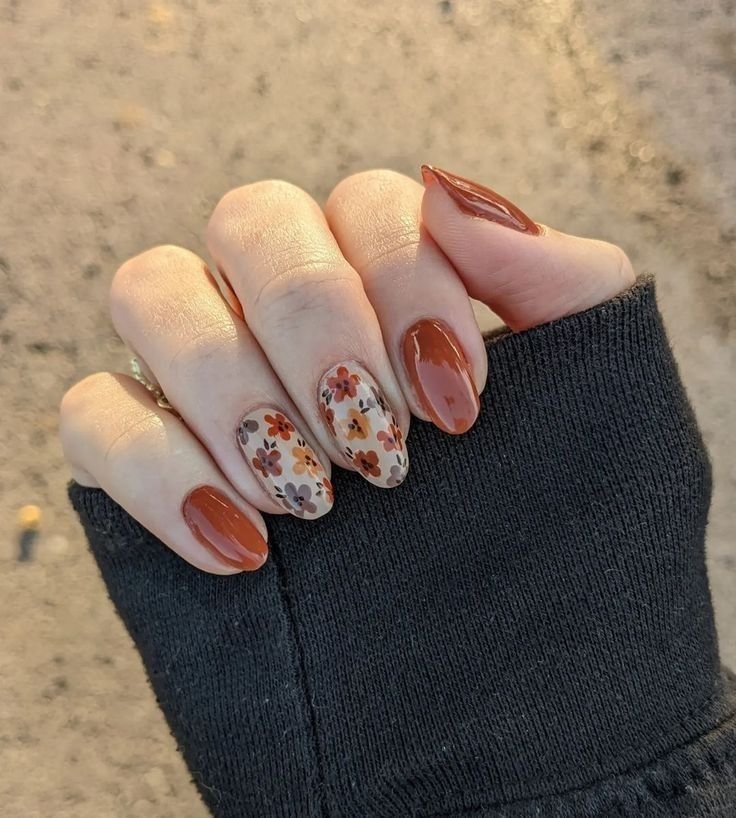
Rustic Floral Charm places floral artwork within a rustic visual framework, allowing botanical details to become the central point of interest. Small petals can gather closely in one area while more open spacing gives another nail a quieter composition. Curved stems and rounded floral forms introduce movement against simpler sections of the manicure. Delicate variations in scale keep the artwork from appearing mechanically repeated across every nail.
6. Olive Patchwork Chic
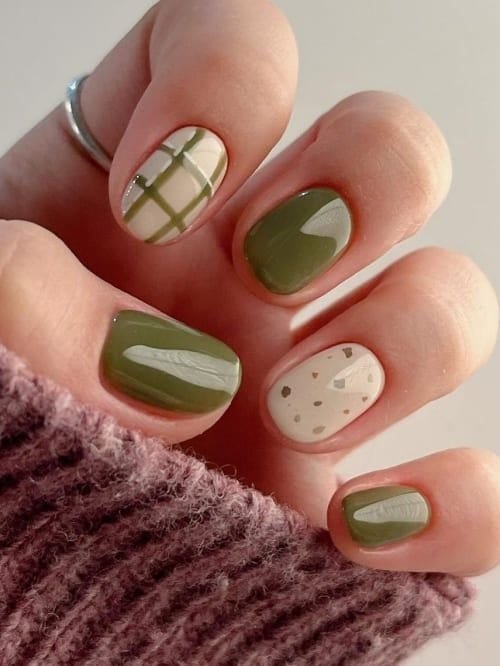
Olive Patchwork Chic arranges olive-toned sections into a patchwork composition with clearly separated areas of color. Geometric divisions can vary in width, giving the surface a handmade quality rather than a rigid grid. Smaller olive sections help break up broader fields while maintaining continuity between neighboring nails. Intentional gaps between patches provide visual breathing room and make the individual pieces easier to distinguish.
7. Burnt Caramel Minimalist
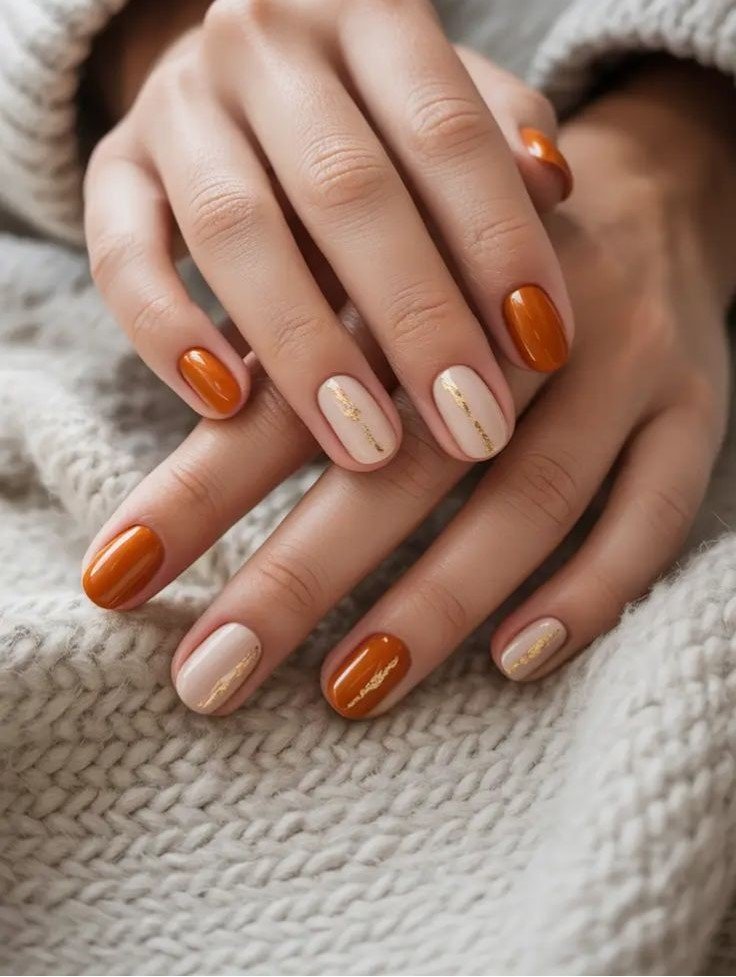
Burnt Caramel Minimalist reduces the design to a restrained arrangement centered on burnt caramel. Narrow placements can leave generous open areas, allowing the color to act as a deliberate accent rather than covering every visible section. Clean boundaries give the manicure a precise quality while keeping the composition visually light. Small shifts in placement prevent the set from becoming overly uniform and add quiet variation from nail to nail.
8. Burgundy Gold Edge
Burgundy Gold Edge focuses attention along the outer edge, using burgundy and gold as the defining elements of the composition. A Burgundy can trace a stronger portion of the border while gold follows in a slimmer line, creating a layered edge rather than a single band. Open space toward the center keeps the perimeter detail clearly visible. Slight differences in line thickness add dimension without introducing unrelated decoration.
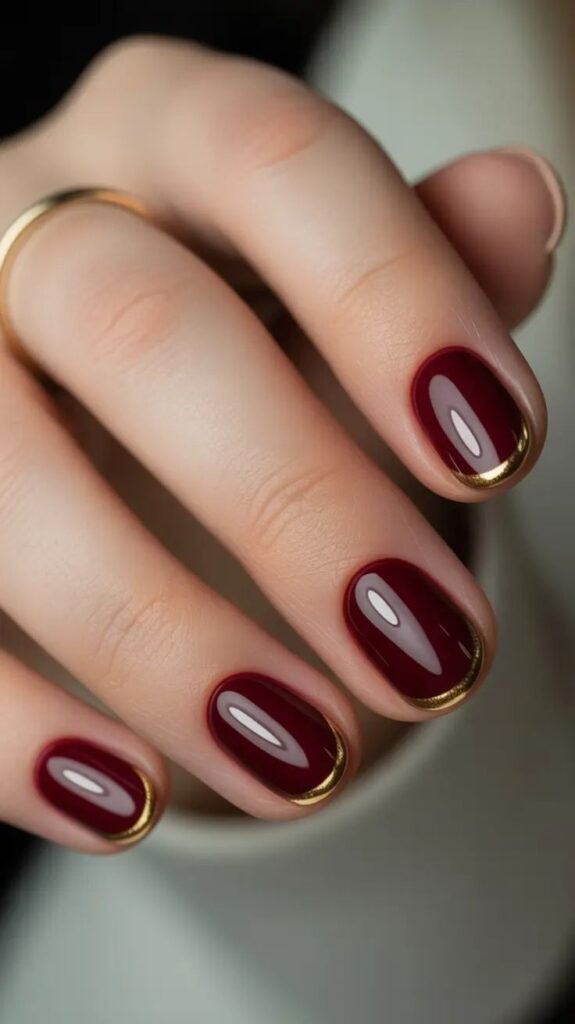
9. Soft Champagne Glow
Soft Champagne Glow centers on a gentle champagne presence that spreads across the manicure with a light, understated character. Gradual shifts within the champagne tone can give the surface more depth than a completely flat block of color. Concentrating the strongest glow toward selected areas introduces subtle movement without breaking the overall simplicity. Quiet transitions between lighter and deeper portions keep the design cohesive from one nail to the next.
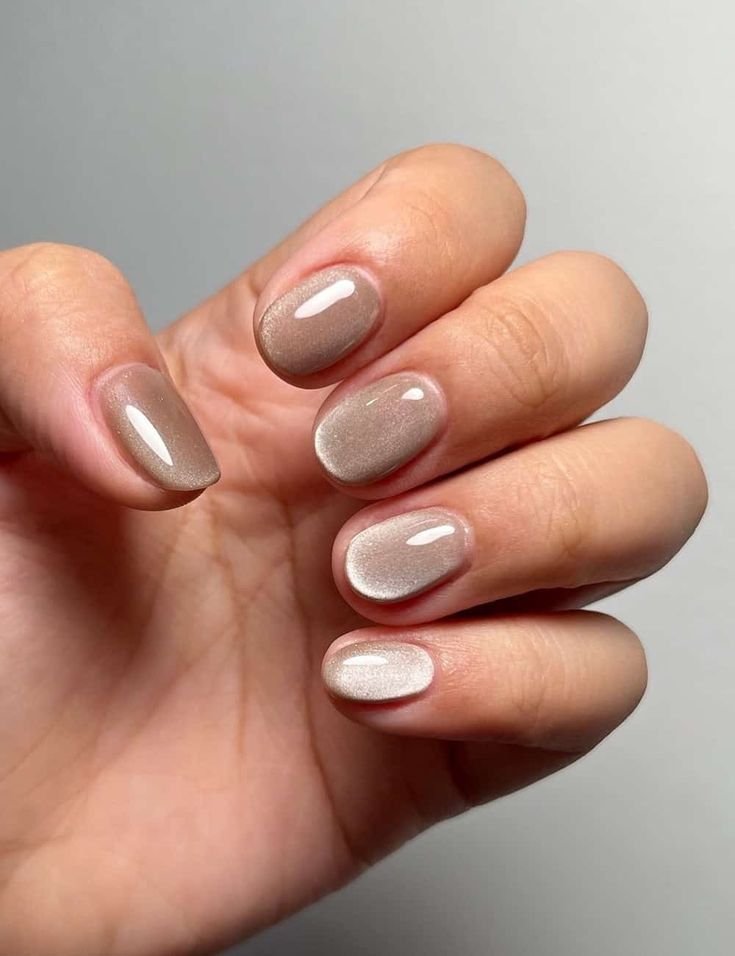
10. Deep Cocoa Aura
Deep Cocoa Aura uses cocoa as the visual anchor, with darker concentration gathered toward selected portions of each nail. A soft aura effect can move outward from the deeper center, producing gradual transitions instead of sharply divided sections. Gentle tonal variation gives the manicure depth while preserving the uninterrupted character of the cocoa palette. Controlled placement keeps the strongest areas visually centered without making every nail identical.
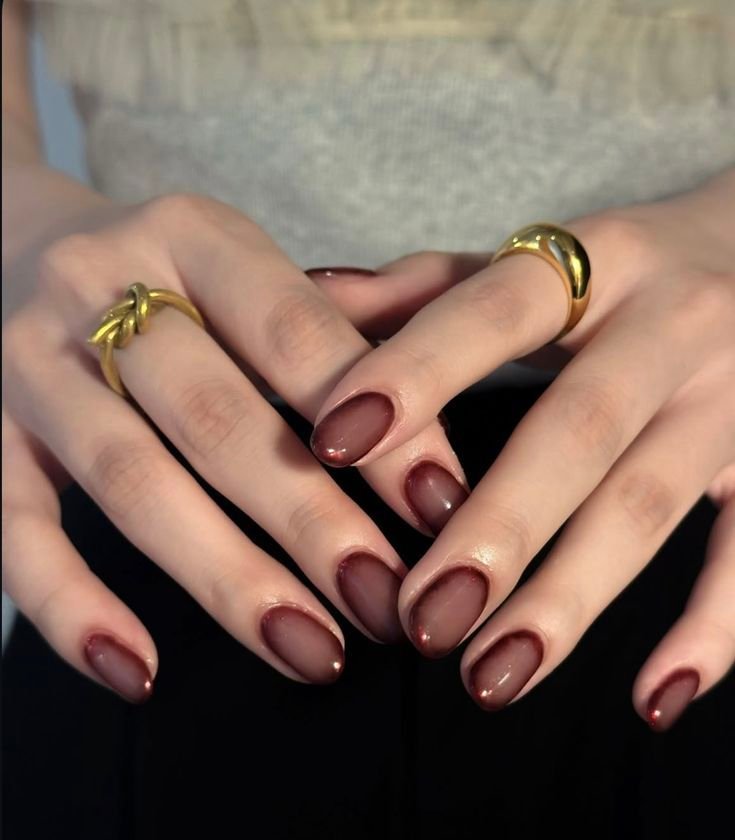
11. Berry Ombre Tips
Berry Ombre Tips shift berry color gradually toward the tips, allowing the intensity to build rather than stop at a hard boundary. Lighter sections can transition smoothly into richer berry tones as the color travels outward. Continuous blending keeps the tips connected to the surrounding surface and avoids an abrupt division between areas. Slight differences in the gradient across individual nails add natural variation while preserving the shared direction of the design.
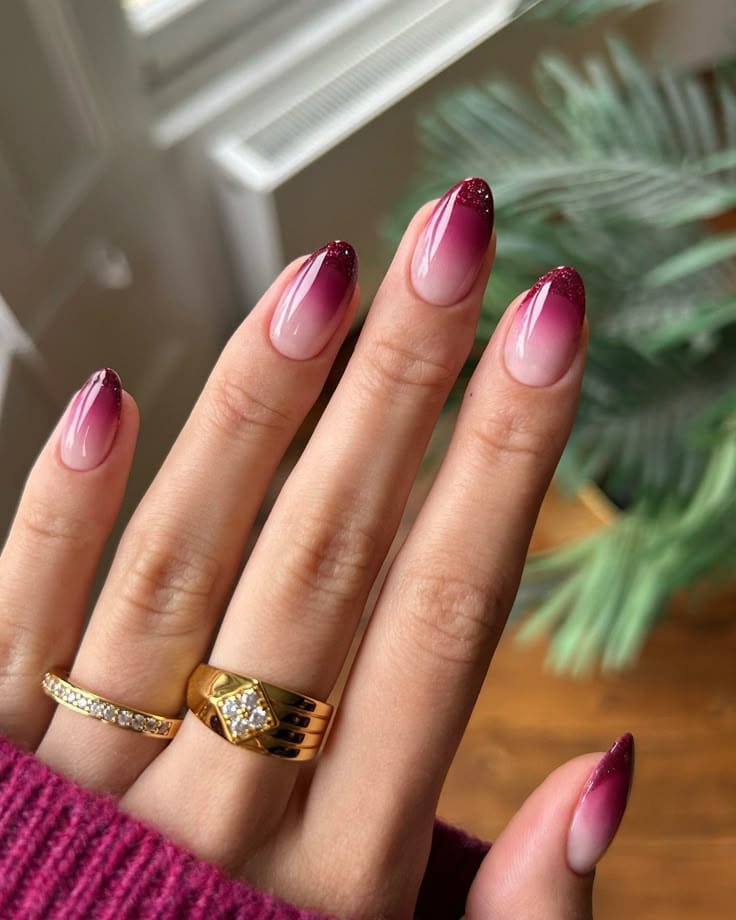
12. Burgundy Accent Bloom
Burgundy Accent Bloom places a burgundy floral bloom as a concentrated decorative moment within the manicure. Rounded petals can overlap gently around a central point, giving the flower a sense of depth through layered shapes. Surrounding space keeps the bloom visually isolated instead of allowing nearby details to compete with its form. Uneven petal placement introduces an organic quality, making the accent feel drawn rather than mechanically assembled.
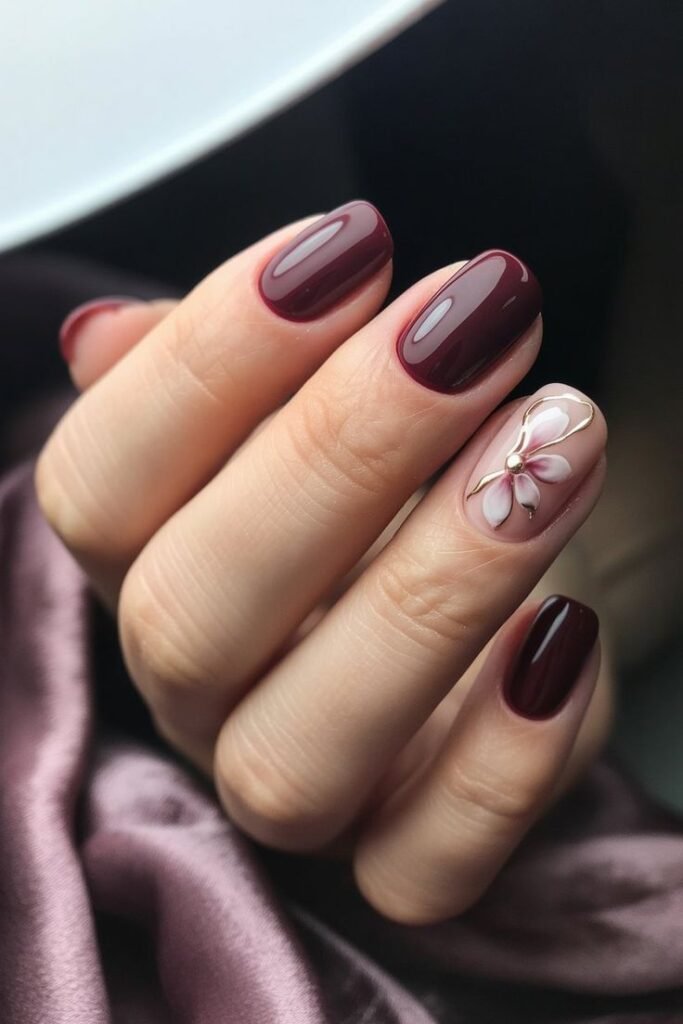
13. Minimal Wine Details
Minimal Wine Details use wine-toned accents sparingly, allowing small marks to carry the visual character of the manicure. Fine lines or compact shapes can appear in separated positions so each detail remains clearly readable. Generous negative space surrounds the wine elements and prevents the composition from becoming dense. Tiny differences in direction and placement provide enough variation to keep the minimalist arrangement from feeling repetitive.
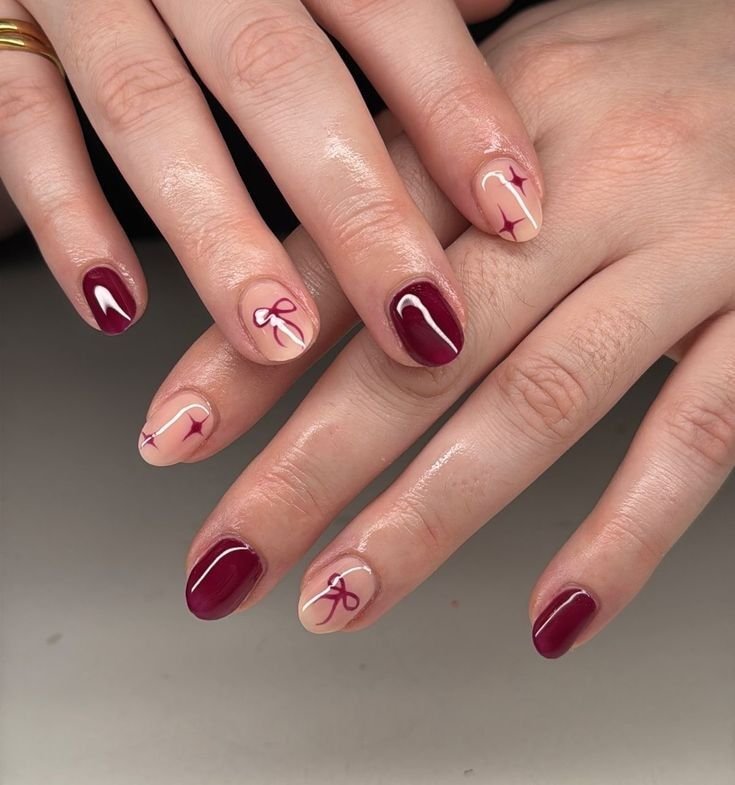
14. Cozy Cocoa Mix
Cozy Cocoa Mix gathers cocoa variations into a manicure where depth comes from changing tonal placement rather than additional decoration. Darker cocoa sections can sit beside softer cocoa areas, creating gentle contrast across individual nails. Layered color relationships give the manicure dimension while keeping its visual language focused on one family of tones. Unequal distribution makes the set feel collected and varied instead of divided into identical blocks.
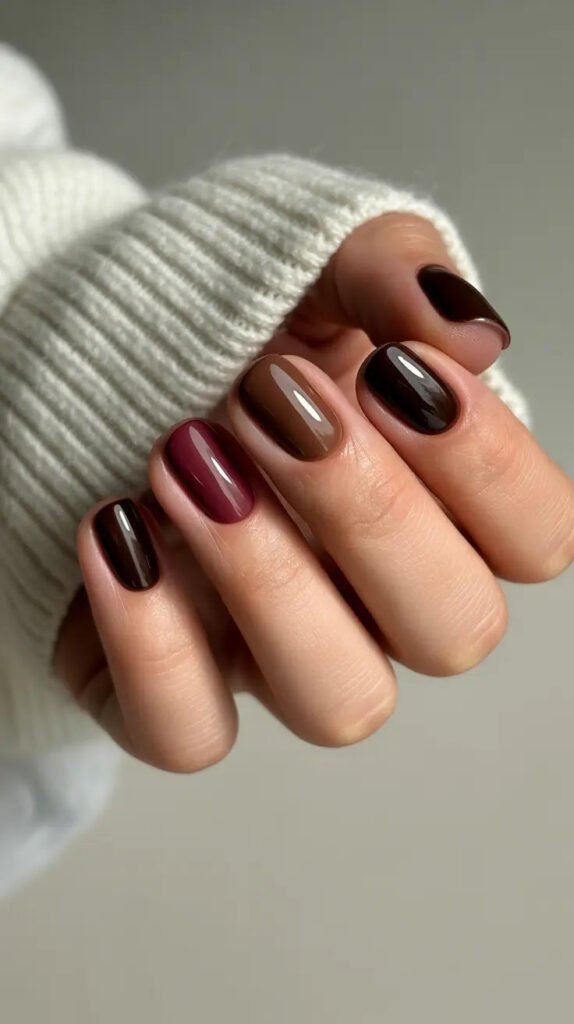
15. Tortoiseshell Chic
Tortoiseshell Chic relies on irregular tortoiseshell markings arranged in overlapping patches that shift naturally across the manicure. Rounded fragments can vary in size, producing a pattern with no single repeated arrangement. Darker markings help define the boundaries between neighboring sections while lighter spaces preserve clarity within the pattern. Organic shapes and uneven spacing keep the surface visually active without requiring additional motifs.
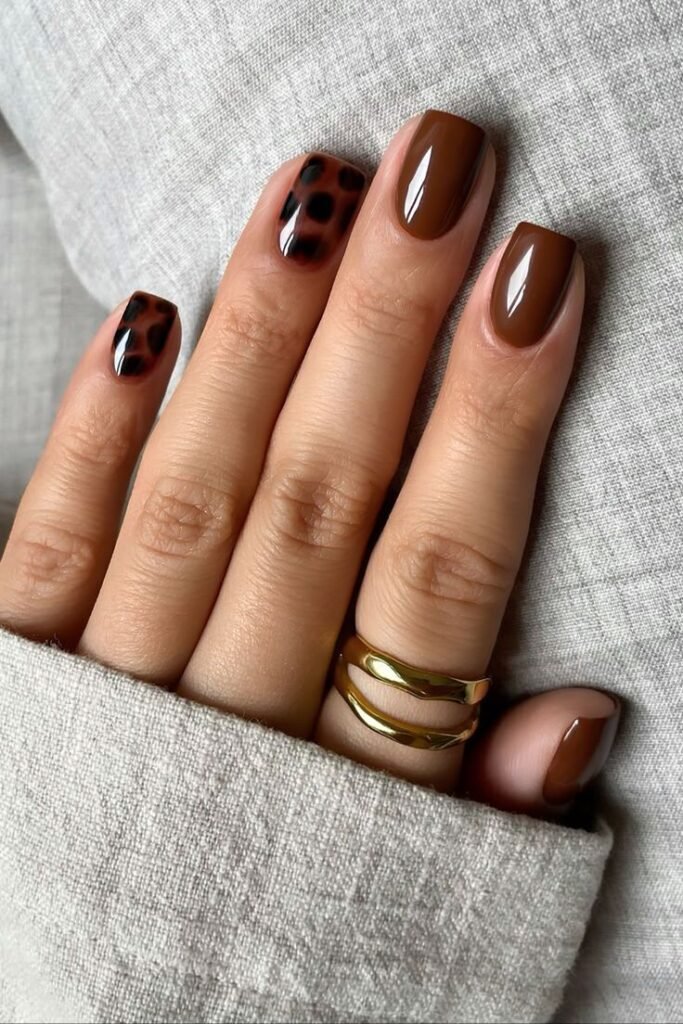
16. Pumpkin Floral Touch
Pumpkin Floral Touch connects pumpkin tones with floral artwork, giving the manicure a clear relationship between color and botanical detail. Petals can emerge from small clusters, allowing the pumpkin shade to appear within or around the floral forms. Varying petal sizes keeps the artwork from occupying identical proportions on every nail. Open areas between blossoms preserve the compact composition and let individual floral shapes remain easy to distinguish.
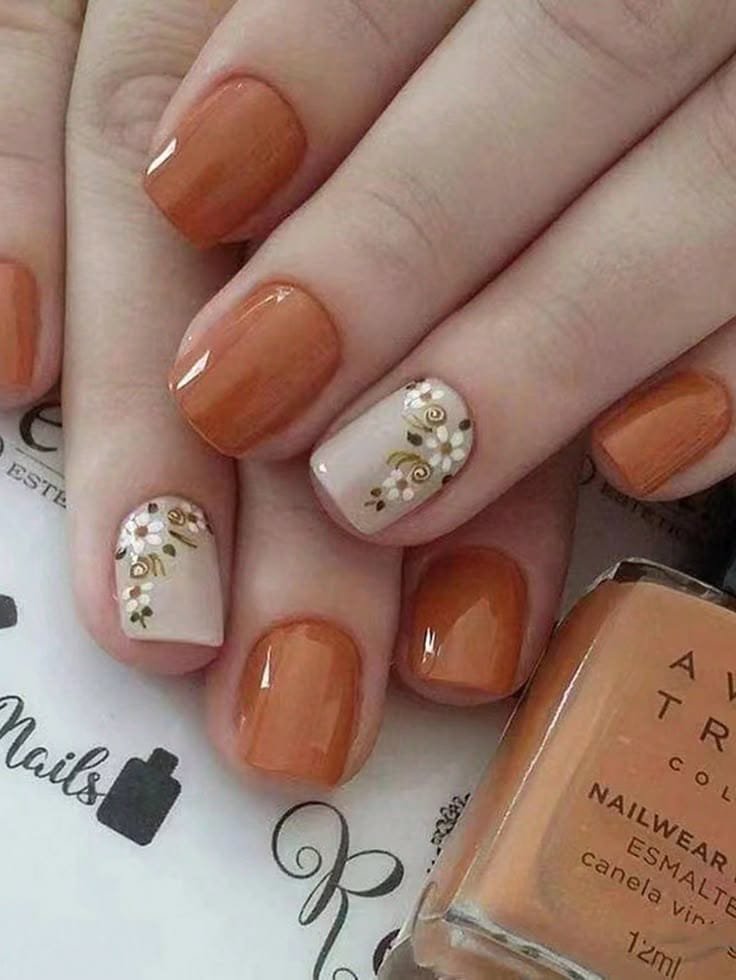
17. Midnight Starfall
Midnight Starfall places star-like details across a midnight-toned composition, using scattered points to suggest movement across the surface. Larger stars can anchor selected areas while smaller marks taper away from them, producing an uneven distribution of visual weight. Spacing between individual elements keeps the pattern from becoming crowded. Different star placements create a gentle sense of direction, making the manicure feel more like a field of separated details than a repeated pattern.
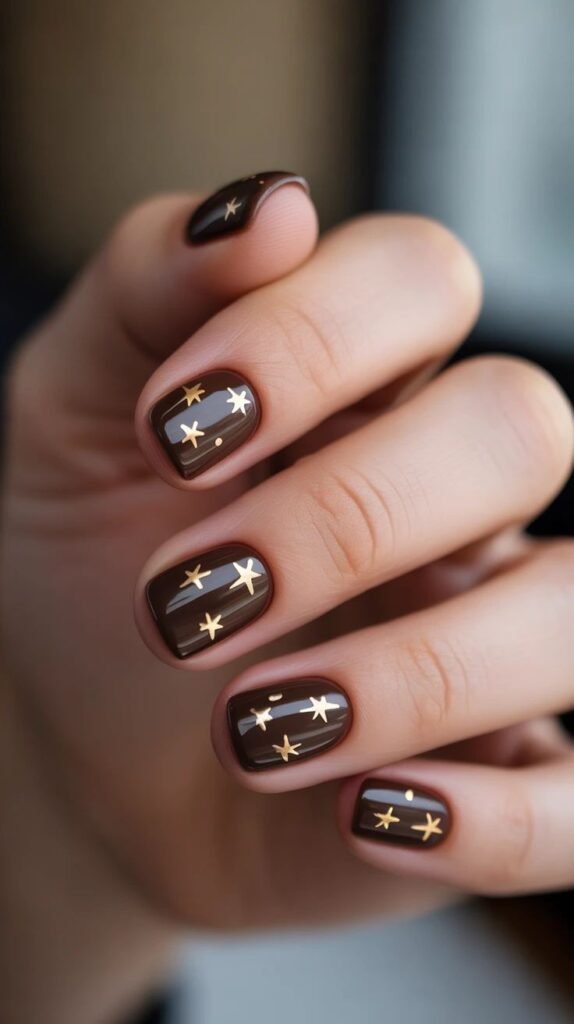
18. Molten Cocoa Swirl
Molten Cocoa Swirl turns cocoa tones into flowing curved paths that travel across the nail surface. Swirling lines can widen and narrow as they move, giving the pattern a sense of motion without relying on sharp geometric divisions. Overlapping curves introduce depth where one path crosses another, while quieter areas allow the strongest movement to remain visible. Irregular wave patterns keep the composition fluid and prevent every nail from following the same route.
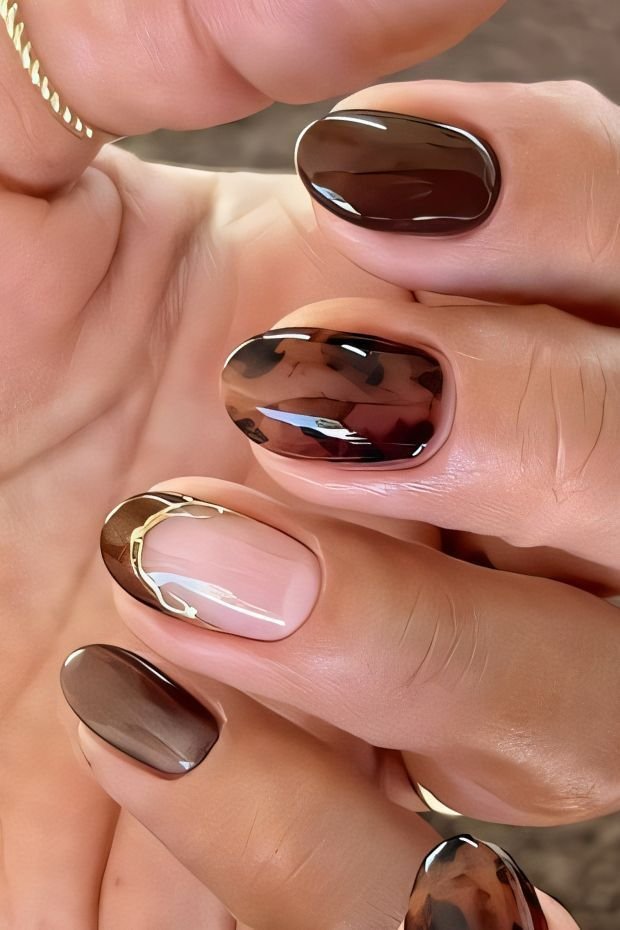
19. Nude Cocoa Geometry
Nude Cocoa Geometry divides nude and cocoa tones into clean geometric sections with deliberate boundaries. Straight edges can meet at varied angles, creating visual structure while keeping the palette tightly focused. Smaller cocoa shapes interrupt larger nude areas, giving the composition a measured distribution of color. Precise spacing between sections allows each geometric form to remain distinct rather than merging into a single block.
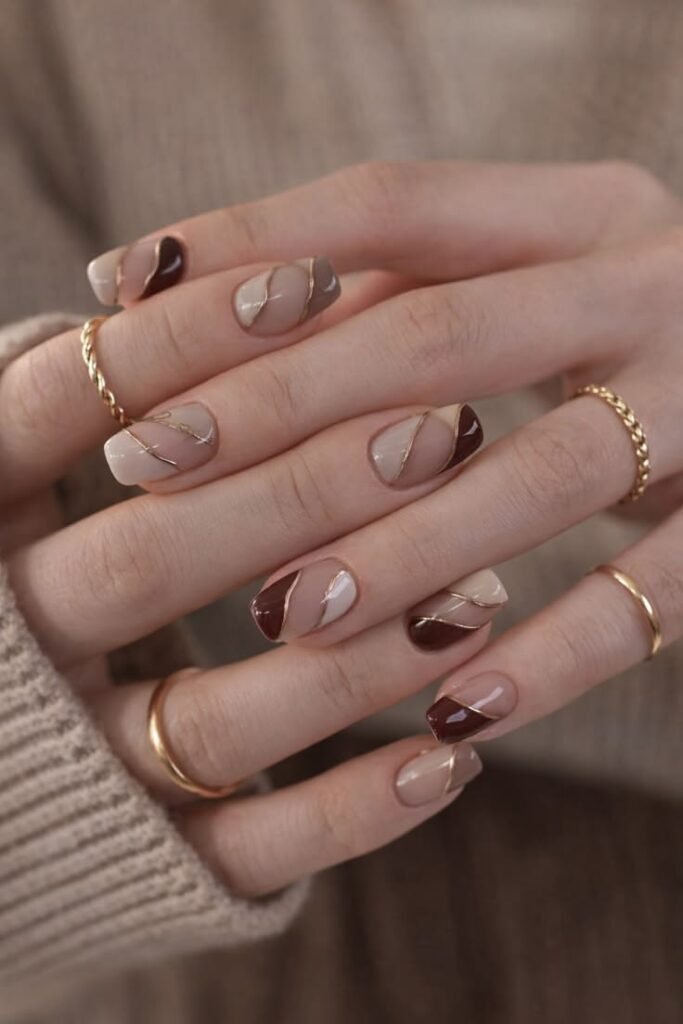
20. Moody Blue Bloom
Moody Blue Bloom combines moody blue coloring with floral forms, allowing the artwork to carry the main visual interest. Blue petals can overlap around selected centers, giving the blooms dimension through changes in shape and placement. More open sections provide contrast against clustered floral areas and keep the pattern legible. Varied bloom sizes prevent the botanical details from appearing copied from nail to nail.
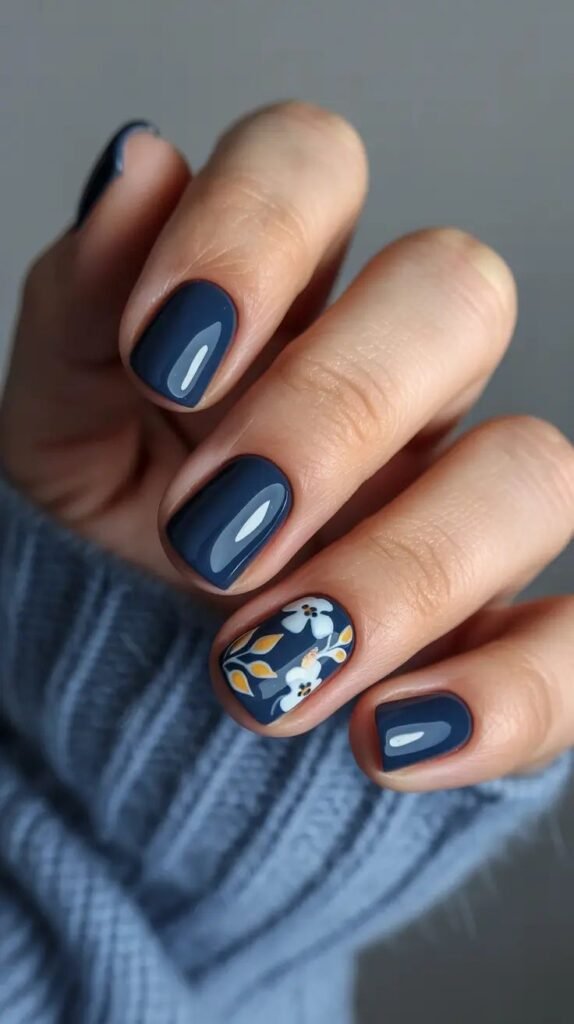
21. Smoky Mocha Ombre
Smoky Mocha Ombre develops a mocha gradient through gradual tonal movement rather than abrupt color changes. Deeper mocha areas can gather toward one portion of each nail before fading softly into lighter sections. Smooth transitions make the shift appear continuous, while slight differences in gradient direction add individuality across the manicure. Concentrated color gives the composition visual depth without requiring additional patterns or decorative elements.
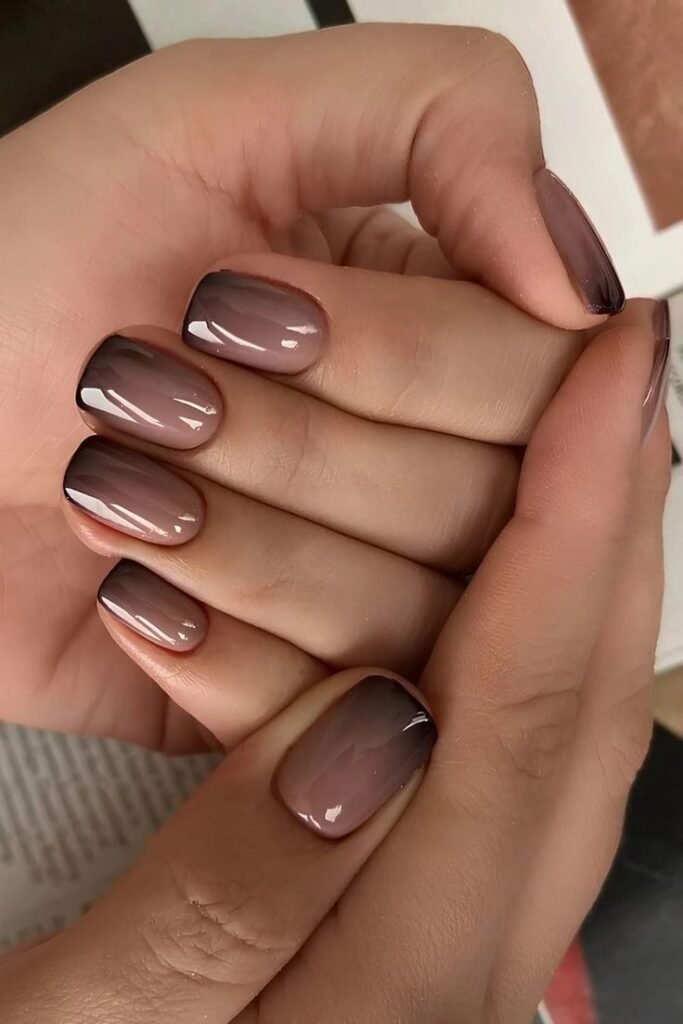
22. Neutral Latte Mix
Neutral Latte Mix arranges latte-inspired neutrals in a varied combination of softly related tones. Individual nails can emphasize different neutral areas, allowing one shade to dominate in one place while becoming a smaller accent elsewhere. Close tonal relationships keep the palette connected even when the placement changes. Alternating proportions introduce movement and prevent the manicure from reading as a sequence of identical neutral blocks.
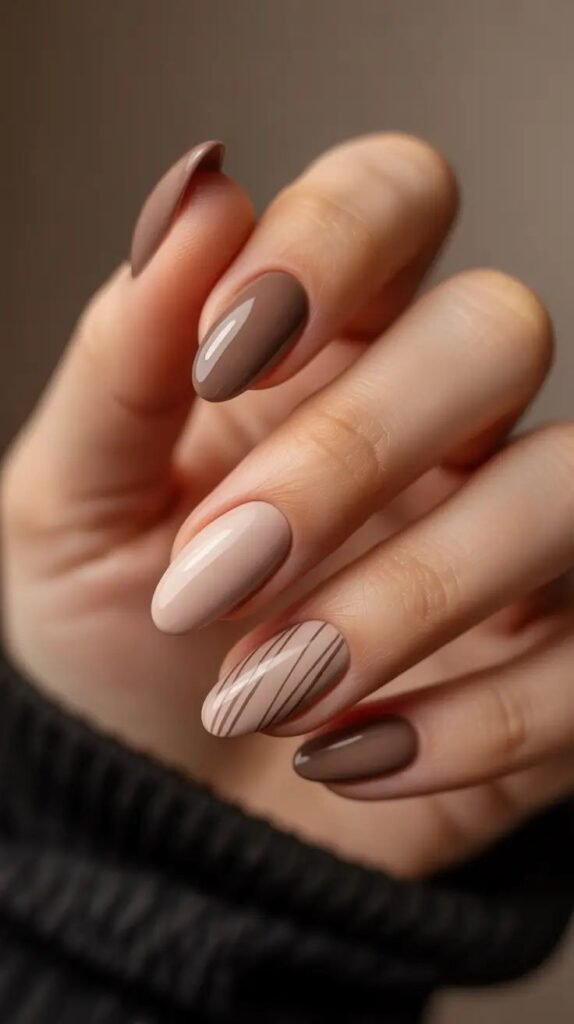
23. Golden Leaf Nude
Golden Leaf Nude places leaf artwork against nude space, allowing the botanical shapes to remain clearly separated from their background. Slender leaf forms can angle in different directions, giving the composition a sense of natural movement without adding unrelated motifs. Golden details draw attention through their distinct placement against the quieter nude field. Carefully spaced leaves preserve negative space and keep each individual outline easy to follow.
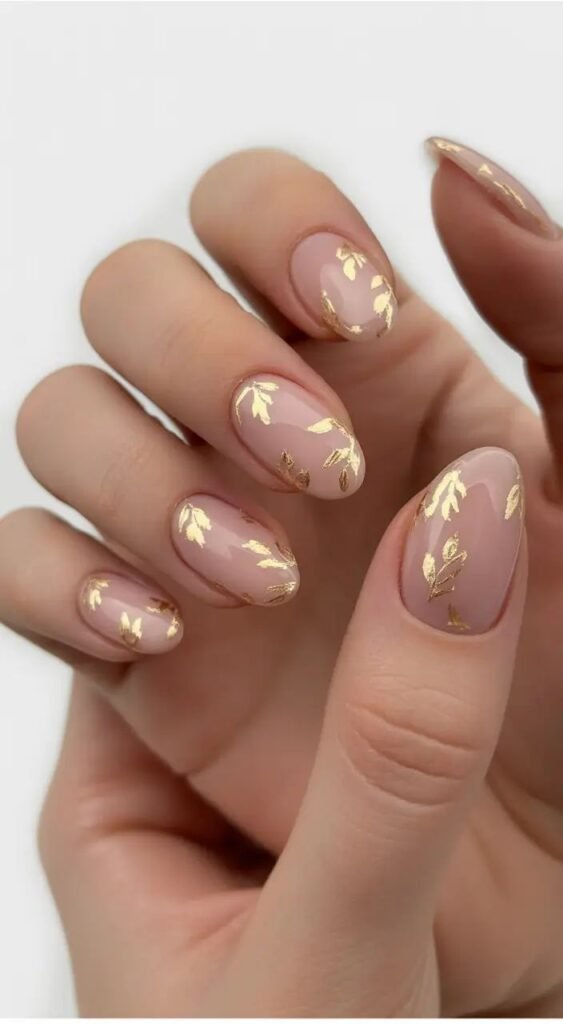
24. Mocha Wave Accent
Mocha Wave Accent uses a curved mocha wave as the defining decorative element, giving selected nails a flowing line of movement. Wider sections of the wave can taper into narrower ends, producing a gradual change in visual weight along its path. Surrounding negative space emphasizes the curve and prevents nearby areas from competing with it. Slight changes in wave direction keep the accent varied while preserving its central motif.
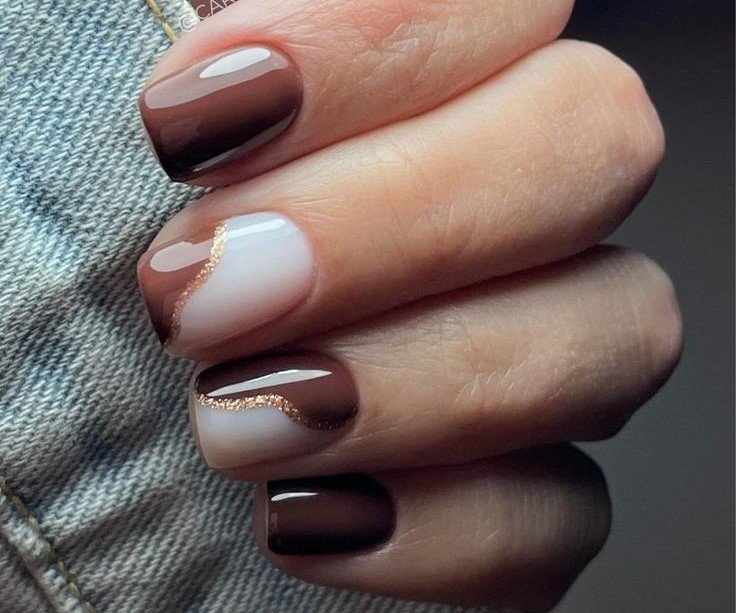
25. Minimal Autumn Sprigs
Minimal Autumn Sprigs reduce autumn-inspired botanical forms to slender, widely spaced accents. Small sprigs can occupy isolated areas, leaving substantial open space around each branch and its individual marks. Fine lines allow the botanical structure to remain delicate without introducing dense clusters. Varied branch direction gives the manicure subtle movement, while restrained placement keeps the composition focused on the smallest details.
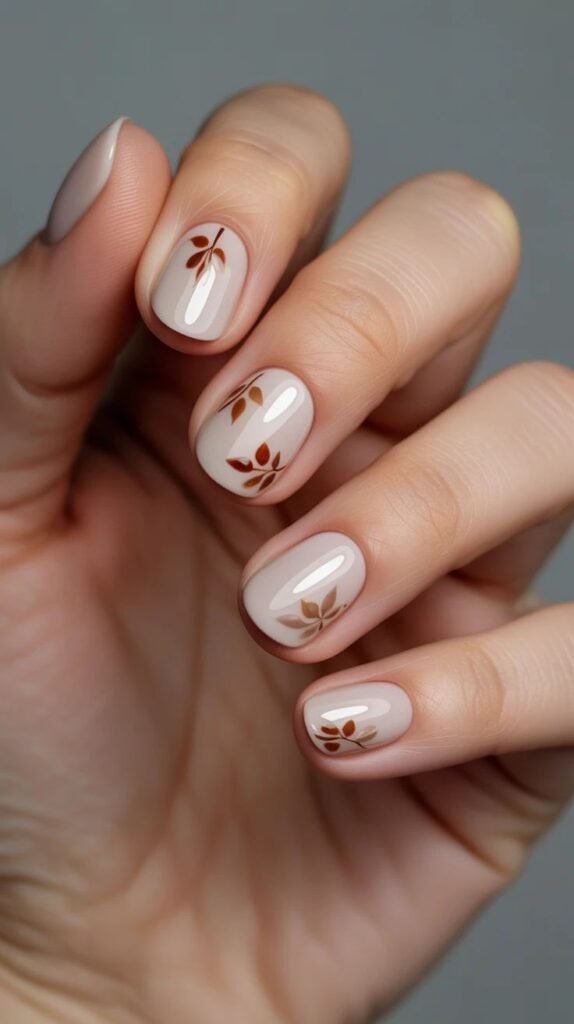
26. Burgundy Leopard Mix
Burgundy Leopard Mix interprets leopard patterning through burgundy markings arranged in irregular clusters across the manicure. Uneven outlines keep the spots from forming a predictable grid, while differences in scale add visual variety. Larger markings can anchor one section before smaller shapes guide the pattern toward a quieter area. Spacing between clusters prevents the leopard motif from becoming visually compressed on the smaller surface.
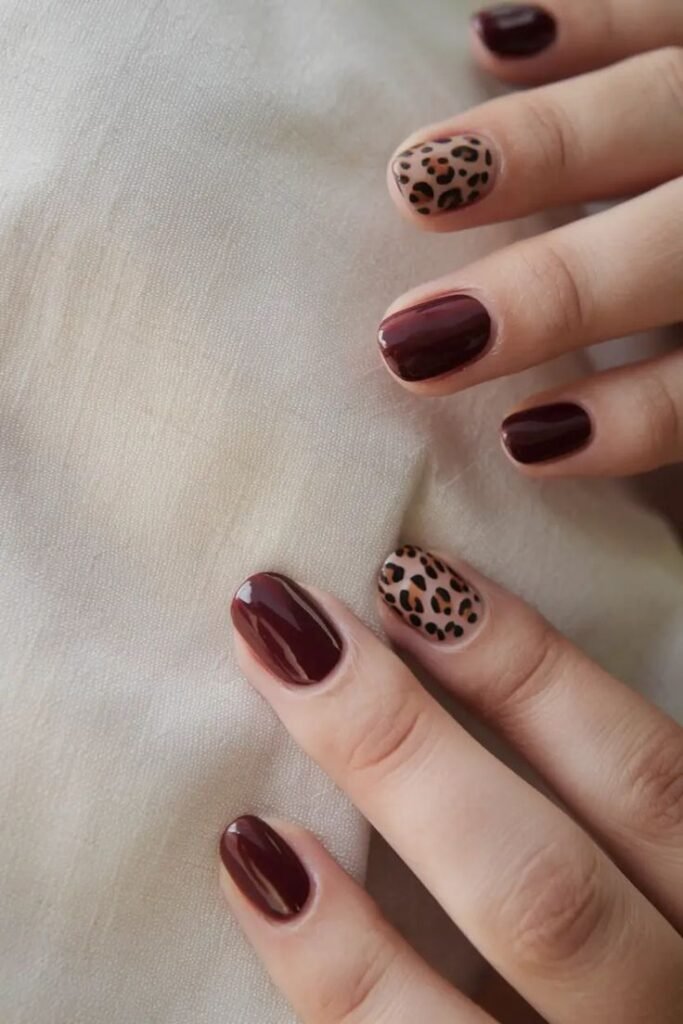
27. Cocoa Daisy Mix
Cocoa Daisy Mix combines cocoa tones with daisy forms, creating a composition where rounded petals contrast with deeper color areas. Individual daisies can vary in size, allowing some blooms to appear as small accents while others occupy more visual space. Petal arrangements introduce gentle repetition without requiring identical placement on every nail. Open gaps between flowers preserve clarity and allow the cocoa elements to remain part of the overall composition.
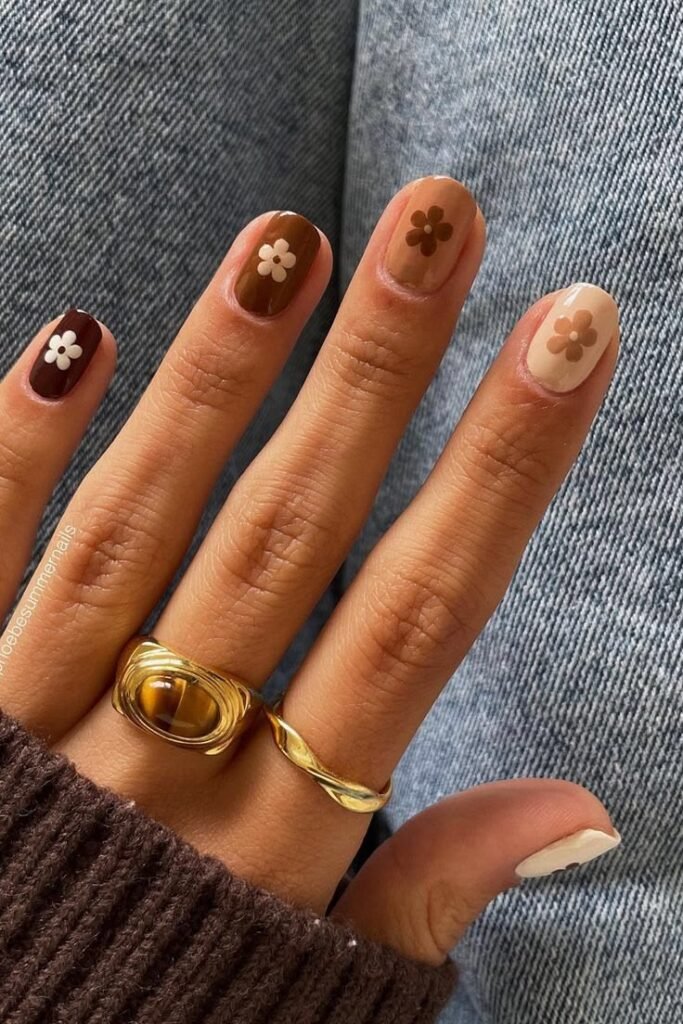
28. Glossy Mocha Minimal
Glossy Mocha Minimal centers the design on mocha with a glossy surface that keeps the composition visually uncluttered. Broad areas of mocha allow the reflective quality of the surface to remain uninterrupted rather than competing with artwork. Sparse detailing, when present within the concept, can stay widely separated to preserve the minimalist structure. Light moving across the smooth surface adds changing dimension without altering the restrained arrangement.
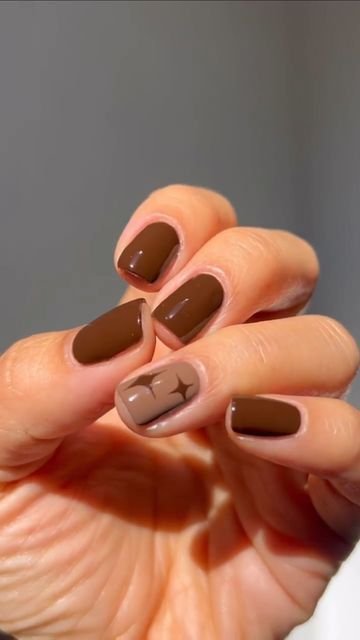
29. Cozy Latte Leaves
Cozy Latte Leaves pairs latte tones with leaf details arranged in a soft botanical composition. Individual leaves can sit at different angles, creating gentle directional movement rather than a repeated vertical pattern. Smaller foliage marks can accompany larger leaves, giving the artwork variation in scale and density. Open portions of the latte-colored surface help separate neighboring botanical elements and keep their outlines visually distinct.
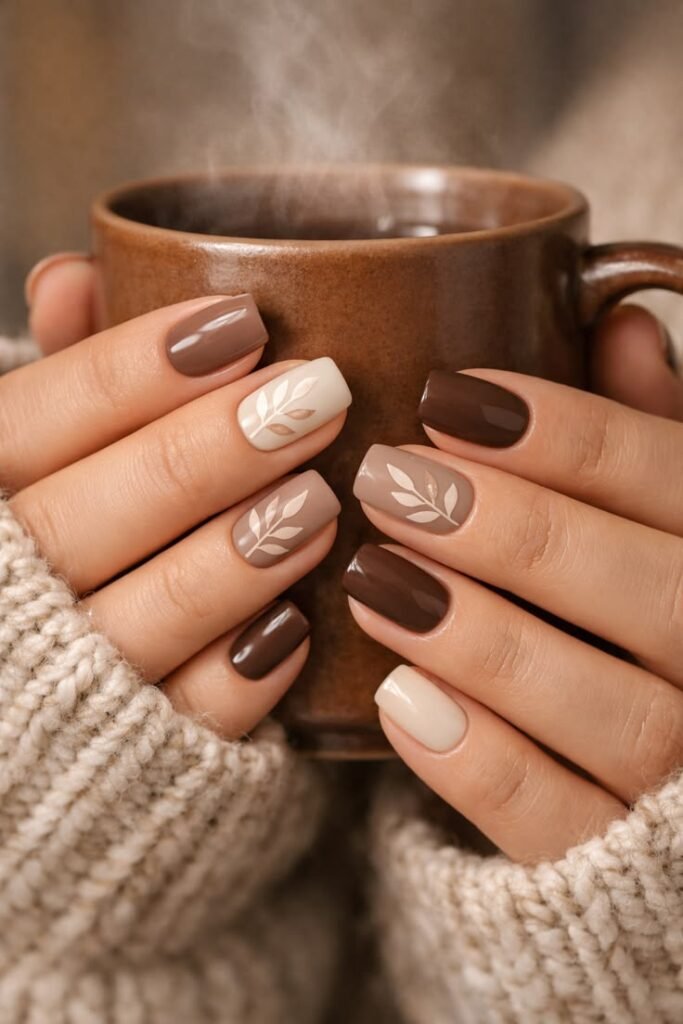
30. Mocha Gold Accent
Mocha Gold Accent places gold details against mocha coloring, using contrast to define a focused accent within the manicure. Gold can remain concentrated in a selected area while mocha carries the surrounding visual weight. Narrow gold elements create a sharper point of attention without overwhelming the broader composition. Careful spacing between the two tones lets each remain recognizable, giving the final arrangement depth through proportion rather than added ornament.
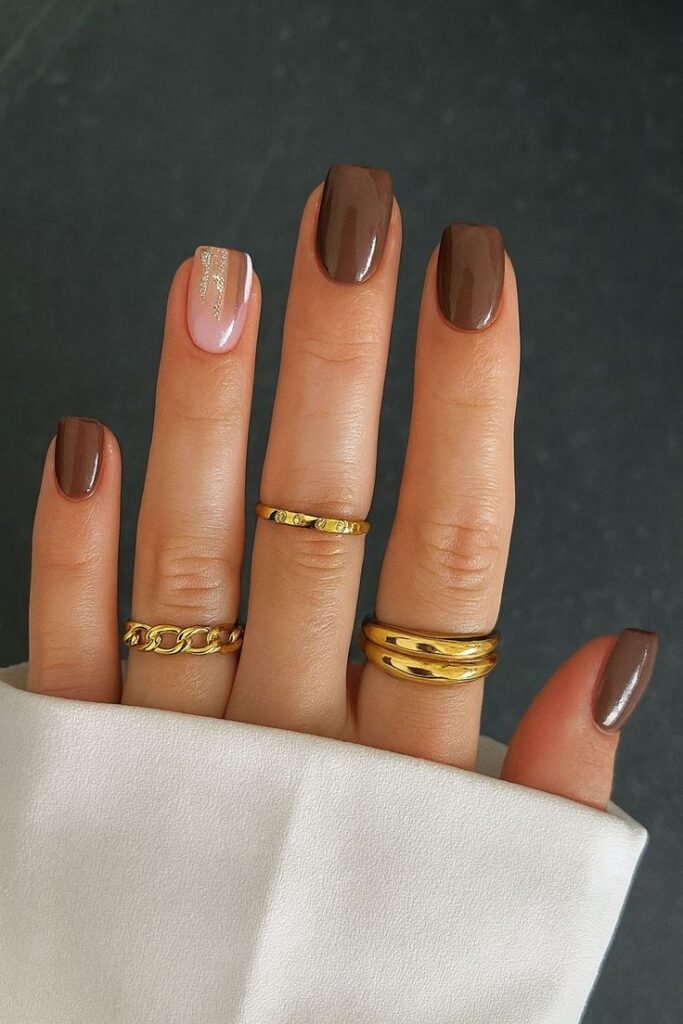
Conclusion
Character comes through in the smallest details when a manicure has enough restraint to let every element remain distinct. Short Fall Gel Nails can turn limited space into a considered canvas, with patterns, florals, cocoa tones, and concentrated accents arranged without visual clutter. Short gel nail designs gain definition from thoughtful spacing, clear edges, and deliberate shifts in color or artwork. Compact fall nails feel most personal when the composition reflects individual taste rather than filling every surface simply for decoration.