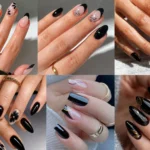


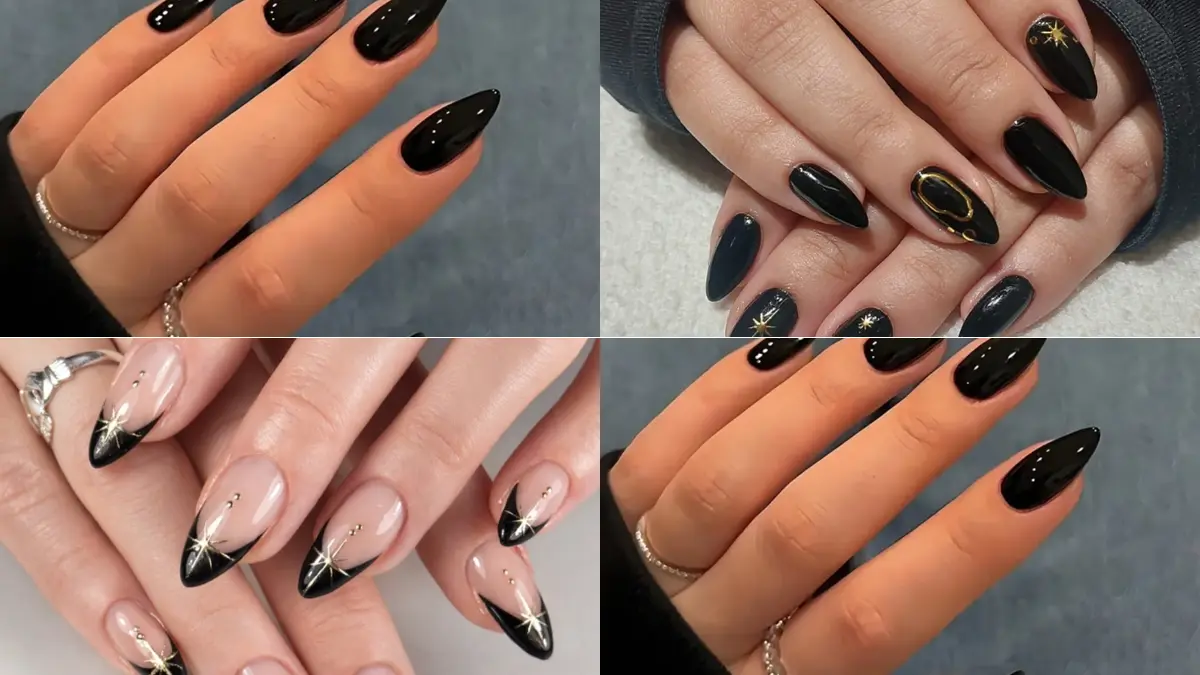
Black can make even the smallest nail detail feel more deliberate. Black nails design ideas move far beyond a single solid color, opening space for reflective surfaces, textured artwork, graphic patterns, dimensional accents, and carefully placed negative space. From fluid marble effects to tiny metallic stars and raised bows, each design approaches darkness from a different visual angle. Some rely on movement, while others use symmetry, contrast, or layered details to build interest across the nails. The result is a varied mix of manicures that lets individual artwork, texture, and placement shape the mood.
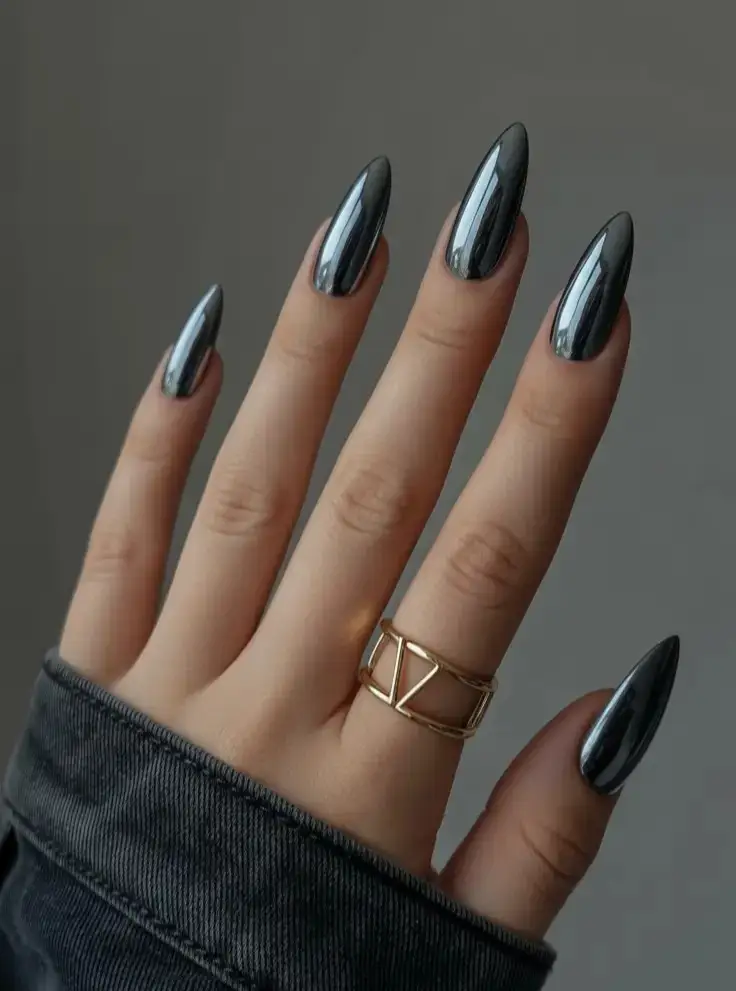
1. Chrome Almond Nails
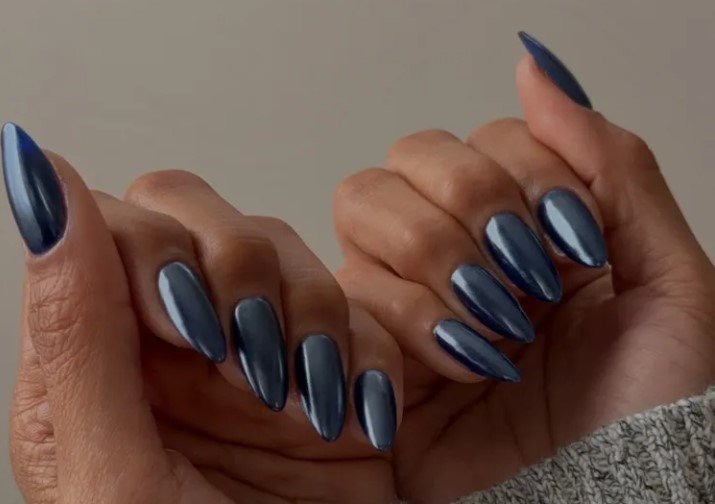
Chrome Almond Nails pair a tapered almond shape with a reflective surface that shifts as light moves across each nail. Curved edges keep the silhouette soft, while the mirrored layer draws attention to the smooth contours. Light travels continuously over the surface, giving different areas a changing sense of depth. Together, the shape and reflection produce a sleek visual flow from the base toward the tip.
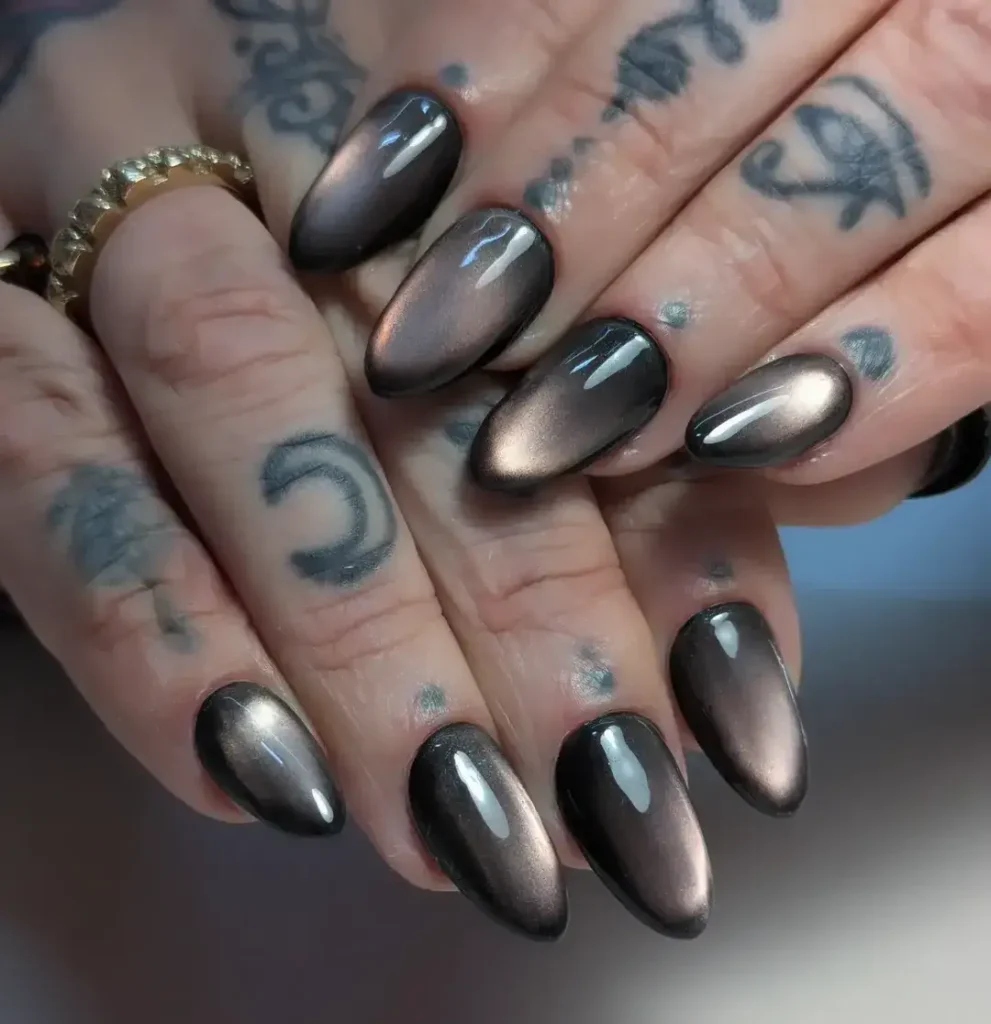
2. Velvet Cat-Eye Nails
Velvet Cat-Eye Nails center on a luminous band that appears to move beneath the surface. Magnetic placement gives the light a concentrated direction, leaving surrounding areas visually deeper by comparison. Depending on how each nail catches the light, the reflective line can seem to shift across the design. That changing effect gives the manicure a soft, layered quality without relying on additional artwork.
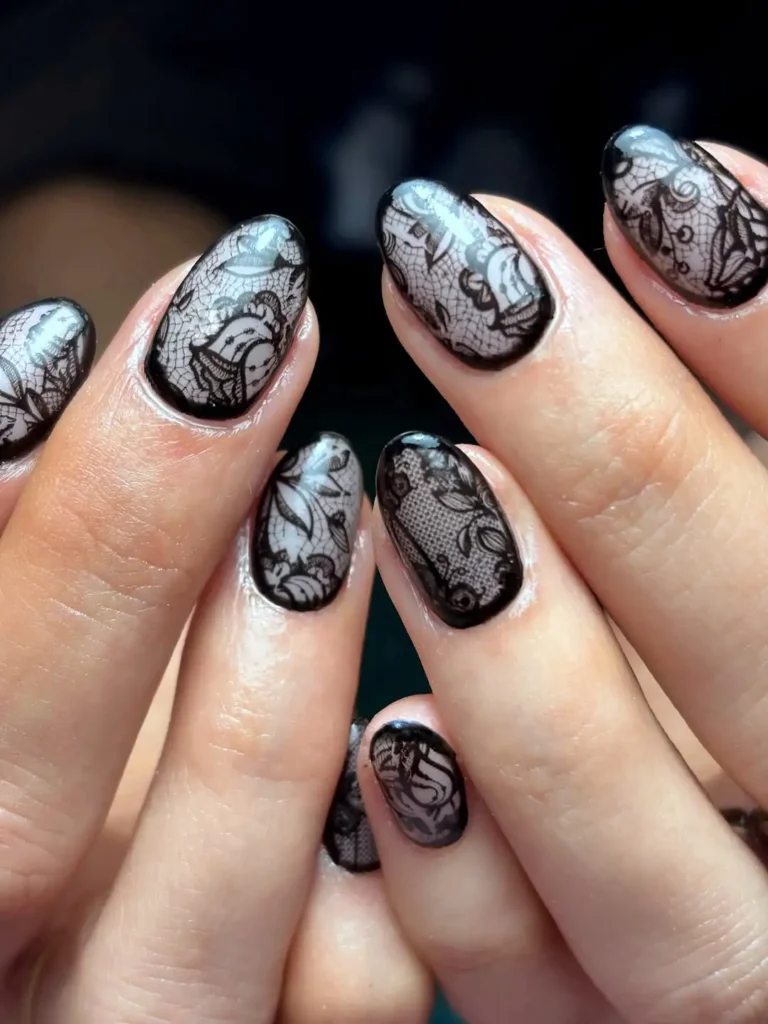
3. Lace Accent Nails
Lace Accent Nails use fine, ornamental patterns to introduce delicate detail across selected areas. Intricate lines can resemble woven threads, floral loops, or openwork sections, allowing small spaces between the artwork to remain visible. Placement becomes part of the composition, especially when detailed sections contrast with less decorated nails. Fine edges keep the pattern readable while preserving the airy character associated with lace.
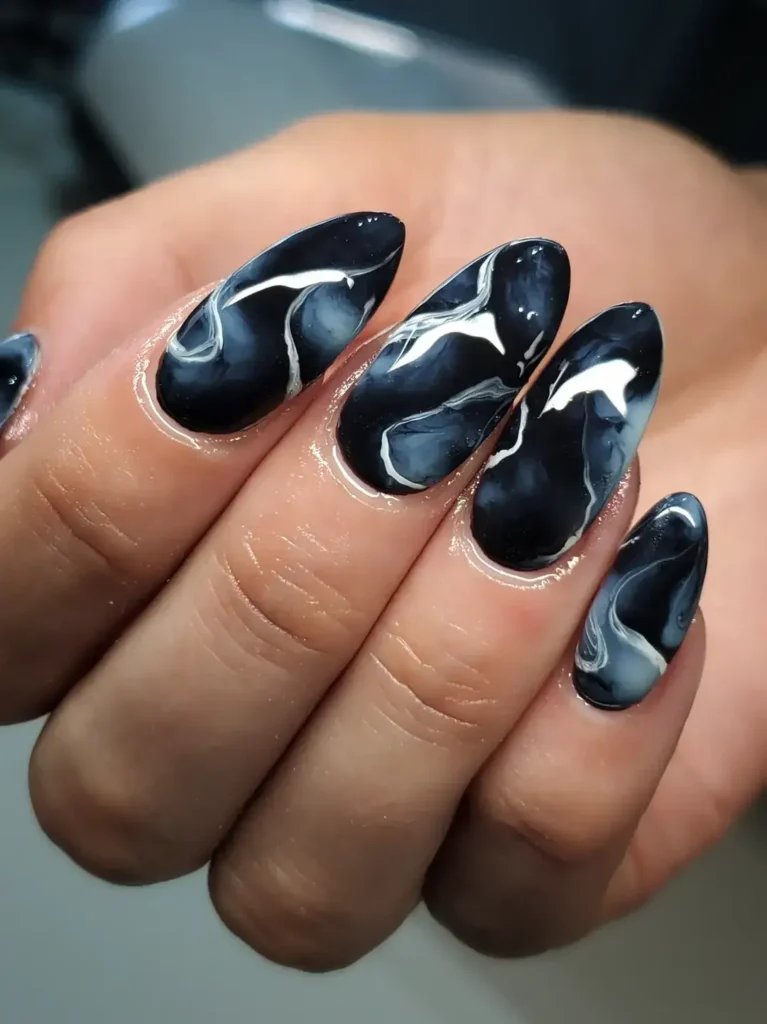
4. Marble Nails
Marble Nails mimic the irregular movement found in natural stone through branching lines and softly dispersed layers. Veins can travel in different directions, preventing any two nails from appearing mechanically identical. Overlapping marks add depth, while quieter sections give the pattern room to breathe. Each surface reads like a small fragment of stone shaped by subtle variation rather than strict symmetry.
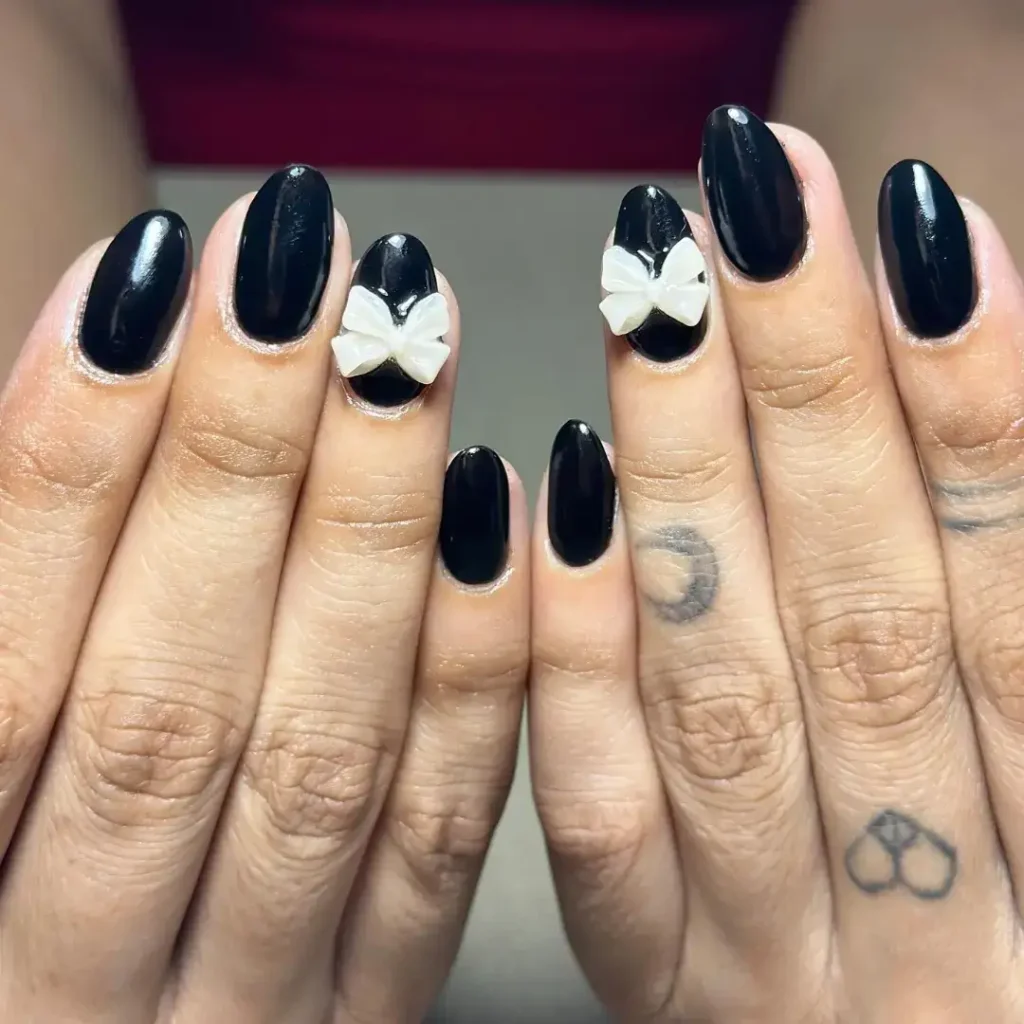
5. 3D Bow Nails
3D Bow Nails introduce raised bow details that sit above the nail surface and immediately change its flat profile. Folded loops, central knots, and dimensional edges give each accent a sculptural quality. Shadows naturally gather around the lifted sections, making the shape easier to distinguish from the surrounding nail. Small changes in placement can make the bow feel centered, offset, or part of a more layered arrangement.
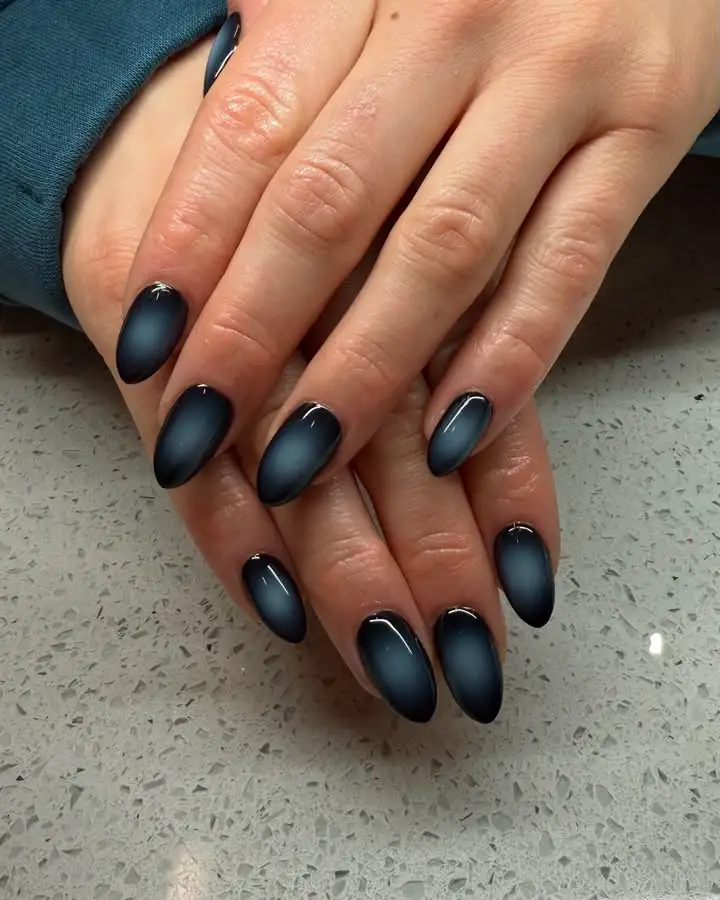
6. Aura Nails
Aura Nails build their visual interest around a diffused area that gradually spreads outward from a central point. Soft transitions prevent harsh borders, allowing the design to feel hazy rather than sharply outlined. Concentrated color near the center slowly fades into the surrounding surface, creating a sense of depth. That blurred movement gives every nail a focal area without the need for defined artwork.
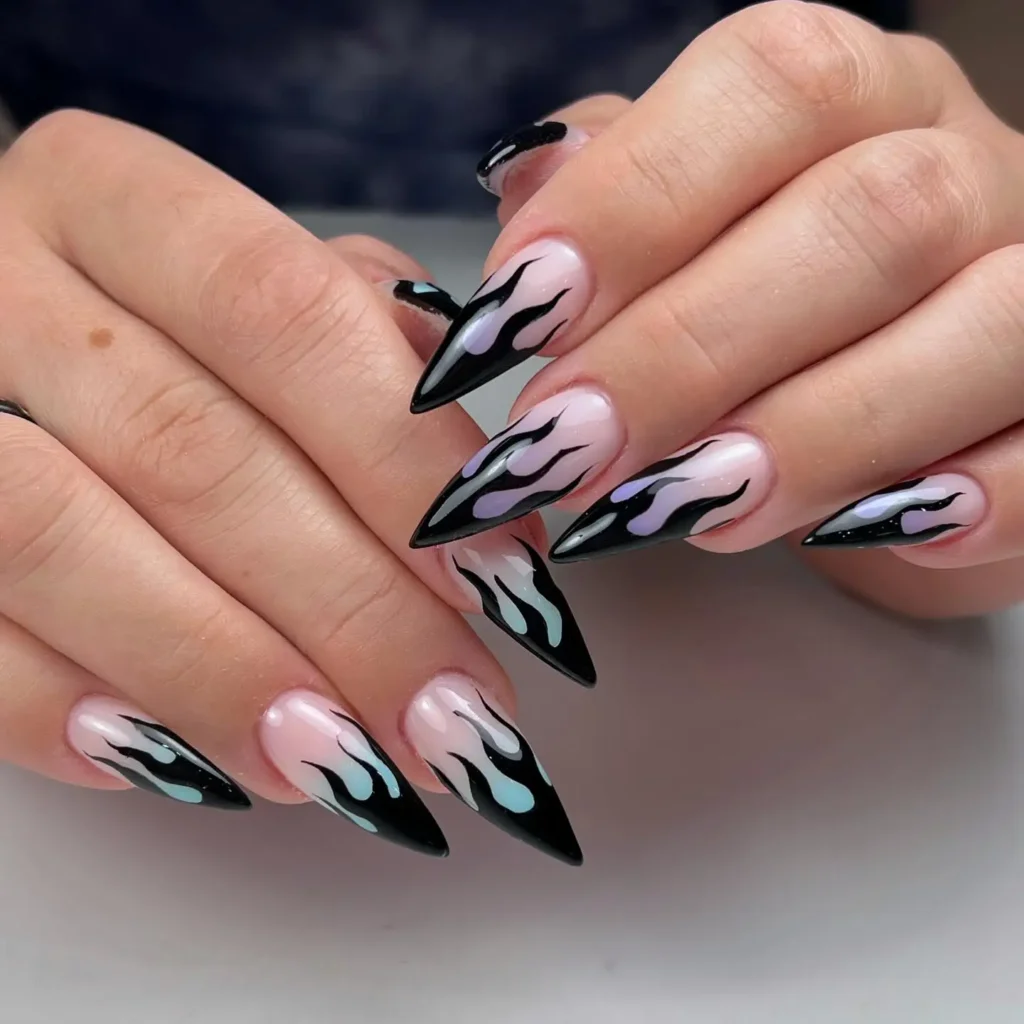
7. Flame Nails
Flame Nails use pointed, curling shapes that travel across the surface in energetic, uneven paths. Individual flames can rise from one edge or twist through open areas, creating movement without identical repetition. Sharp tips contrast with the rounded curves between them, giving the artwork a lively rhythm. Varying the height and direction of each flame keeps the pattern from feeling static.
8. Pearl Nails
Pearl Nails focus on a smooth, luminous surface that reflects light with a softer glow than a mirror-like effect. Gentle shifts in reflection give the nails a layered, almost nacre-like quality as the angle changes. Surface light appears diffused rather than sharply defined, which keeps the visual effect calm and fluid. Subtle luminosity becomes the main detail, allowing the finish itself to carry the design.
9. Tortoiseshell Nails
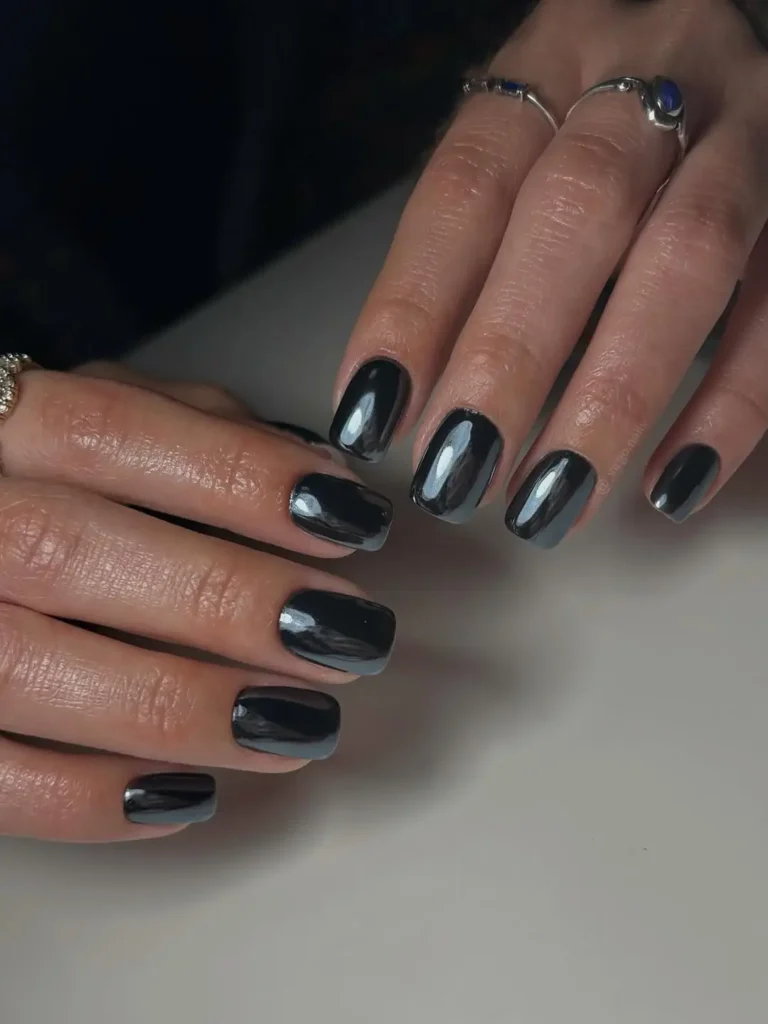
Tortoiseshell Nails build depth through irregular patches layered across one another rather than arranged in a uniform pattern. Translucent areas allow underlying sections to remain partially visible, giving the surface a sense of visual layering. Uneven shapes and soft edges prevent the pattern from becoming too geometric. Each nail develops its own variation, much like a natural material marked by shifting density.
10. Drip Nails
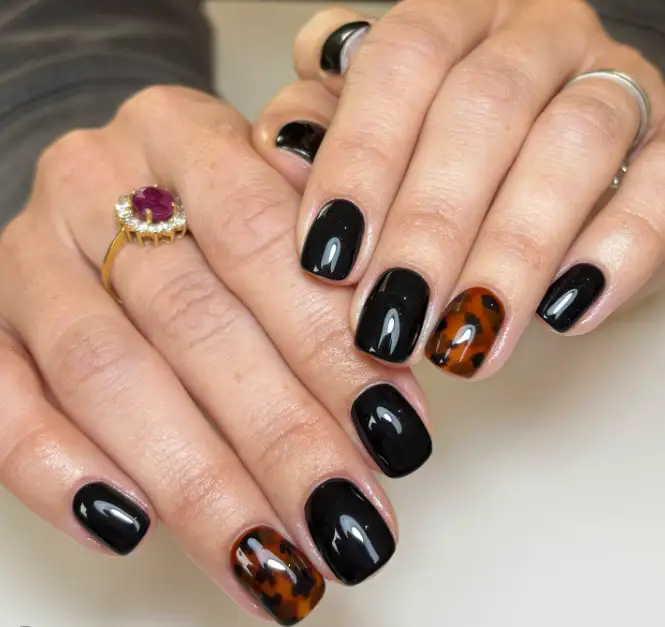
Drip Nails use flowing edges that appear to descend from one area of the nail toward another. Rounded drops and elongated trails interrupt straight boundaries, giving the pattern a liquid sense of movement. Differences in drip length help the artwork feel less uniform and more spontaneous. Empty areas around the descending shapes keep each curve distinct instead of allowing the design to become crowded.
11. Starry Night Nails
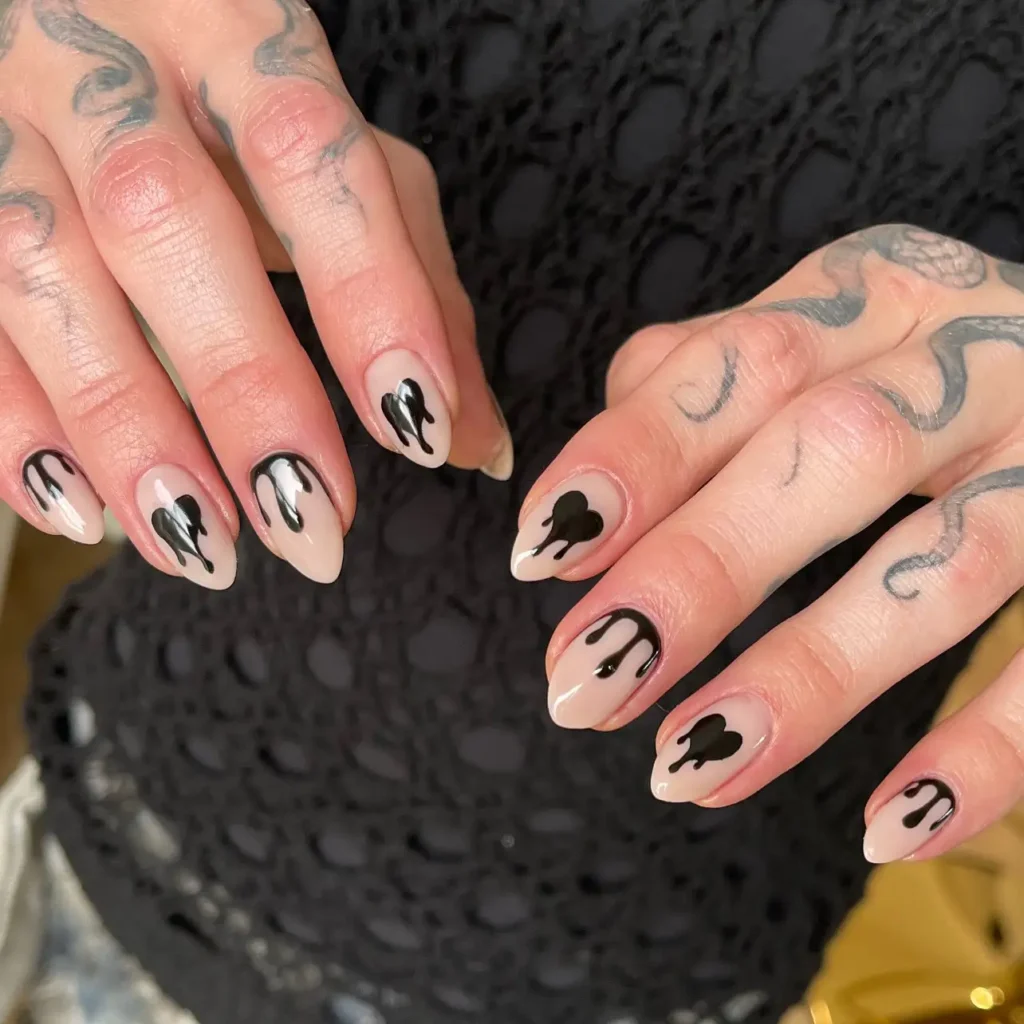
Starry Night Nails scatter tiny star details across the surface to create a layered, celestial pattern. Spacing can range from isolated accents to denser clusters, giving different parts of the manicure their own visual rhythm. Small points and star shapes break up larger areas without overwhelming the base. Careful distribution keeps the artwork feeling expansive rather than confined to one focal spot.
12. Checkerboard Nails
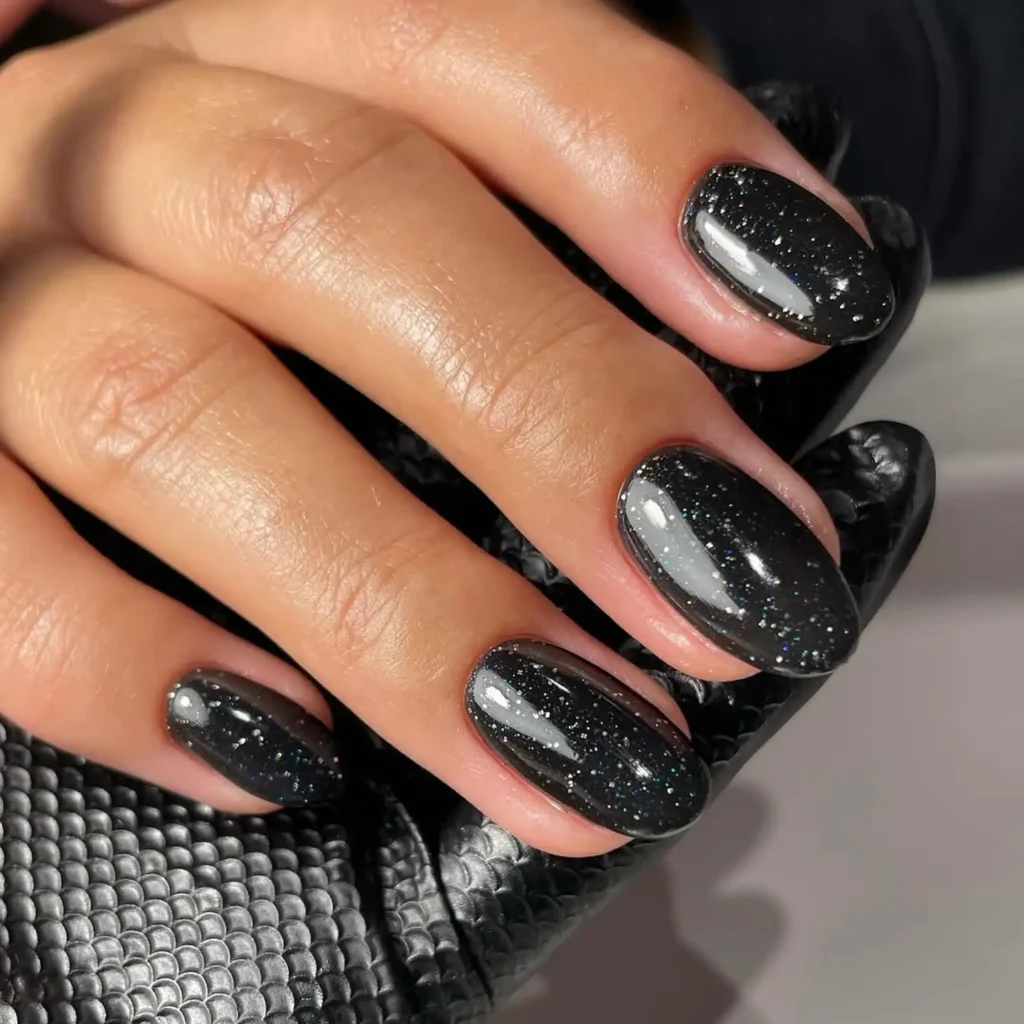
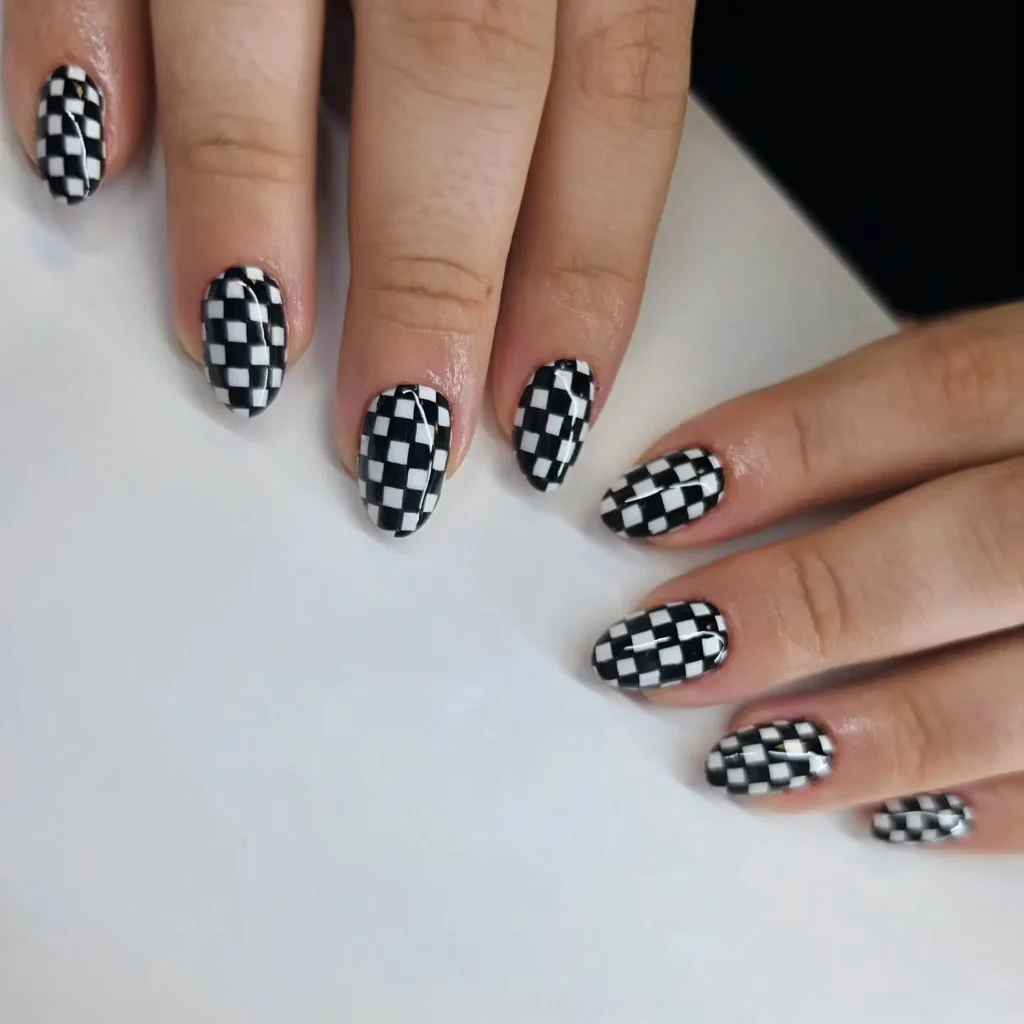
Checkerboard Nails rely on repeated squares arranged in a clear grid across the nail surface. Alternating sections create immediate contrast, while the straight edges give the pattern a crisp, graphic character. Slight changes in placement can make the grid feel centered, angled, or intentionally interrupted. Repetition supplies structure, yet the small scale of each square keeps the design visually active.
13. Crocodile Texture Nails
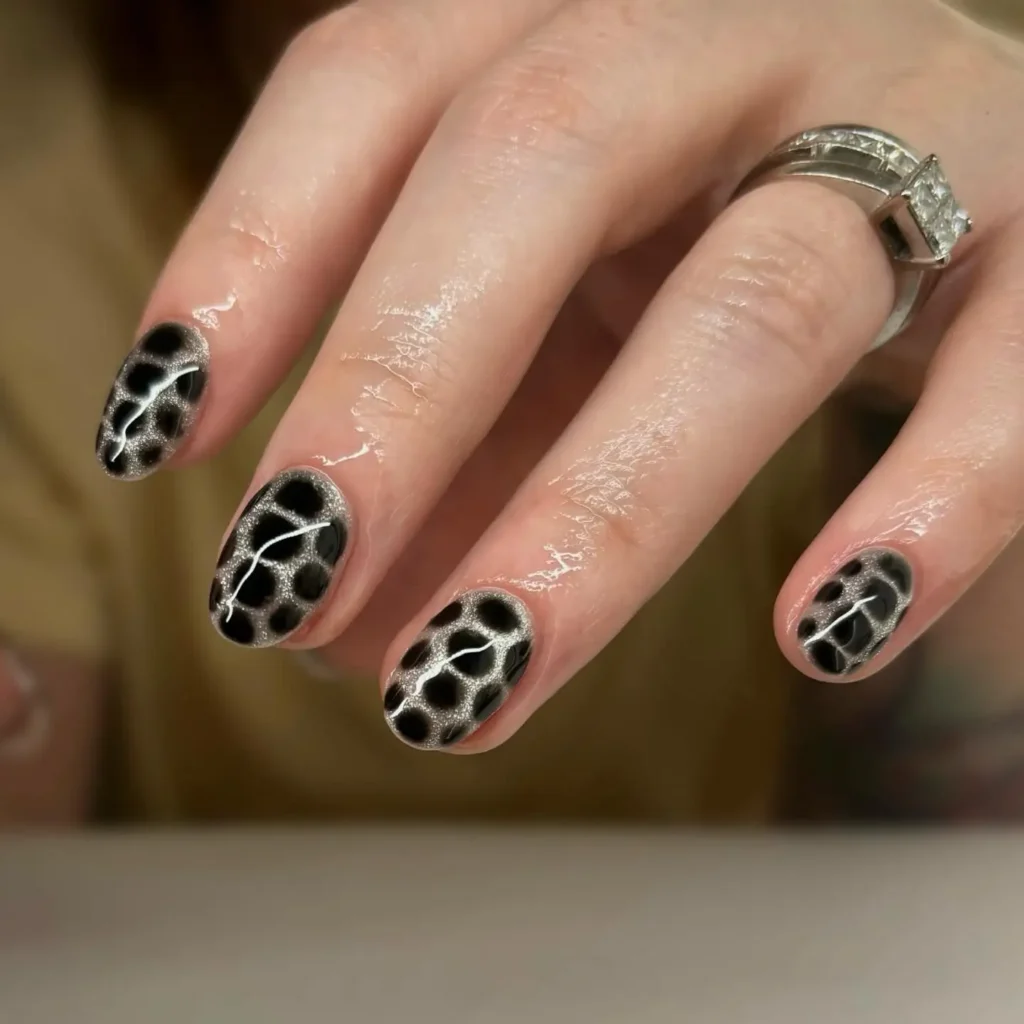
Crocodile Texture Nails recreate the uneven, scaled surface associated with crocodile skin through raised or defined sections. Individual segments form an irregular network, making texture the strongest part of the design. Changes in light emphasize the edges between each section and reveal the pattern’s dimensional quality. Uneven spacing keeps the surface organic rather than turning it into a rigid geometric repeat.
14. Silver Foil Nails
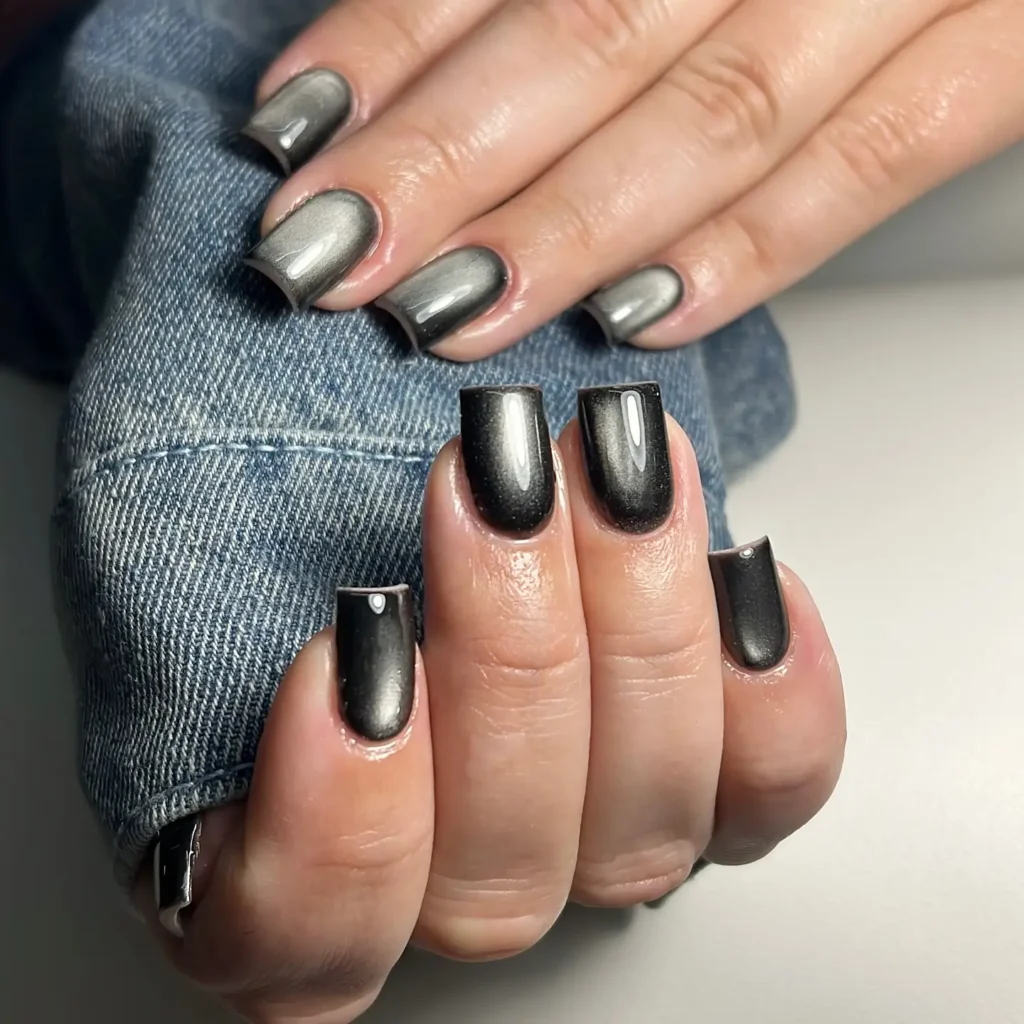
Silver Foil Nails use irregular metallic fragments to introduce flashes of reflection across the surface. Torn edges prevent the placement from appearing too precise, giving each piece a slightly different outline. Scattered sections can overlap or remain separated, creating contrast between reflective areas and the space around them. As light catches the foil, individual fragments become visible from different angles.
15. Negative-Space Swirl Nails
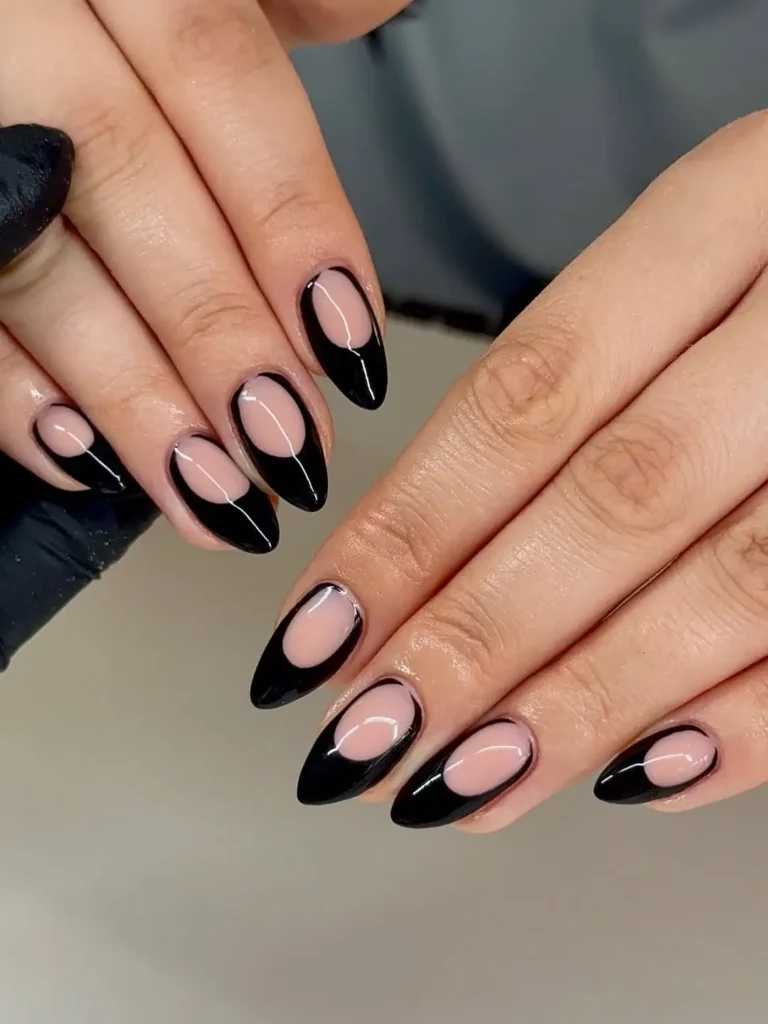
Negative-Space Swirl Nails let bare sections remain part of the artwork while curved lines travel around them. Open areas break up the movement, preventing the swirls from covering the entire surface. Each curve can change direction or thickness, adding variety without losing the sense of flow. Space between the lines becomes just as important as the lines themselves in shaping the composition.
16. Gemstone Nails
Gemstone Nails draw attention through stone-like details that suggest depth beneath the surface. Layered markings, concentrated areas, and irregular boundaries can give each section a mineral-inspired character. Variations across the nails help the design avoid looking duplicated from one finger to the next. Visual density shifts naturally from lighter areas to more concentrated sections, adding complexity to the arrangement.
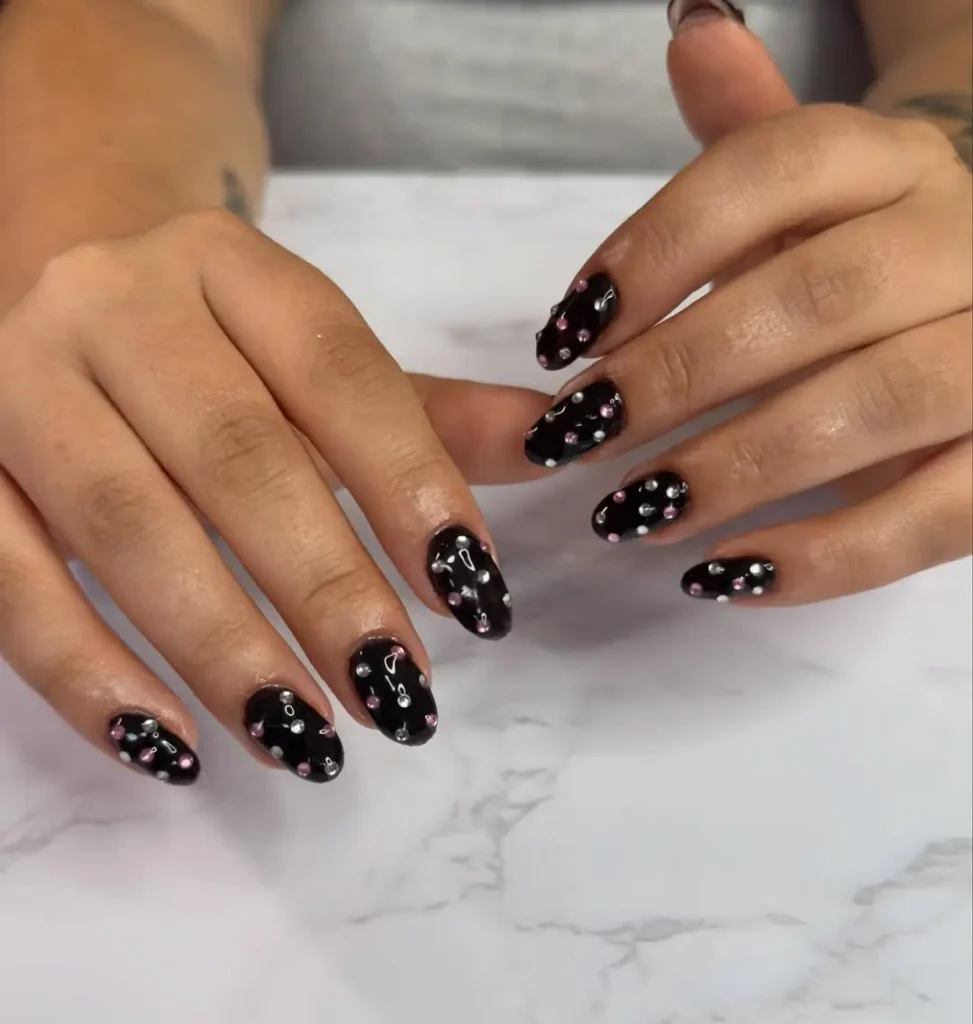
17. Leopard Print Nails
Leopard Print Nails use irregular spots framed by uneven outlines rather than perfectly matched shapes. Gaps inside and around each marking keep the pattern recognizable while allowing the surface beneath to remain visible. Spot sizes can vary across the nail, creating a less rigid rhythm than a repeated geometric design. Scattered placement gives the print a naturally unpredictable character from one area to another.
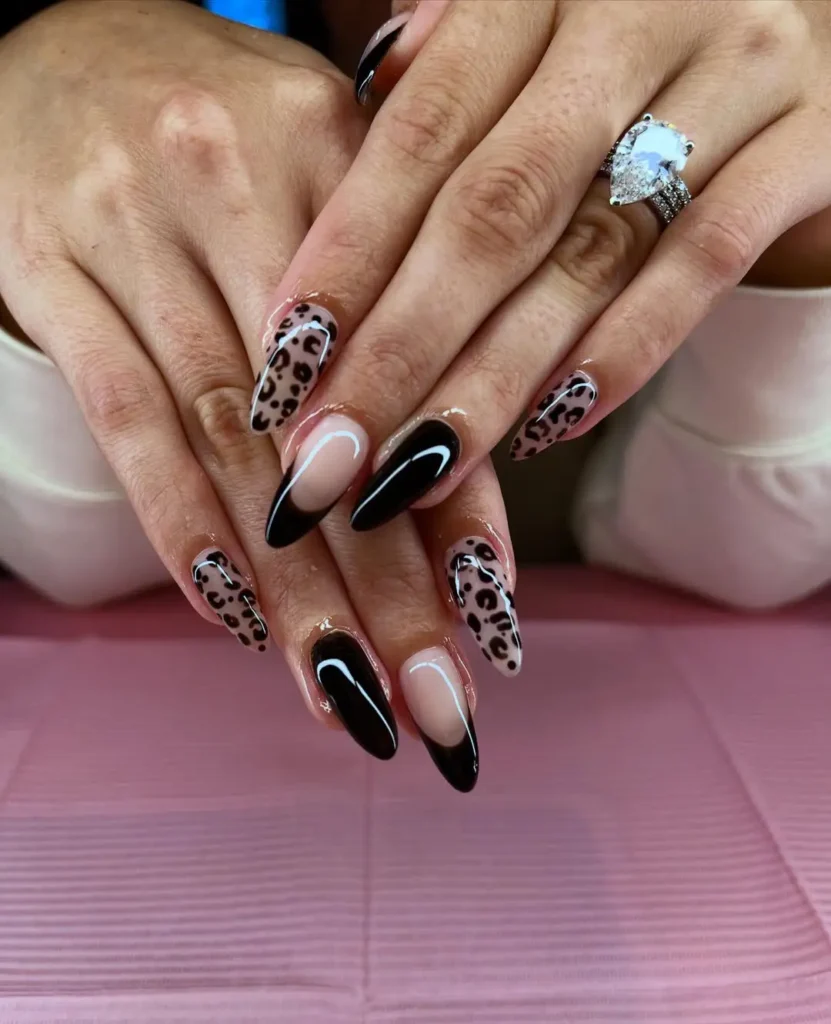
18. Velvet French Tips
Velvet French Tips place the soft, light-responsive velvet effect along the tip area instead of covering the entire nail. A defined boundary separates the textured visual effect from the remaining surface, creating a clear directional contrast. Shifting reflection gives the tips added dimension as light moves across them. Concentrating the detail at the edge keeps the design focused and leaves the rest of each nail visually open.
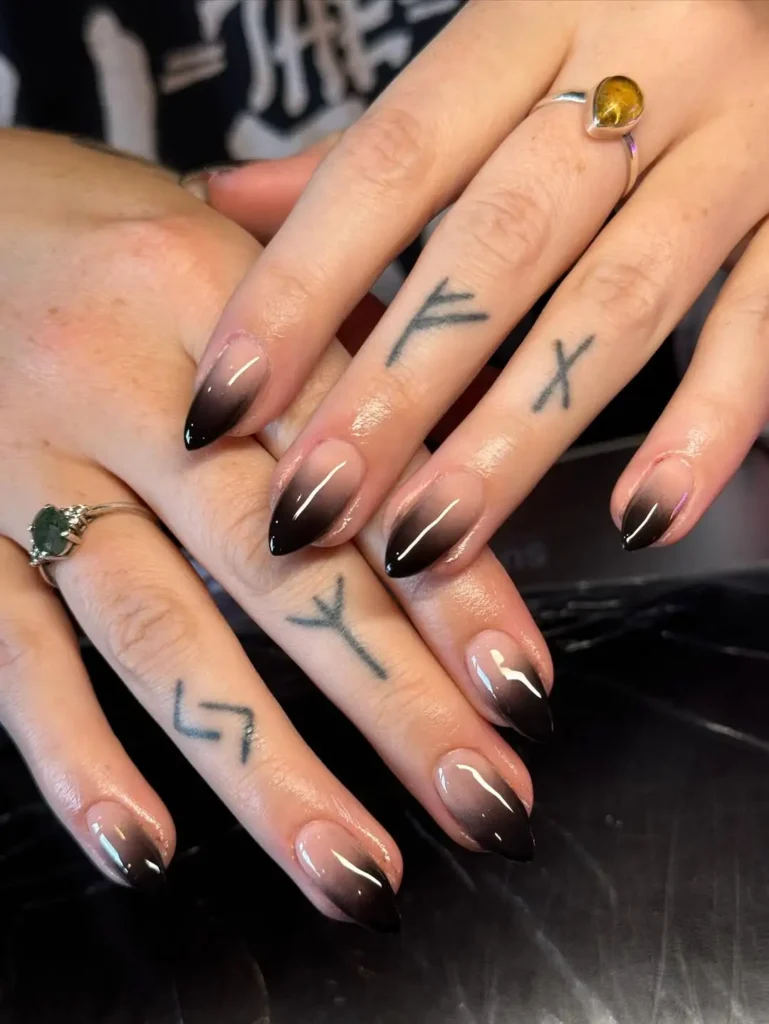
19. Ink Splash Nails
Ink Splash Nails resemble scattered marks spreading across the surface in uneven bursts and fragments. Fine droplets can sit beside larger splashes, creating a range of scale within the same design. Irregular edges suggest spontaneous movement rather than carefully drawn symmetry. Areas of open space keep the scattered marks distinct, allowing each splash to retain its own shape and direction.
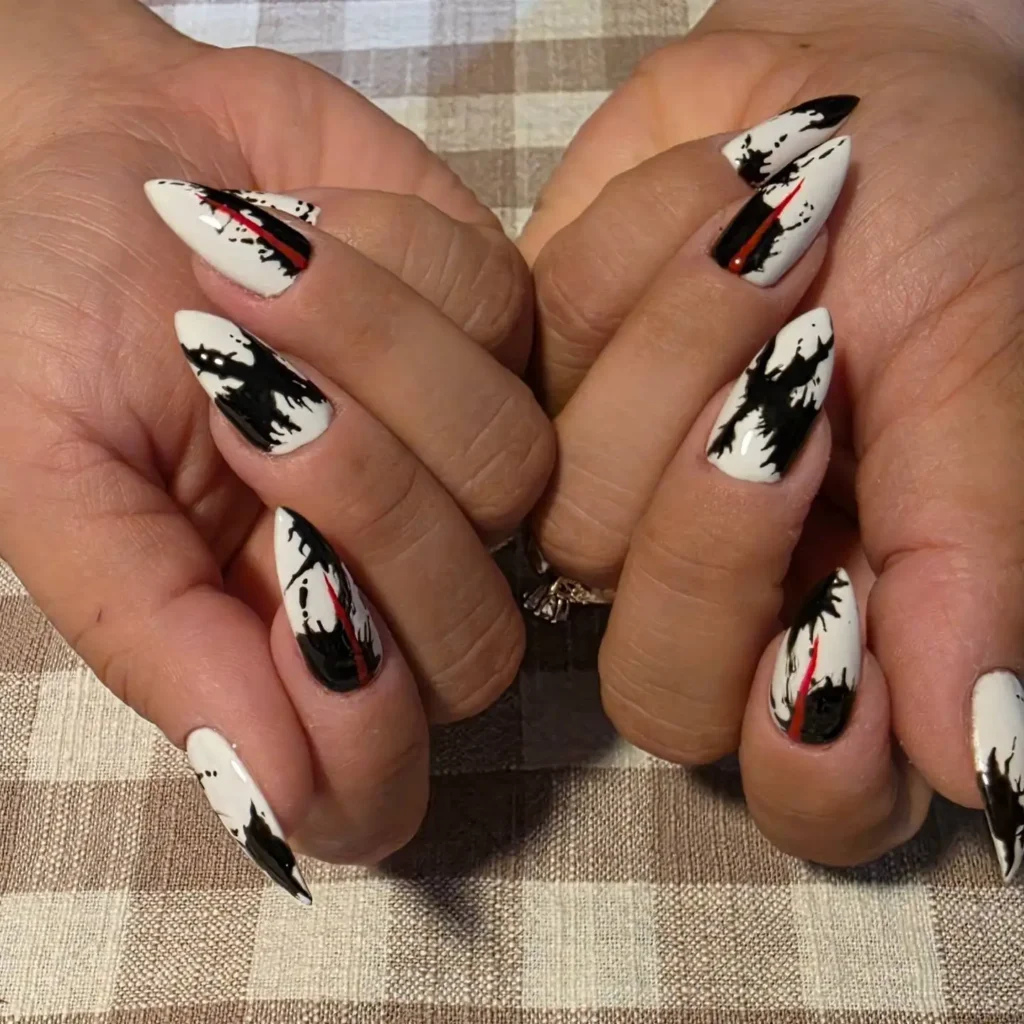
20. Matte Coffin Nails
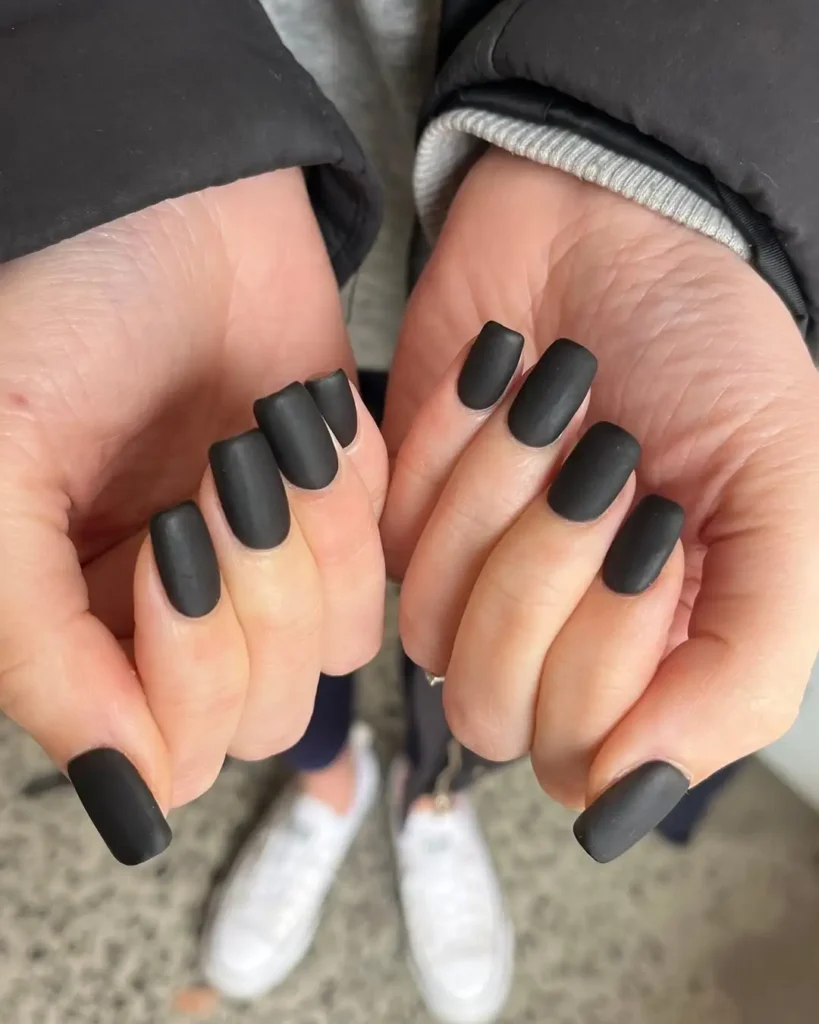
Matte Coffin Nails pair the straight-sided coffin silhouette with a non-reflective surface that absorbs light rather than bouncing it back. Flat planes become more noticeable because the muted finish removes strong glare from the nail surface. Tapered sides guide the eye toward the squared tip, emphasizing the shape’s structured outline. Together, those elements give the nails a clean, controlled visual presence.
21. Holographic Nails
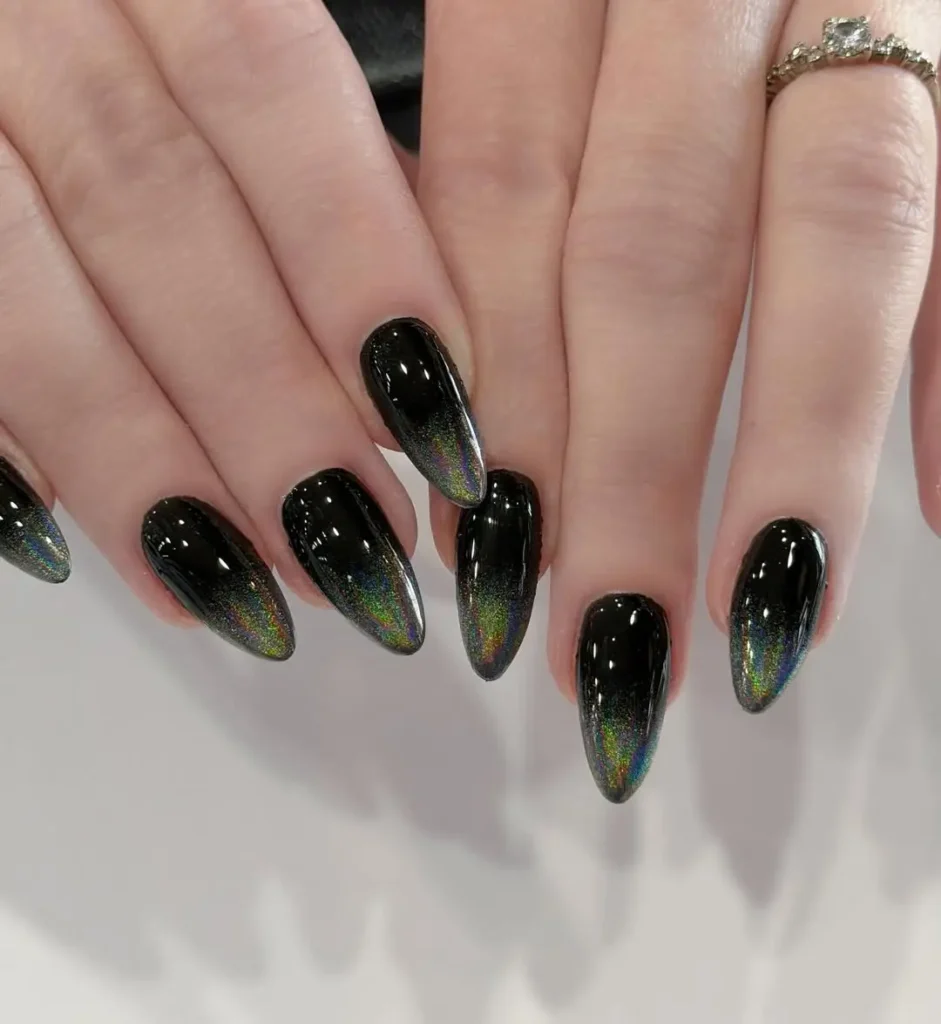
Holographic Nails shift through changing bands of reflected light as the surface moves under different angles. Multiple tones can appear and disappear across the same nail, making the effect feel constantly in motion. Fine reflective particles distribute the light across a broad area instead of concentrating it in one spot. Movement becomes part of the design, since each change in angle reveals a different layer of reflection.
22. Spiderweb Nails
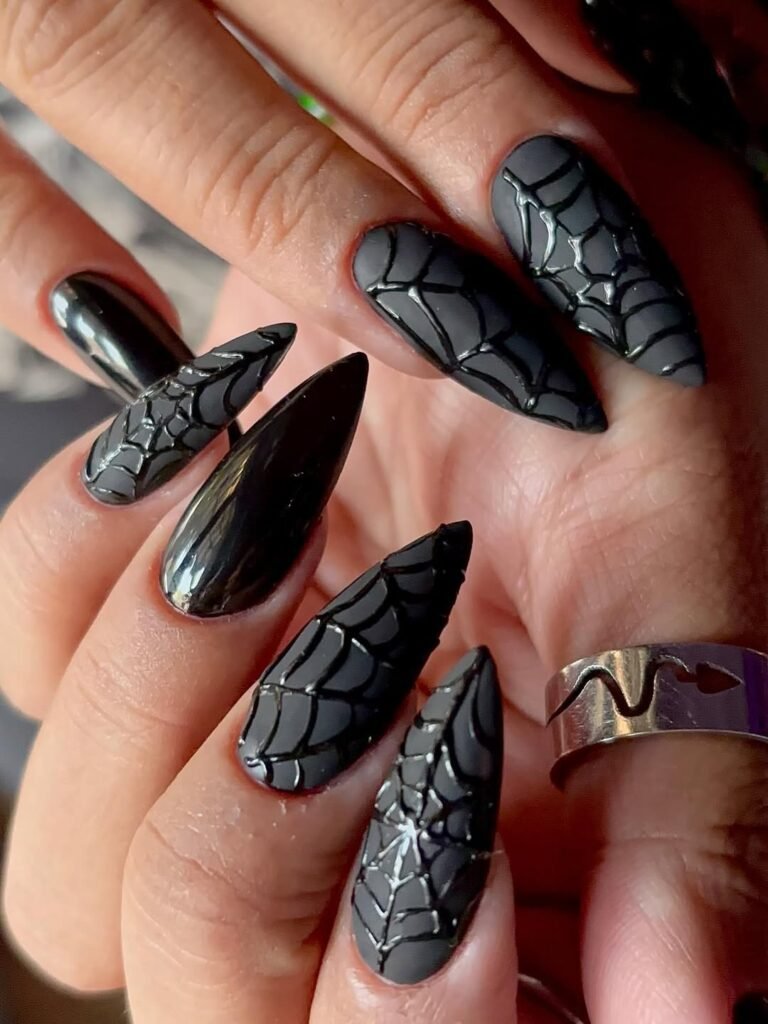
Spiderweb Nails use thin connecting lines that stretch outward and intersect in a delicate network. Curved sections can link to straighter strands, giving the pattern a sense of tension and direction. Empty spaces between the lines remain essential, keeping the webwork from becoming visually heavy. Fine detailing allows each connected section to stay visible while preserving the fragile structure of the pattern.
23. Studded Nails
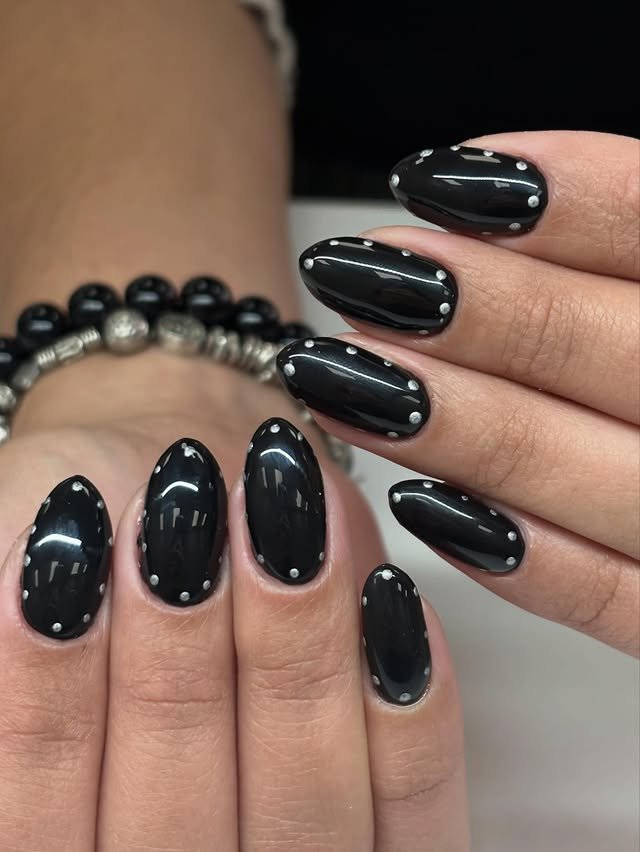
Studded Nails introduce small raised accents that change the surface through repetition and placement. Individual studs can form lines, clusters, borders, or isolated points, depending on how much structure the arrangement carries. Light catches the edges of each raised piece differently, adding small shifts in reflection across the nails. Spacing between the studs determines whether the result feels orderly, scattered, or concentrated around a single area.
24. Smoky French Nails
Smoky French Nails reinterpret the familiar tip placement through a diffused, hazy transition rather than a sharply defined edge. Soft blending allows the darker area to appear suspended as it moves across the tip region. Gradual shifts keep the boundary from looking rigid, adding depth through tonal dispersion. Concentrating the smoky effect near the edge leaves a clear sense of direction across the nail.
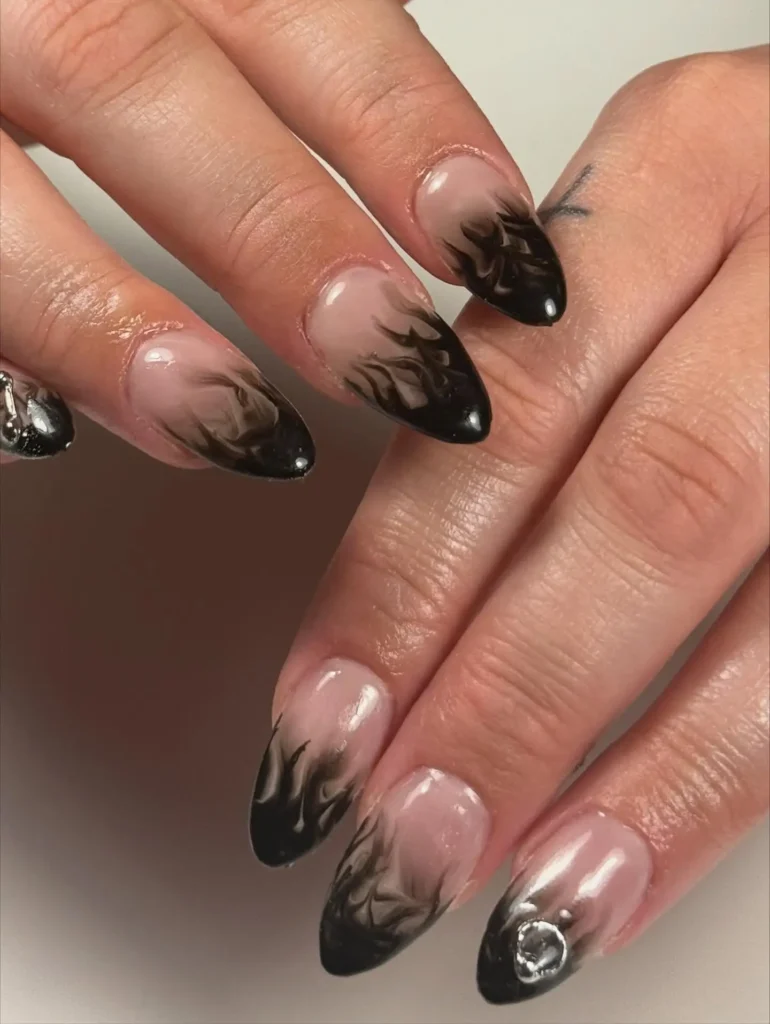
25. Metallic Star Nails
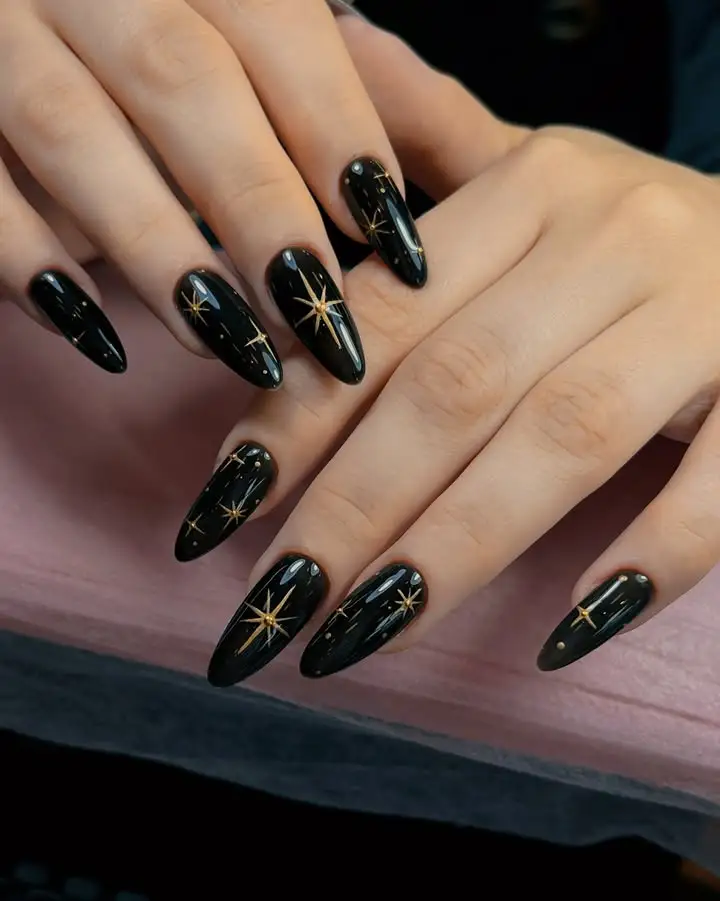
Metallic Star Nails place reflective star shapes across the surface, turning small points of light into distinct decorative details. Crisp edges help each star remain recognizable even when several appear within the same arrangement. Reflection changes across the metallic surfaces, causing individual accents to catch attention at different moments. Varied spacing can make the pattern feel scattered like a field of small symbols or arranged around a central area.
Conclusion
Visual impact often comes down to the details you notice first and keep returning to. Black nails design ideas can take many directions through texture, pattern, light, dimension, or carefully placed artwork, leaving plenty of room for individual preference. Pay attention to the elements that hold your interest, then choose a design with the right amount of contrast and detail for your taste. A manicure feels more personal when its visual character reflects what you genuinely enjoy seeing on your nails.